

The Truth About How Often You Should Drain Your Water Heater (Really)
Most homeowners aren't thinking about their water heater until they're hit with an unexpectedly cold shower or worse, a sudden leak. For the most part, warm baths, hot showers, and scalding dishwasher cycles are something we take for granted. But lurking inside that giant eyesore of a tank is a slow-growing problem that needs regular maintenance.
Minerals from your water supply, like calcium and magnesium, settle at the bottom of your water heater tank over time. For a while it just sits there, quietly reducing efficiency until you have to crank up the temperature a few degrees more often than you used to. Eventually, you may start to hear strange noises coming from the tank or notice your water looking rusty. And in the worst case scenarios, unchecked sediment can cause corrosion that leads to cracks or even burst tanks. Fortunately, draining your water heater annually is a simple and proactive way to avoid skyrocketing electric bills, expensive plumbing problems, and water damage that could cost you hundreds, or maybe even thousands, to fix.
While it helps to understand the plumbing basics, draining your water heater is relatively simple. It's a task most DIYers can handle with just a few simple tools. You'll need a garden hose, a bucket, an adjustable wrench for loosening stubborn valves, and old towels. If you live in an area with extremely hard water, your tank may benefit from a twice-yearly drain, but for most homes, doing the process annually is sufficient. Even if you've never touched your water heater before, making time to do this simple maintenance task can help keep your tank running efficiently and extend its lifespan.
What neglecting your water heater really costs
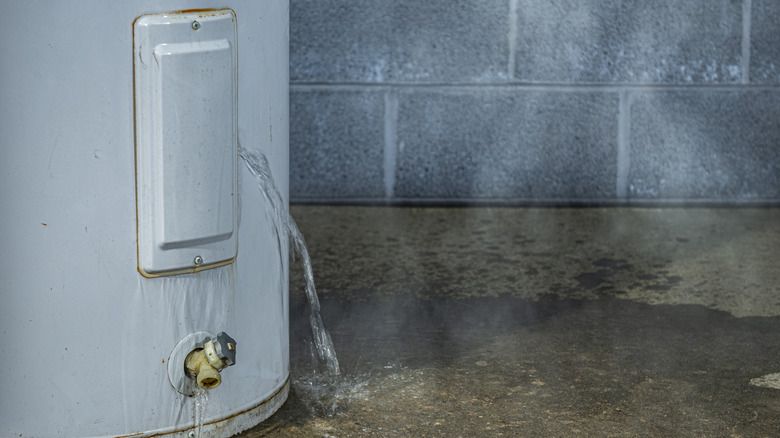
You can hire a plumber to help you flush or drain your water heater. In certain cases, you definitely should. If your tank is leaking, making loud noises, or hasn't been maintained in several years, you should have it looked at as soon as possible. Don't wait until disaster strikes!
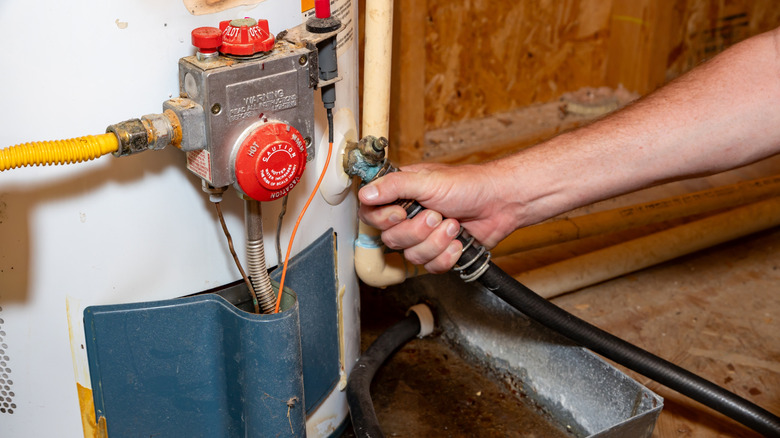
However, for routine annual maintenance, paying a professional hundreds to drain your water heater isn't necessary. A water heater doesn't take long to drain – only about an hour. Start by turning off the power. For electric water heaters, this means switching off the breaker, but for gas models, you'll need to turn the control to "pilot" or "off." Next, shut off the cold water supply valve feeding your tank. You'll also need to attach a garden hose to the drain valve, which you can find near the bottom of your tank. Since you'll be working with hot, dirty water, wear protective eyewear and gloves, and run your hose to a utility sink or, better yet, outdoors. Put a bucket beneath the pressure release valve to catch drips before slowly releasing it. Then, open the drain valve so the tank can empty. Once your water runs clear, close the valves, remove the hose, and turn the water supply back on to refill your tank. Last but not least, turn the power back on.
Draining your water heater annually is key. If you put this task off long enough, sediment hardens into a thick layer that's extremely difficult to remove. At that point, draining may require multiple attempts, or fail entirely, causing leaks, burst tanks, or a costly replacement.