

Ditch Traditional Decluttering: A Better, Easier Way To Clean Up Your Home In 2026

Everyone is looking for methods to declutter their home. Whether it's 15-minute hacks we perform weekly, or longer challenges that stretch out over months, decluttering is one of the surest ways to get your home organized and feeling more peaceful. But traditional decluttering can often be exhausting — we're so focused on creating piles, organizing, and removing extraneous things that we often become overwhelmed and quit. If you are heading into 2026 with decluttering goals but want to ditch traditional methods, then reverse decluttering could be a better, easier way to clean up your home in the new year.
The idea is that instead of focusing so much on what you want to get rid of, you shift your focus to what you want to keep. This newly adopted mindset allows you to intentionally focus on what items truly work for your home and lifestyle. As a result, the excess will reveal itself more naturally, allowing for easier decision-making and less time spent piling and organizing.
Proponents of this method say that it is a lot calmer and far less overwhelming than traditional decluttering. There is certainly some truth to the fact that focusing on the things that are important and essential is more empowering than focusing on those that aren't. But if you're looking for some applicable tips you can use to make reverse decluttering work for you in 2026, we've got you covered.
Reverse decluttering tactics for 2026
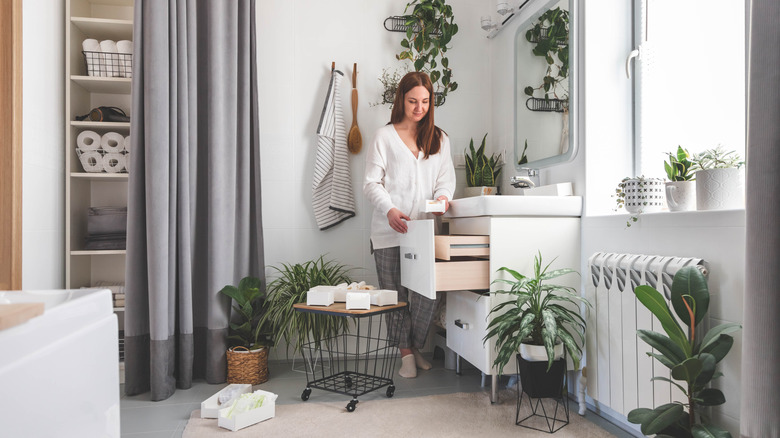
In order to use reverse decluttering properly, you need to ascertain what is truly important or essential to you. Take your closet as an example; this is one area of your house that should be on the top of your list for decluttering in 2026. Look at the clothes and accessories you wear on a regular basis or cherish for special occasions. Whatever items haven't been worn in ages, no longer fit, or don't have any place in your wardrobe, get rid of them. This is an easy place to begin as it starts shifting your mindset to one of intentionality, while also getting an important area decluttered. You can then carry this on throughout the house.
You can also apply reverse decluttering to categories as opposed to going room by room. For example, in your kitchen, you could have an abundance of mugs — some you received as gifts, others as souvenirs. Ask yourself: which mugs do you use daily? Pick the ones you always reach for, then remove the rest. This works for other items, including books in the library, cosmetics in the bathroom, and linens in the closet.