

Turn Snake Plant Leaves Into A Brand-New Plant — Here's How

We may receive a commission on purchases made from links.
Whether you're new to growing houseplants or you've spent years unsuccessfully searching for your green thumb, a snake plant (Dracaena trifasciata) may be just what you need to cultivate your confidence as an indoor gardener. This plant is as tough as is pretty, which means that you don't have to coddle it to keep it alive. This gorgeous houseplant can thrive without windows and doesn't need much water to keep on keepin' on. Plus, if you want to expand your houseplant collection, propagating snake plants is a simple way to do it. In fact, a bent or broken leaf is a lemon you can turn into lemonade with the power of propagation. You can use it to grow a new baby plant with a little help from a freshly sanitized cutting tool and a glass of water.
When propagating new snake plants, a leaf that's damaged but not diseased is likely to produce the results you want. If none of the plant's leaves are looking a bit battered, a pristine piece of foliage will also work. Using a knife, lop off the leaf you've selected near its base. Then, grab your pruning shears and slice the leaf into a few sections that are about 3 inches long. Make a pair of diagonal cuts at the bottom of each section, which encourages root formation and produces a triangular space. When you're done cutting, let the leaf sections rest until the edges you sliced have thickened up a bit. This may take a few hours. While you're waiting, prepare a glass of fresh water. Following the thickening process, pop the bottoms of the cuttings into the water.
Helping your snake plant leaf cuttings form roots
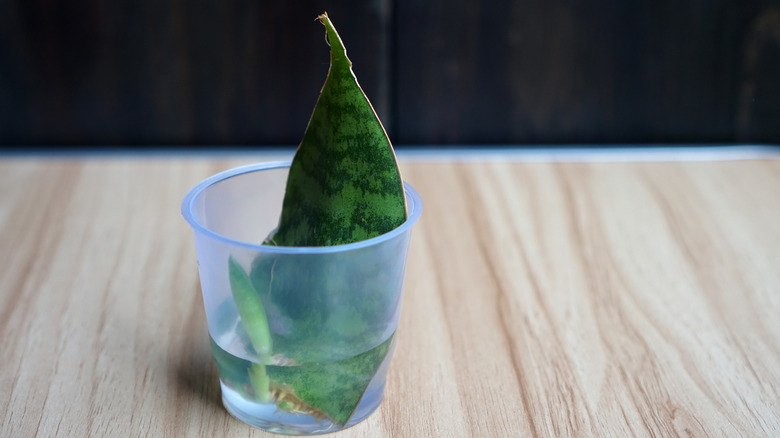
The next steps of the propagation process are brought to you by the letter "W." First, remember that "W" that stands for "window." While established snake plants can handle low-light conditions, cuttings and young plants will need some sunlight. Place your snake plant cuttings by a window that receives bright, indirect light to promote root growth. Next, check that the water is 1 to 2 inches high. After that, watching and waiting are the name of the game. Look for signs of both rooting and rotting. Soft, brown areas on the cutting indicate that rot is present. Also refresh the water in the cup every few days. Roots should emerge in two to six weeks.
Want to accelerate the rooting process? There are a few shortcuts to try. The first is rooting hormone. Before placing each cutting in the water glass, apply a product such as Garden Safe TakeRoot to its bottom edge. Another method involves creating a greenhouse-like environment for the cutting. You can do this by placing a clear plastic cup or bowl over the top of the water glass that's holding the cuttings. The idea is to lock in warmth and humidity, so be sure to close off any areas that they might escape. A third method leverages an electric-powered seed-starting mat such as the Vivosun Waterproof Seedling Heat Mat, which can keep the temperature near the cutting between 68 and 86 degrees Fahrenheit. This is just right for root development. Once roots and a fresh shoot have formed on each cutting, care for your new snake plants by transferring them to containers filled with potting mix, watering them thoroughly, and returning them to their moderately sunny window.