

Think Twice Before Using Hot Water To Remove Ice Dams From Your Gutters
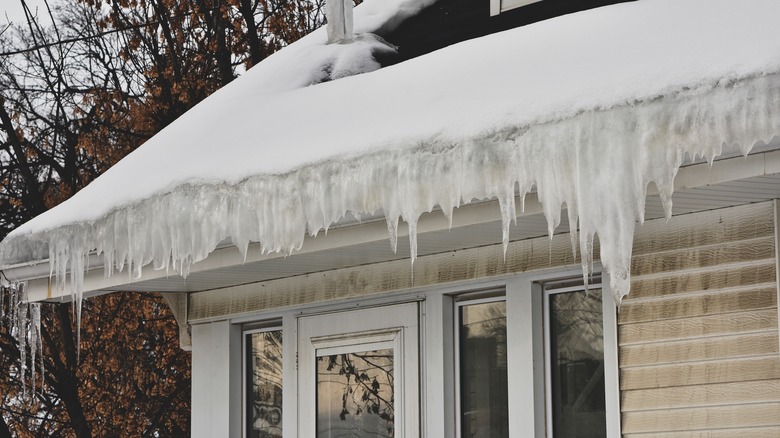
Ice dams occur when a thick ridge of ice forms at the edge of a roof or along your gutters. This dam prevents melted snow from draining away from your house. Having nowhere to go, that water can then seep underneath shingles, getting inside the ceiling and walls of your home. Ice dam damage can be costly to repair, so it is better to have them cleared away as soon as you see one forming.
But how exactly can you go about removing ice dams safely and efficiently? One common answer is to climb atop a ladder with a bucket of hot water to melt the dam down. While this is generally effective, there are major safety concerns to consider before you try this hack for yourself. Accessing your gutters is going to require the use of a ladder, which is tricky at the best of times. Add winter weather and a bucket of water into the mix, and ladders can become downright deadly if you are not careful.
If you're still keen to try this, make sure your ladder is secure on the ground and that the rungs are completely clear of ice and snow. Then, and only then, should you make your way up to clear your gutters. You should also take care to wear shoes or boots with excellent traction to prevent slipping. With that in mind, hot water is a common ingredient you'll find across a wide range of ice-melting solutions. In this case, all it needs to do is melt the ice that has formed along your gutters, and flow away through the downspouts, making this hack cost-effective and straightforward. Here's how to do it safely.
How to safely remove ice dams with hot water
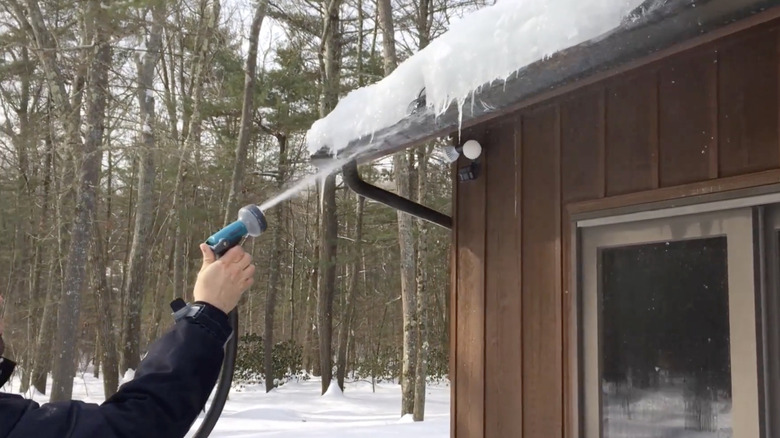
There are two ways you can go about using hot water to remove ice dams. Once you're securely up the ladder, clearing away the ice dams with hot water is straightforward — simply pour the hot water over the ice along the length of your gutters until it has melted away. The amount of water you use will depend on the size of the ice dam. Seeing as it would be highly inefficient and unsafe to continually scale the ladder to get more pots of hot water, this method is really only best for smaller ice build-ups. Additionally, make sure the container you're transporting the water in has a tight-fitting lid so you can avoid making slippery zones in the process.
The second method avoids using a ladder altogether and can be used to combat larger ice dams safely. Just go into your basement or utility closet and hook your garden hose directly to your hot water tank. You can then use a continual flow of hot water to melt the ice dams while being safely on the ground. You can also use it as an excuse to flush your hot water tank.
While not a long-term solution, using hot water is nevertheless highly efficient in the moment. If you want to prevent ice dams altogether, it would be better to call in a professional to install a heating coil along your roofline. This will melt the snow once it has started to build up and prevent ice dams from forming along your gutters to begin with.