

Transform An Old Plastic Fruit Container Into A Quaint Kitchen Herb Garden
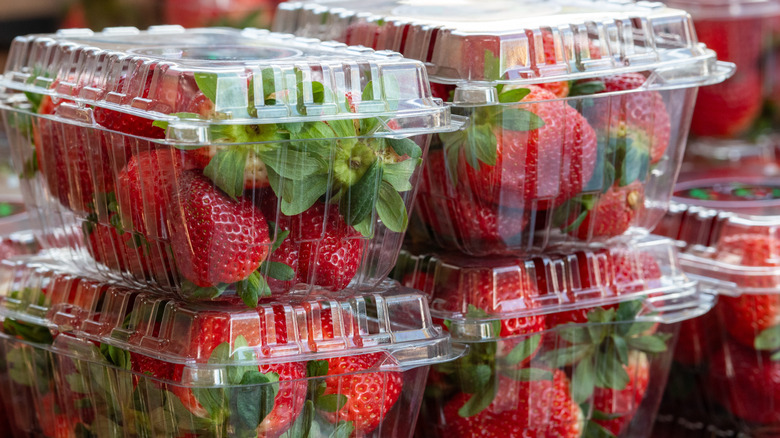
Everyone wants to cut down on plastic waste in their home. It's something we can all work toward by being more conscientious about how much plastic we purchase and consume. However, the fact is that the sheer amount of plastic used in global markets makes this task utterly overwhelming. Even the containers we buy our strawberries, raspberries, and blueberries in are made out of plastic. Is there a way we can reuse those for something good? Yes, there is. While you might be tempted to discard those containers, you can hang on to them and transform them into planters for your kitchen herb garden.
The typical plastic berry container from the grocery store has a series of openings along the borders of the top and bottom. These perforations provide berries with the necessary airflow to prevent condensation and mold growth. They also serve as the perfect exit point for water, which comes in handy when washing the berries. It also really comes in handy when water needs to exit from the potting soil.
The container holes are large enough to let water escape while keeping potting soil in. As such, if you collect a few containers, you can set up your own, quaint herb garden right in the kitchen. The question is, what are you going to grow?
The best plants to grow in fruit containers
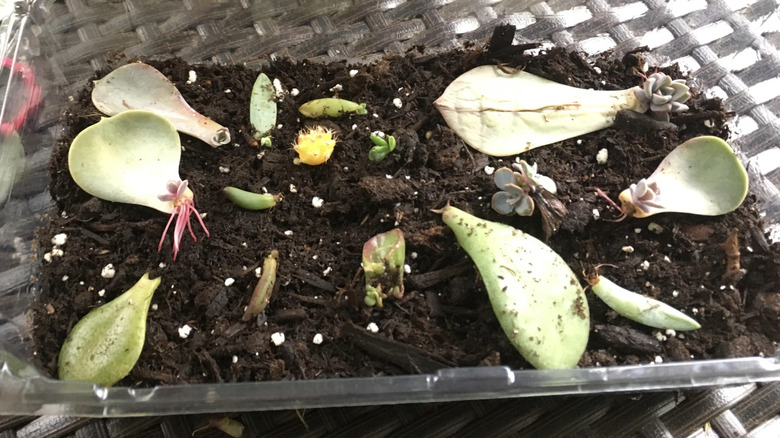
The kinds of plants you'll be able to grow will depend greatly on the depth of the berry containers you have. Owing to their size, strawberry containers tend to be the biggest in terms of space. Blueberry and raspberry containers are on the shallower side, unless you're buying larger quantities of them. We'd recommend a larger strawberry container just to allow you more room and options for herbs.
In terms of herbs, the best kinds to plant in these containers are the shallow-rooted ones. These include easy growers like oregano (Origanum vulgare), basil (Ocimum basilicum), parsley (Petroselinum crispum), and catmint (Nepeta spp.). You can also utilize the fruit containers as little greenhouses for seed starting, and as planters for other small plants like beautiful succulents and cacti.
One downside to using containers like this is that they can tend to get a little messy during watering. Some soil or water can seep out of the bottom, which could leave your countertops messy. This is easily remedied with a plate, however. It's a small trade-off when you are both able to see the roots grow and enjoy knowing that you've contributed less to the local landfill.