

Help Your Spider Plants Stay Lush And Healthy All Winter With A Few Quick Tips
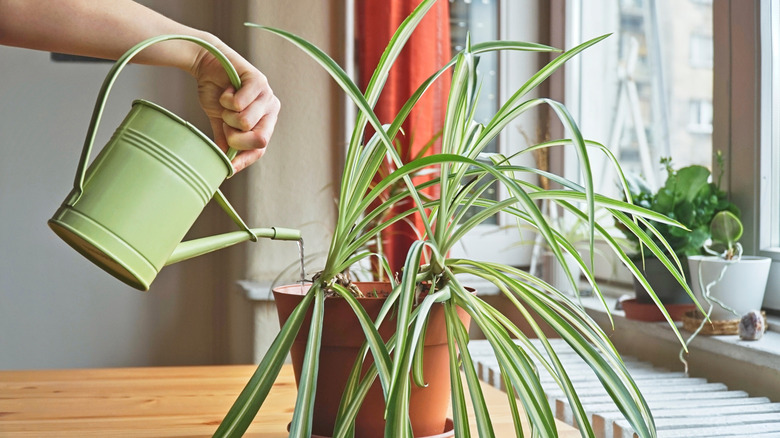
When it comes to houseplants, you can't do much better than a spider plant (Chlorophytum comosum). Not only are they perfect companions for home gardeners with allergies, but they are a wonderfully lush plant with light green foliage that can serve to brighten up any room. And while spider plants are among the easiest of all houseplants to care for, there are still some winter care tips you should observe in order to make sure that they stay healthy all season long.
Winter is a tricky time for most houseplants but tends to suit spider plants quite well. Though houses can be quite dry due to the heat being on, spider plants are more tolerant of such environments than those that need humid conditions. So long as you keep your indoor temperature between 65 and 75 degrees Fahrenheit, you won't need to worry about your spider plants wilting from the cold.
Spider plants also require less watering than other houseplants. One thing you absolutely must not do is overwater your spider plant. Soggy soil will most definitely cause both root rot and a yellowing of the plant's leaves, so you should only water the spider plant once the soil has completely dried. Then, water until the soil becomes moist. If the tips of the plant have turned brown, that's a sure sign you've left them unwatered for too long.
Other winter care tips

While there are some houseplants that will survive perfectly well in low- or no-light areas, spider plants need several hours of bright, indirect sunlight in order to remain lush and healthy. This means that during the winter, you will need to keep your spider plants in the rooms that get the most sun, which are typically the rooms that face south. Just be sure to keep your spider plants a distance away from any drafty windows, as the cold could adversely affect them.
Another thing you will want to watch out for is your pet's interest in the plant. This is especially true if you have cats. While spider plants are not toxic, for cats, spider plants are similar to catnip in that they are hallucinogenic. Therefore, it would not be uncommon to see your cat nibbling away at the leaves in order to attain what amounts to a mild high for it. The solution would be to limit your cat's access to the spider plant by keeping it out of reach.
Spider plants will also respond to a good trim or pruning. If there are any leaves that are looking less than stellar, clip them so that the plant does not expend any unnecessary energy trying to keep them alive. Winter is also a great time for you to split your spider plant, which can be easily propagated into more plants that will establish their roots for spring growth.