

This 'Magic' Nails-And-Vinegar Wood Staining Hack Will Transform Your Furniture
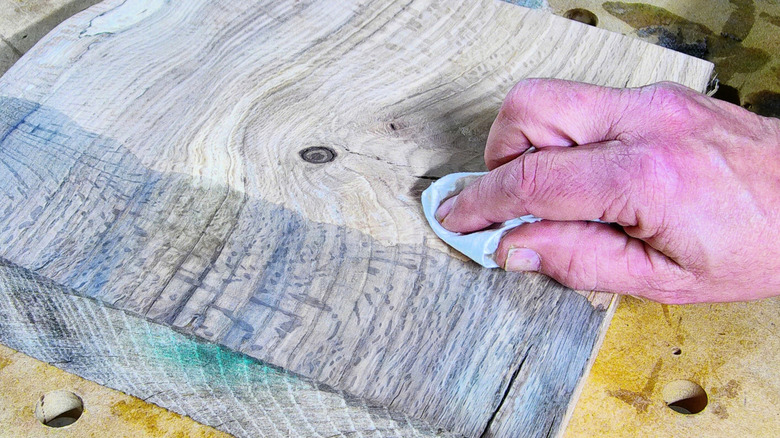
Staining or coloring wood is something craft people have been doing since woodworking began. As a professional woodworker, one of the consistent challenges I have come up against is coloring wood to match my customers' expectations. There are a wide variety of ways to change the color; basic wood stain, dyes, and paint, to name a few (although some feel adding paint to wood furniture will ruin it). But beyond the basics, there's another method for coloring wood — the vinegar and iron hack. This method colors wood by chemically reacting to the tannins in the fibers. It's almost like magic.
The trick here is to soak iron or steel in white vinegar. This creates iron oxide in the solution. When you apply the mixture to wood, especially wood species that have a high tannin content, the iron oxide and tannins react to one another to darken the wood fibers. In tannin-rich oak, that reaction can turn the wood nearly black if the mixture is strong enough. Why would you do this? One advantage of coloring wood via a chemical reaction is that the color generated does not just lie on top of the wood's surface. It won't obscure the figure of the grain, but will enhance it.
Make your own stain magic
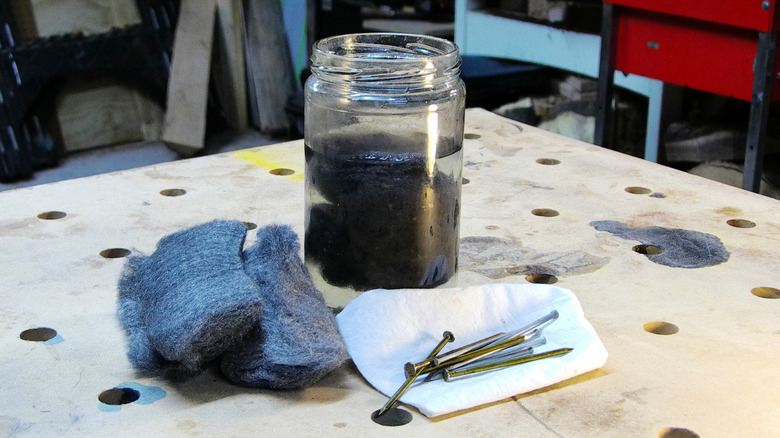
It couldn't be easier to make this non-toxic solution. Using a glass container, put a whole bunch of old iron nails or a pad of 0000 steel wool into the container. Pour in the white vinegar until it covers the contents completely, with a bit more to spare. Soak the iron in the vinegar (at least overnight, but 24 or even 48 hours is better). If you cover the container, make certain that it is vented in some way. One step that many folks take is to transfer the solution to a second container using a coffee filter to remove any small particles.
To use the mixture, apply it to wood that has been prepared for a finish – sanded and smooth, tight spots and all. All you need to do is flood the mixture on, allow it to sit on the surface for a short while, and wipe it off. You should see the color change as soon as the wood dries. The moisture in the mixture will raise the grain of the wood, so allow it to dry and then polish it smooth with a fine synthetic abrasive pad.
How dark the wood will get depends on its tannin content, as well as how long the iron soaks in the vinegar. Oak (both red and white) has high tannin content and gets very dark. Cherry? Somewhat less. Maple and birch — very little. This is not to say you won't see a change in the low tannin species, just less, and the hue will be different.