

Here's What Happens When You Put Windex In Your Toilet
We may receive a commission on purchases made from links.
Of the many glamorous weekly house cleaning tasks we all perform, scrubbing the toilet likely ranks at the top of our lists... or maybe not. Even if you are tired of scrubbing, though, it's hard to understate the importance of doing so. And if you want to try a new approach, there's a product that you've possibly considered using on your porcelain throne but never squeezed the plastic trigger on: Windex.
What, Windex on a toilet? Yes, it is worth considering. The superior cleaning characteristics of Windex, evident when cleaning glass, also shine when used on porcelain. Original formula Windex's ingredients pack a big cleaning punch, with particular notoriety going to ammonia: The pros and cons of ammonia as a cleaning agent are a whole other subject, but in regard to toilets, know that the average ammonia solution is alkaline with a PH of around 11 on the 14-point scale — it cleans by breaking down grime that has a moderate PH rating. Other notable Windex ingredients include a surfactant, lauryl dimethyl amine oxide (surfactants reduce the surface tensions of liquids, helping them stick to stuff more effectively — e.g., shampoo) and ethylene glycol n-hexyl ether.
Let's cut through the chemistry terms, though, and just say that yes, Windex will loosen all the messy stuff that builds up in toilets and leave them sparkling clean once again. That doesn't mean it'll necessarily be the best disinfectant, so keep that in mind... or alternatively, if that's your goal, trade out your classic Windex bottle for one of Windex Multipurpose Cleaner Disinfectant (though this Windex product does not contain ammonia). The small amount of ammonia in Windex also won't damage your septic system, so don't worry about that. Now, let's roll up our sleeves and examine how to scrub our favorite porcelain fixture clean.
How to clean your toilet with Windex (& what to avoid combining it with)

Before we start, one word of caution: If you use Windex as a toilet cleaner, do not mix it with chlorine bleach. If you are using a version of Windex that contains ammonia, this is very, very important! Combining ammonia and bleach will lead to a chemical reaction that produces a deadly gas.
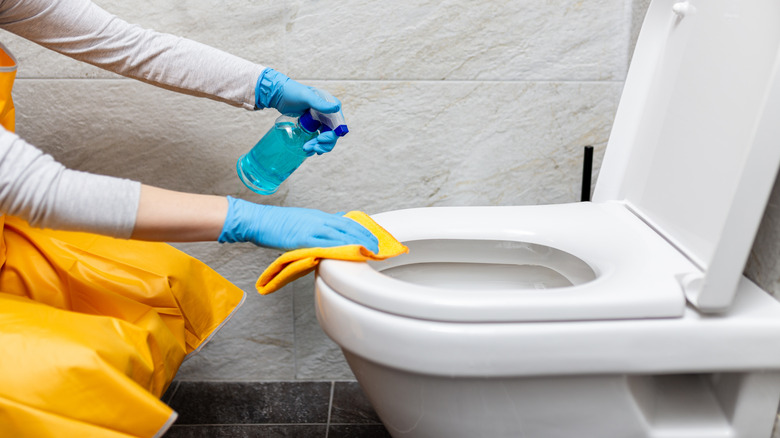
With that significant note in mind, cleaning your toilet with Windex starts exactly the same way you'd clean your windows: Spray all the surfaces, leaving nothing untouched, and make sure they're all good and wet. Next, allow the Windex to sit on the porcelain surface for a while. Letting the Windex settle in allows the ammonia in the solution to break down particles before you remove them with the friction of scrubbing. Once that's done, start scrubbing with a soft cloth on the exterior surfaces of the toilet: Windex itself recommends using its products with a lint-free towel to avoid leaving the little fabric crumbs that many types of rag might speckle onto your presumably clean surface. However, once you start getting into the germier inside of the toilet, switch to a proper toilet brush — places like under the rim of the toilet are full of biofilm, and using a porous surface like a cloth here presents more of a contamination risk compared to the stiffer bristles of a brush.
The results will be a clean, white, shiny toilet. Voila. And you didn't even need to pick up any specialized product to accomplish it. Spray, let it sit, and scrub it away: Simple as that.