

This Winter Essential Can Permanently Kill Weeds In Gravel (But There's A Catch)
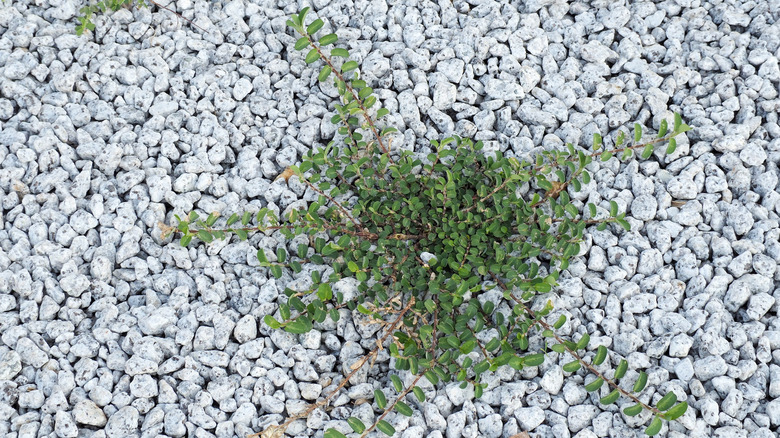
A well-installed gravel driveway or walkway is typically not overly susceptible to rampant weed growth, but over time, dirt and dust can build up in your gravel, and weeds can get a foothold. That's where rock salt comes to the rescue. Rock salt is a product you can use to treat your gravel driveway or gravel patio to permanently kill weeds. Yep, it's the same thing that helps folks avoid slipping and sliding on ice during the winter. It's powerful, easy to use, and persistent. But as with most apparent panaceas, there is a caveat.
Rock salt, sodium chloride, kills weeds and other green plants by impairing their ability to process the water they need to live. It's a desiccant, meaning it breaks down plant walls on a cellular level, permanently killing the plant. Which plant? Any plant it comes into significant contact with. As such, rock salt is considered a non-selective herbicide — that's the major catch here. With that being said, this is not a significant problem when using it to keep gravel clear of weeds, as most folks typically don't want anything growing in their gravel. Still, plants in the drainage area of your gravel installation will be at risk, so it's key to eliminate any risk of runoff.
How to use rock salt to keep your gravel weed free
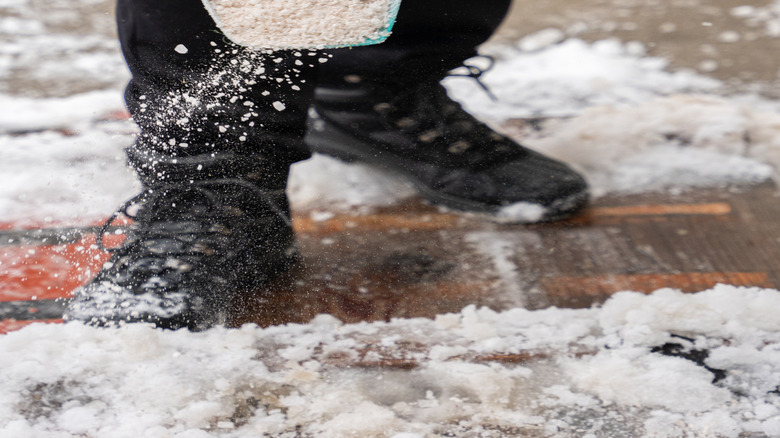
While it may seem odd, before you spread rock salt on your gravel, the first thing to do is clean it. With a hose or a pressure washer (on a low setting), get rid of dirt, seeds, and other detritus that have built up in your gravel. This step will help the rock salt be more effective. As a general rule, you'll need about 2 pounds of salt per 100 square feet of gravel surface if you are spreading rock salt in its rock form.
Another way to use salt as an herbicide on your gravel is to dissolve about 1 cup of salt into 1 gallon of water. Put that solution in a garden sprayer and apply it evenly to the gravel. Applying the rock salt before the growing season, perhaps even in early winter, will mean that as spring rolls around, the existing plants and seeds will be in contact with the salt or salt solution before they get well established. If you start the process later, especially with the spraying technique, it may take more than one application.
To prevent the salt from spreading to your desired plants, you can create shallow ditches along the edge of the gravel driveway or patio to direct runoff to an area where no harm will occur. Edging like pavers, bricks, or plastic garden edging is effective as well. While the history of the Romans seeding Carthage's fields with salt may be more myth than fact, it's a potent reminder for you to take precautions to keep rock salt, and any diluted runoff from the salt, from spreading into plants you do not wish to kill.