

This Gorgeous Houseplant Flourishes Even In Spots Where Sunlight Rarely Reaches
We may receive a commission on purchases made from links.
Whether you're seeking plants that will work in a basement or greenery for a windowless home office, it's smart to familiarize yourself with species that tolerate minimal sunlight. If you'd like to add a tropical touch of nature to a dark space, parlor palm (Chamaedorea elegans) could be just the ticket. Also known as neanthebella and good luck palm, this perennial shrub has a single, bamboo-like stem and slender green leaflets that look a bit like feathers.
Though its favorite spot is likely to be near a window that faces north or east, it can also perform well in areas with less sunlight. In fact, keeping it away from your windows may be wise if you live somewhere that experiences a lot of cold weather. That's because parlor palm is not fond of chilly drafts that often emanate from windows.
Parlor palm is a popular houseplant because its maintenance needs are so minimal. It can adapt to a range of indoor growing conditions and won't revolt if you forget to water it from time to time. Unlike some palms, parlor palm doesn't require an abundance of humidity. In fact, it's willing to grow in relatively dry air and soil. Its leaves stay a dark shade of green all year, even when it's grown in low light or under a fluorescent bulb. Plus, it doesn't contain spines or toxic compounds that could hurt children or pets. You can even use its container to influence its size. Keeping a parlor palm in a smaller pot encourages it to stay small, whereas moving it a larger vessel tells it to spread out its roots and grow bigger.
Caring for a parlor palm in a low-light environment
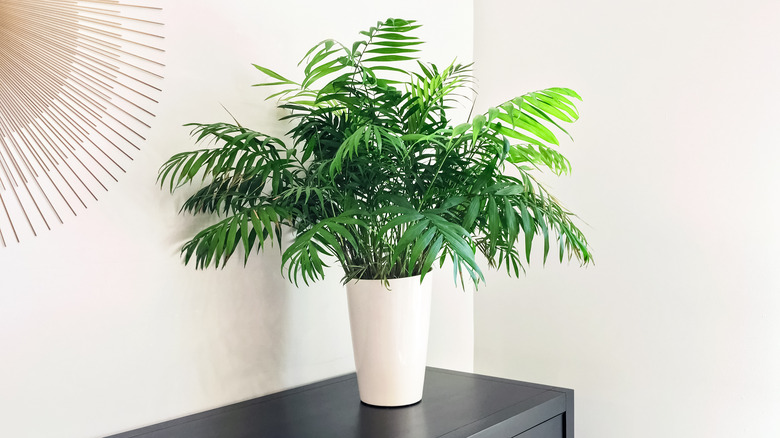
Though parlor palm can handle dark bedroom corners, window-free reading nooks, and other not-so-sunny spaces, it is still best to respect its hydration and nutrition preferences so it can flourish. First and foremost, avoid soggy soil, which sets the stage for root rot. Poor drainage is one of the main culprits, so to avoid this, plant your parlor palm in a high-quality growing medium such as Gardenera Palm Tree Potting Mix and make sure its container has drainage holes that let excess water escape. Avoid overwatering your parlor palm, too. Give it a drink when the top layer of its soil is visibly dry, and keep in mind that it may need fewer watering sessions in the winter.
Also monitor your parlor palm for signs of pest infestations, which can prevent it from living its best life. Though this houseplant isn't particularly prone to insect issues, mealybugs and spider mites may occasionally move in. Spritzing your parlor palm with water regularly can help prevent this. You can also watch for signs that these pests are present, which would include tiny white or yellow spots on the foliage for spider mites, or whitish wax in the case of mealybugs. If you see symptoms like these, treat your parlor palm with a product such as Natria Insecticidal Soap as soon as possible. Consider growing plants that repel spider mites and other pests near your parlor palm as well. In addition to serving as a bug-deterring companion for your parlor palm, cilantro is easy to grow indoors year-round.