

Why Your Houseplant Leaves Are Turning Yellow (And How To Fix It)
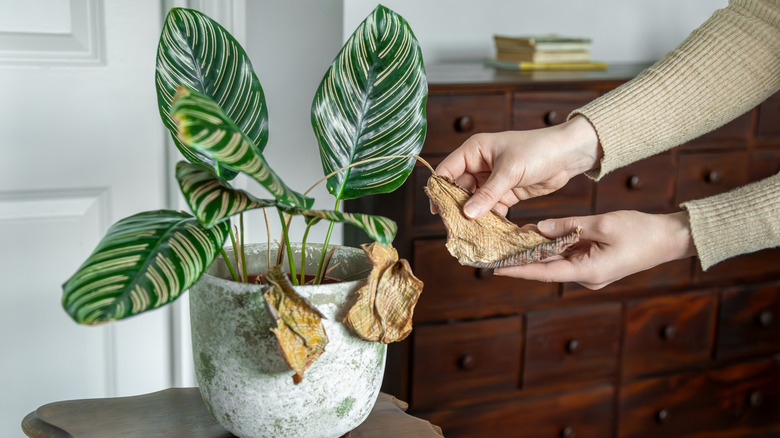
Adding houseplants to your decor will bring a tremendous splash of greenery to your household. However, even though most houseplants are relatively easy to care for, there are still some common issues that you can run into during their lifespan. One of the most prevalent is when their usually vibrant green leaves turn yellow. If you've ever wondered why this is happening, you're not alone.
The truth is that there is no single reason why your houseplant's leaves are turning yellow. It could be the result of too little or too much sunlight, too much watering, transplant shock, root damage, or weird temperatures. Your houseplant may also be infested with some common pests. The key to figuring out what is ailing your plant is to first understand what its survival requirements are and how where you've placed it in your home could be causing the leaves to turn. Then you can work toward fixing it.
What follows is a detailed list of common reasons most houseplants turn yellow. For each, we'll examine some specific houseplant varieties and explain how you can fix and reverse the yellowing of the leaves.
Overwatering or underwatering
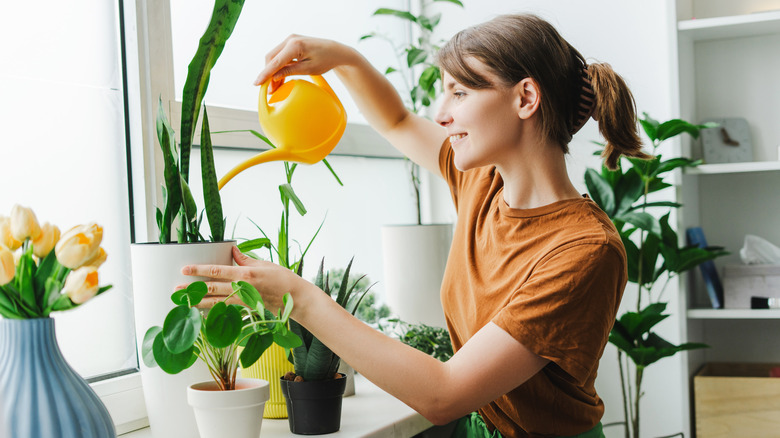
One of the keys to keeping your houseplants healthy long-term is to make sure you are watering them correctly. Different plants have different watering needs. Jade plants (Crassula ovata), for example, should be watered regularly. The trick is to let the soil dry completely before watering again. This prevents overwatering. Waterlogged roots don't get any oxygen and will be susceptible to various bacteria, which cause leaves to become squishy and yellow and eventually fall off.
Underwatering is a similar issue. The signs are especially noticeable on houseplants with large leaves, like the enormous monstera (Monstera deliciosa). If it does not get enough water, the leaves will turn yellow and brittle and begin to wilt. This is also because the roots aren't getting nutrients.
Thankfully, it is easy to determine whether you are overwatering or underwatering your plants. You need to frequently test the soil to see whether it is excessively dry or excessively wet. You can also pick up your potted plants to get a gauge. If the pot is lighter to pick up, it is likely dry and needs water. If it is heavy, there is likely too much water in the soil. But it is also important to understand your indoor plants' watering needs and act accordingly. That is the main way to avoid this problem.
Transplant shock
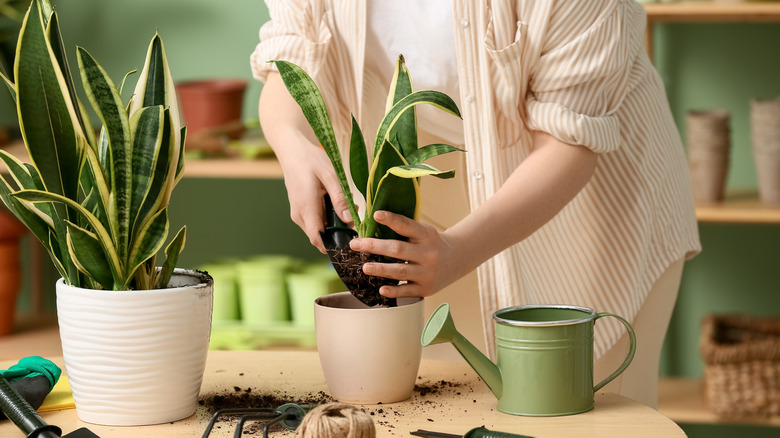
Do you remember the time when you asked your mother-in-law about the beautiful snake plant (Dracaena trifasciata) she had growing by the window in her living room? Do you remember that she split the plant apart and gave you some leaves to plant at your house? Did the leaves turn yellow a few weeks later? This was through no fault of your own; the plant was going through what's known as transplant shock.
Plants can get stressed just like people can. This is especially true when they are split apart at the roots. While most plants will survive a transplant and go on to thrive, others may take a little longer to adapt. See, when you place a plant in new soil, it is going to put a lot of its energy into forming new roots. As such, there may not be enough nutrients getting to your leaves, and some of the weaker ones will begin to wither. Yellowing during transplanting could also be caused by the roots not getting enough water, or because the pH of the new soil isn't the right balance for the plant just yet.
Either way, this is easily remedied through soil amendments and attentive care. Even if you lose a few leaves to yellowing, your plant will very likely bounce back once its roots are established in its new home. You can also give the plant some additional shade, or pep it up with rooting hormones.
Temperature
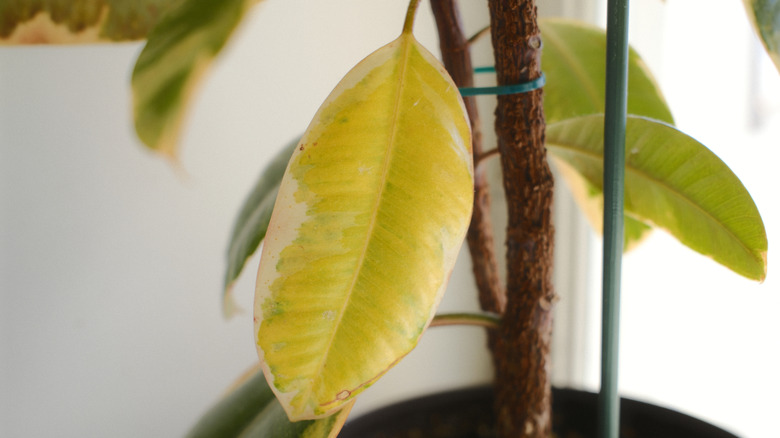
The average comfortable room temperature of a house hovers between 68 and 76 degrees Fahrenheit. This range is perfect for the vast majority of houseplants, which tend to thrive in higher temperatures. A perfect example of this is a ficus tree (Ficus benjamina), also known as a weeping fig tree. The temperature range these plants thrive at is between 65 and 85 degrees Fahrenheit. However, this also means that you need to be aware of temperature fluctuations when growing houseplants like ficus.
We'll continue to use the ficus as an example. While any of the aforementioned reasons for yellow leaves can happen to a ficus, the yellowing could also be the result of temperature issues. If you have your plant in an area that is too cold, say near a drafty window or air conditioning unit, or too hot, like beside a radiator or heating vent, the temperature fluctuations could be too intense. This can contribute to additional stress, which will cause your plant to yellow.
The simple solution is to move your ficus to an area where the ambient room temperature stays relatively stable during the day and night. Keeping your plant within its natural temperature parameters is necessary to avoid yellowing leaves and other potential damage.
Erratic sunlight
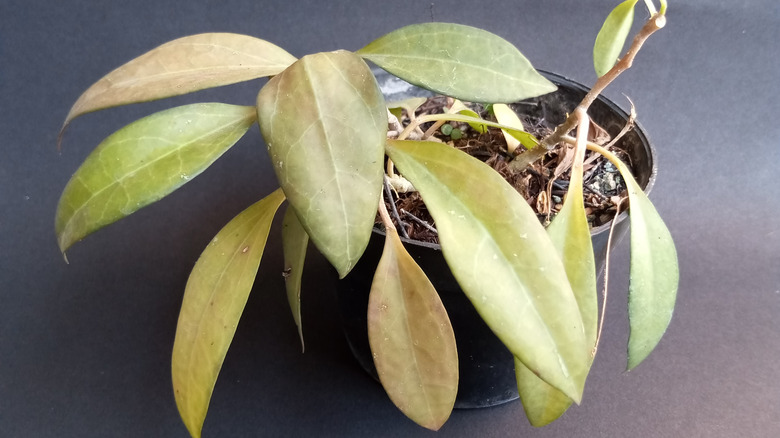
Unlike the herbs or other vegetables you've brought into the house to survive the winter, not all traditional houseplants need a large amount of sunlight to survive. In fact, a great variety of houseplants, such as the cast iron plant (Aspidistra elatior), can easily thrive in the shadiest areas of your house. Still, depending on the types of plants you have, too much or too little sunlight can have a damaging effect that causes the leaves to turn yellow.
Intense direct sunlight can scorch the leaves of some houseplants, giving them a pale yellowish appearance. In this case, move the plant out of this area and into one that gets indirect sunlight. You could also train your plant to become more sun-tolerant by spending a few weeks moving it closer to the direct sunlight area you want it to be. After a while, it will be strong enough to take it.
Plants can also yellow if they are not receiving enough sunlight. This tends to happen on the bottom leaves and those that get less light than the rest of the plant, making this issue easy to diagnose. You can fix this not only through pruning, but also by providing the plant with extra illumination in the form of LED or other types of growth lights.
Fungal/bacterial infection

The yellowing cause that's of the biggest concern is a bacterial or fungal infection. These commonly occur in plants that have had overwatering issues or if there is poor air circulation in the roots or between the branches. This can easily cause pathogens and fungi to build and spread, which in turn can cause the leaves on your plant to begin yellowing.
Most of these fungi and bacteria will present themselves in the form of the leaves developing irregular yellow spots and/or patches of darker discoloration, but the entire leaf can also turn yellow. These include bacteria and fungi that attack the roots, such as honey fungus and root rot caused by overwatering. Rusts and downy mildew can also lead to a yellowing of the leaves. Unfortunately, if the disease is prevalent enough, it can kill your plants.
However, if you catch it early enough, there are things you can do to fix the problem. Pruning away the infected leaves is necessary, and you will also need to apply a fungicide to prevent the disease from spreading. You can also move the plant into a less humid or moist space, and make sure the roots are well aerated by poking holes in the soil with a chopstick or something similar.
Pests
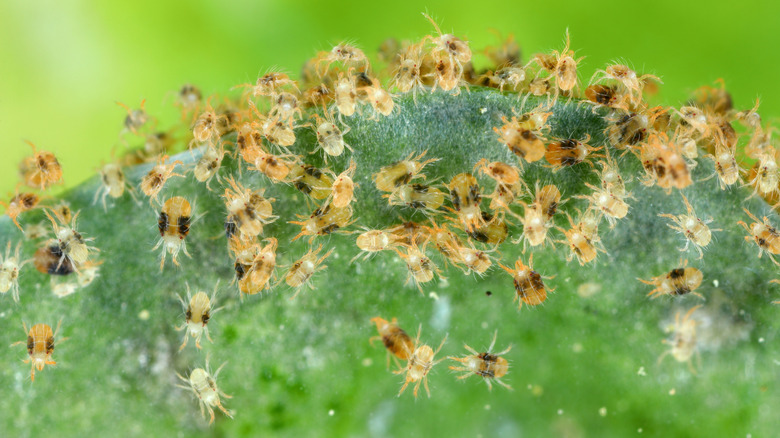
Just because your houseplants are inside does not mean that they are not susceptible to pests. Indeed, there are several different types of indoor pests that could lead to yellowing leaves. These pests attack foliage and cause yellowing by sucking away the sap found inside of the leaves. They include the likes of aphids, red spider mites, and whiteflies.
While pests are certainly a big issue, they are not so big that their presence cannot be dealt with in an effective manner. Using certain insecticidal soaps can help keep them off the leaves. Better yet, there are several natural pest control remedies that will keep the bugs at bay. You should also regularly check your plants' leaves for webbing, bite marks, yellow spots, and other indicators that pests have visited them.
So, just because your plants are yellowing, it does not mean that they are going to die. Indeed, if you keep a close eye on your plants and make sure you are engaged in practices that help keep them healthy, then your chances of seeing yellow leaves are minimal. However, if you ever do notice any yellowing, you're now armed with the knowledge and tools for how to fix the problem.