

15 Vintage Kitchen Items We Hardly See Anyone Using Today
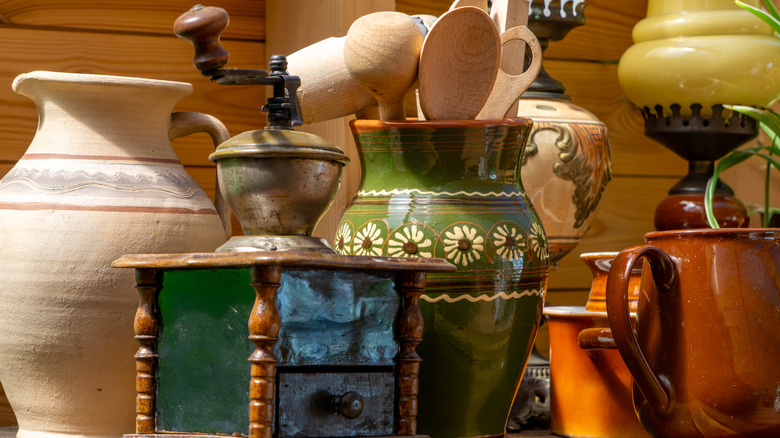
Throughout the history of cooking, humanity has had the amazing ability to create a huge amount of chic kitchen gadgets that have helped cooks put food on the table. From the medieval rotisserie to the latest in cold brew coffee technology, having a kitchen that is well stocked with the right tools is going to make mealtime all the easier. And yet, as is so often true in other areas, there are many vintage kitchen items that were at one time popular but that we barely see anymore.
Before we get deep into our list, we need to make a distinction. There has, in recent years, been a renewed interest in some vintage kitchen items. The rise of off-grid living and homesteading has been a major contributor to this, as a lot of these items do not require electricity. While many of the items on this list serve a legitimate purpose, therefore making them prime candidates to make a comeback someday, others are purely products of their time that might serve as more of an aesthetic choice as opposed to actual kitchen practicality.
That said, our list ranges the spectrum of vintage items that will help prepare a meal, organize even the smallest of kitchens, and are just fun to have. So, without further ado, here are 15 vintage kitchen items that we hardly see anyone using anymore.
Apple peeler and corer
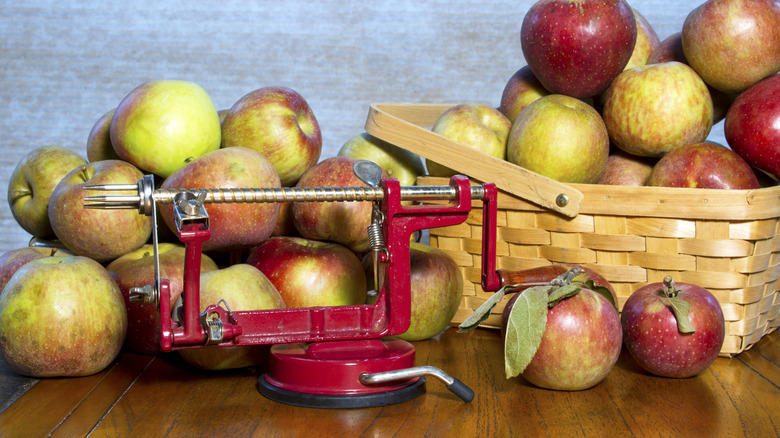
Invented in 1864, the "apple parer," as it was then known, works by attaching an apple to pins on the end of a long screw. As you turn the handle, the apple is pushed along a track that peels the skin off, slices the apple, and removes the core in mere seconds. This was, and remains, an excellent tool for anyone who wants to make their own canned apple products, like apple sauce or apple butter, even if we don't see it as much as we used to.
Mechanical whisk
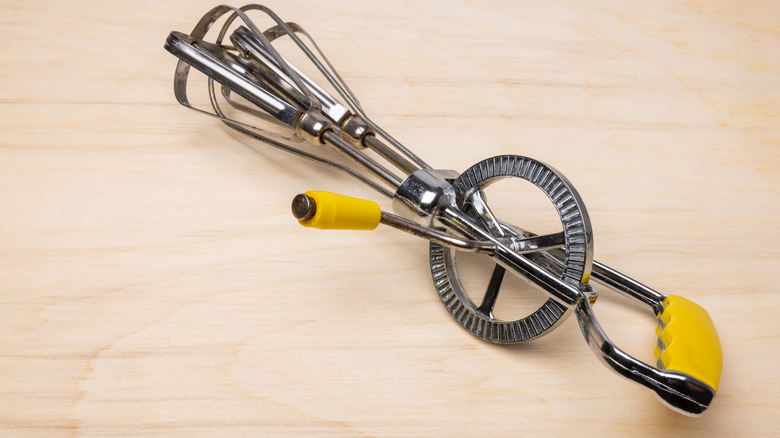
While there are several modern iterations of this century-old invention, which is often called a rotary beater, the traditional remains something of a vintage classic. Unlike the electric, handheld offspring it spawned, the traditional rotary beater consists of two whisk heads attached to a hand-crank spinning rotary. The invention gives you all the benefits of a traditional whisk without all the manual exertion required to use one. As a personal note, my wife inherited one from her grandmother and regularly uses it to make everything from scrambled eggs to cake batter. It's awesome.
Butter mold
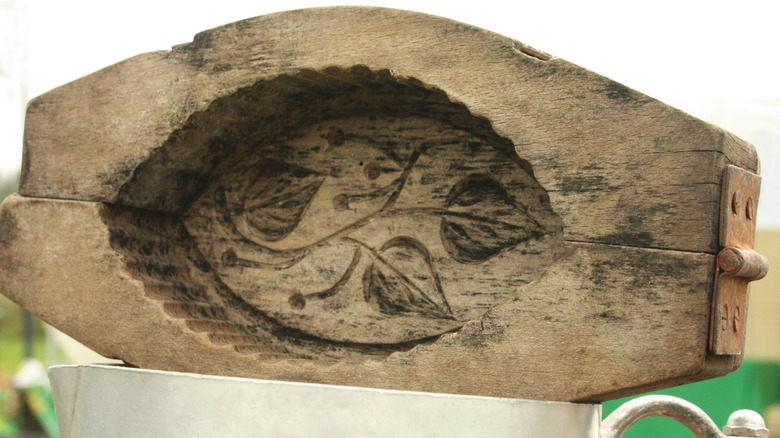
Butter molds were once a staple of dairy farms, and some featured smaller versions of the star symbols that adorn barns (which actually have a deeper meaning). Since we've outsourced the majority of our butter making to industrial dairy, the wooden butter mold has practically disappeared from the kitchen. Coming in numerous different sizes, farmers would add soft butter to the patterned molds to create uniform shapes for sale and storage. If you make your own butter, or just want to add some flair to your butter tray, you can find these at vintage markets or specialty stores.
Soda siphon seltzer bottle

Long before soda streams graced our countertops or we could buy cases of bottled seltzer to pep up with our favorite hacks, the best way to get yourself a fizzy drink was to have a soda siphon seltzer bottle. These bottles utilize small carbon dioxide cartridges to carbonate the water inside the bottles. Though really only prevalent in bars these days, soda siphons were must-haves for the homebody who loved a scotch and soda. Though vintage ones are likely more of a style statement, they can still be used to make bubbly beverages if the need arises.
Hand-crank ice cream machine
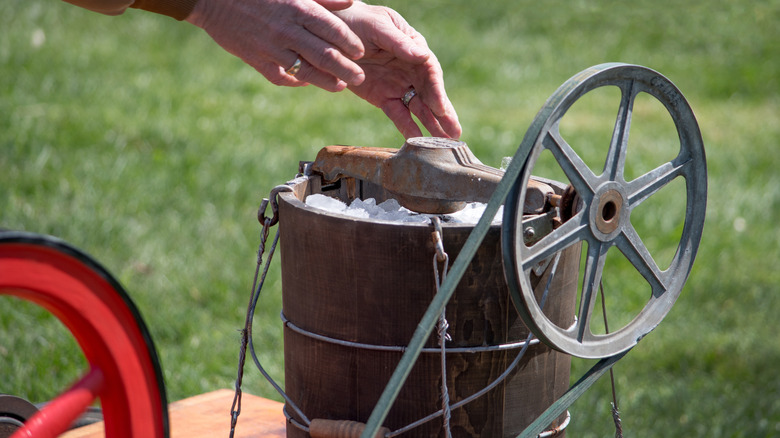
Hand-cranked ice cream machines were a 19th-century invention that brought this sweet treat out of wealthy homes and to the masses. These machines consist of two buckets placed within one another. The outer bucket holds the ice and salt, while the inner bucket holds the cream mixture that gets churned via hand crank into ice cream. Though still manufactured today, with motorized ice cream makers so affordable and prevalent, there is really no need to have one of these unless you're old-fashioned at heart or live off-grid and really love ice cream.
Vacuum coffee maker
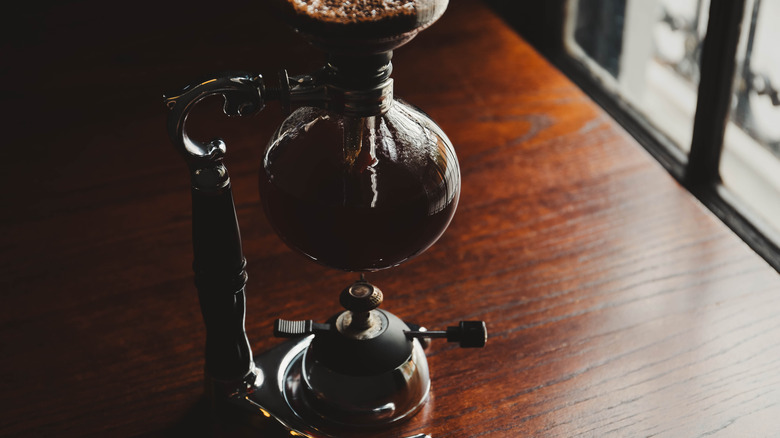
Also known as the siphon (syphon?) coffee pot, you're really only going to find one of these in two places: upscale coffee bars and the kitchen counter of a coffee obsessive. Though they've been around since the 1840s and were one of the earliest examples of a coffee machine, the fact that there are so many other options available makes the vacuum pot outdated and overly complicated for everyday use. Still, if you really want to add that vintage flair to your kitchen, you could do worse than scouting out one of these.
Percolator
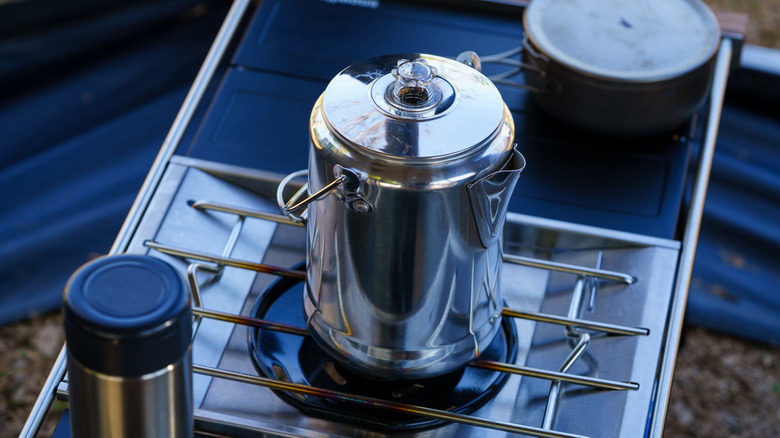
While they still remain popular for outdoors and camping uses, the fact of the matter is that no one in your family after your grandmother bought or used a stovetop or plug-in coffee percolator. These work by boiling water up through a coffee filter that cycles through the pot until brewed to your preferred strength. Though often thought of as a less elegant way to make coffee, there is a lot to be said for the simplicity of them, and I think they are well overdue for a serious kitchen comeback.
Food mill
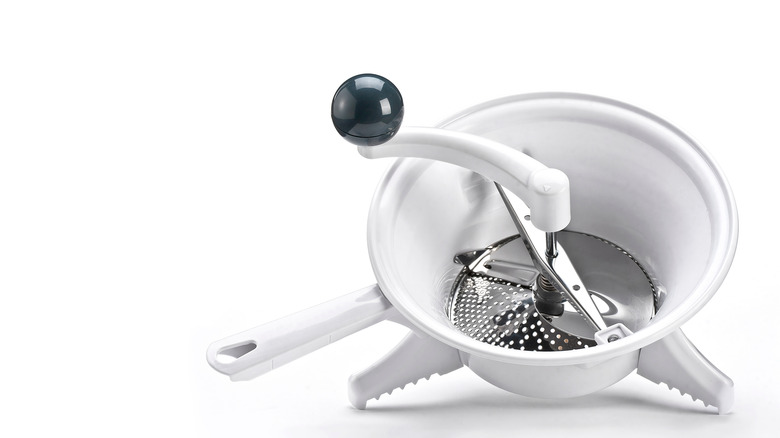
Though they can separate seeds and skins more effectively than a blender, allowing you to have a really smooth velvet tomato sauce, food mills are rather cumbersome and outdated when it comes to kitchen appliances. While this may have been a key tool in grandma's kitchen for making sauce or mashed vegetables, and can certainly be found in more than enough older cookbooks, the fact is that blenders and food processors made the food mill obsolete for all but the most specific jobs.
Bread box
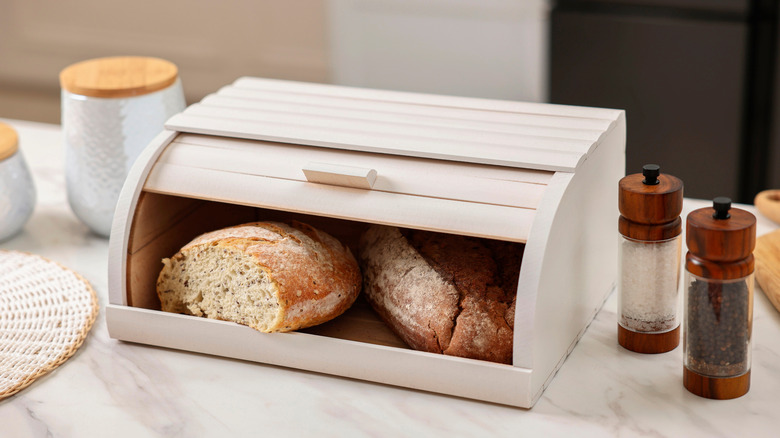
The reason we don't see bread boxes in the kitchen as often as we used to is actually rather sad. When fresh bread was made regularly, the bread box served a purpose: It provided a place that would help keep your bread fresher for longer. Today, with all of the preservatives found in mass-produced bread, there is no need for us to use bread boxes for preservation purposes. However, if you make your own bread or purchase artisan loaves, track down a bread box to add a useful vintage element to your kitchen.
Cookie gun
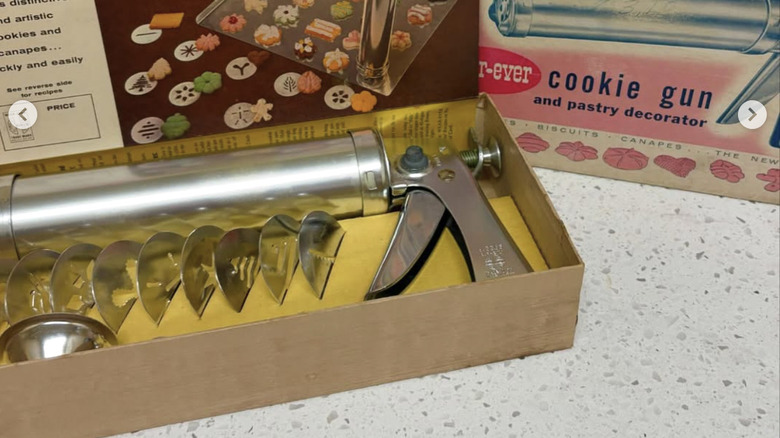
Making cookies is a wonderful tradition for many families to partake in around the holidays. Everyone has their own memories, some of which revolve around the cookie gun used by grandma to make intricately shaped cookies. Basically a caulking gun that shoots cookie dough, the cookie gun, also known as the cookie press, plopped out uniformly shaped and sized cookies without the need for endless amounts of cookie cutters. After being wildly popular in the 1930s through '50s, the cookie gun is making a comeback with some modern bakers.
Jell-O mold
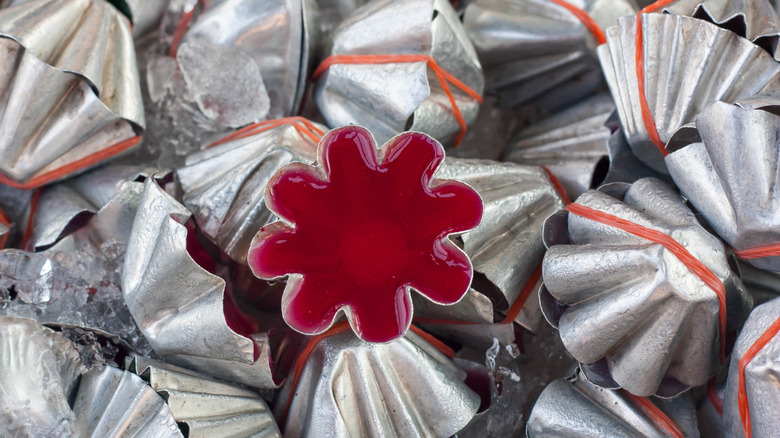
Chances are someone in your family once made aspic, a savory gelatin dish that was highly trendy in the 1950s, or an equally legendary Jell-O salad. Either way, they would have needed shaped Jell-O molds to create the intricate structures that dominated American food for the better part of 20 years. While some may still use the molds for sweet party pieces, there are very few kitchens left that actually stock and use these molds on a regular basis.
Cherry pitter
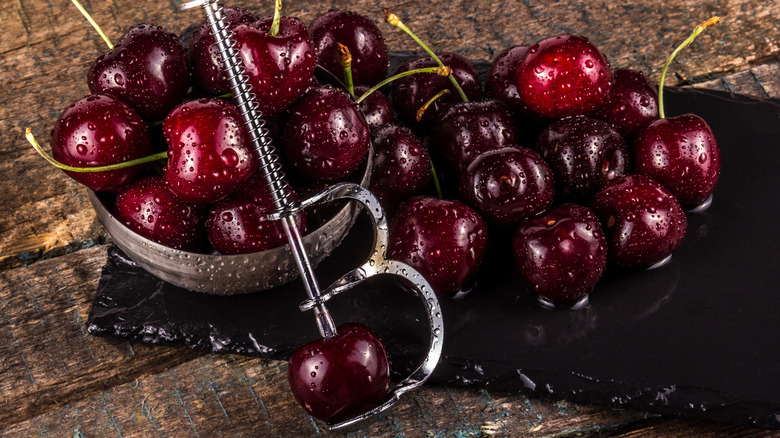
A cherry pitter is a specialized tool that really comes in handy if you either grow cherries or purchase a lot of them for use in baking or preserving. While you could just use a knife, a cherry pitter helps keep the cherry intact while removing the pit on the inside without a huge mess. There are numerous different types of cherry pitting tools, from vintage ones that attach to your jar lids to newer pitters with a splatter guard. But again, you don't really need one unless you're working with cherries a lot.
Ice crusher
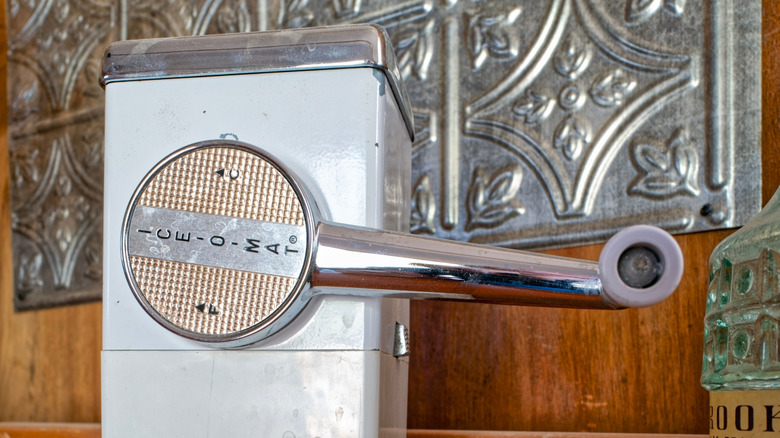
The countertop ice crusher is almost extinct from modern American homes for one reason: We now have refrigerators that can crush ice for us. Originally developed in the late 1800s, tabletop ice crushers came into more prominent use later in the 20th century. People would use the hand-cranked machines to break up large ice cubes into smaller pieces to keep food on ice or to make colder drinks, including cocktails like mint juleps. Electric blenders also played a role in their obsolescence.
Manual sausage stuffer
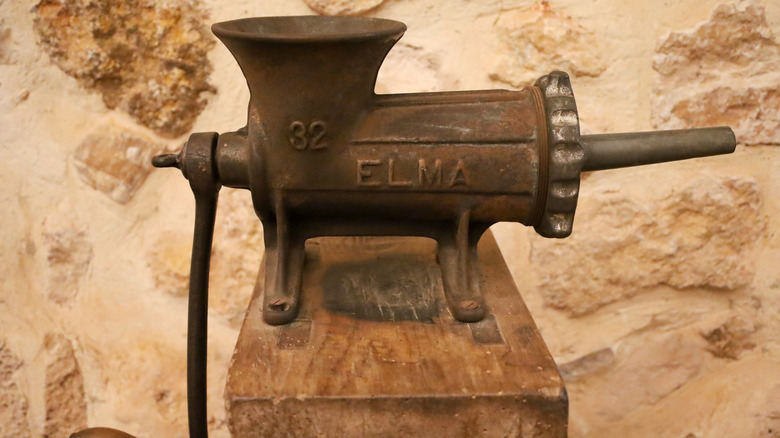
Like my wife inherited her rotary whisk from her grandmother, I inherited a massive, metal sausage stuffer from my great-grandmother. It's a hand-crank behemoth that she used in the 1920s to make sausages for her family. Its practical use in my home is minimal, as I don't make sausages from scratch (though I'd like to). As it is, unless you're a hobbyist butcher or raise animals for your own meat supply, there is next to no reason an old-school sausage machine should be in your kitchen.
Egg scale
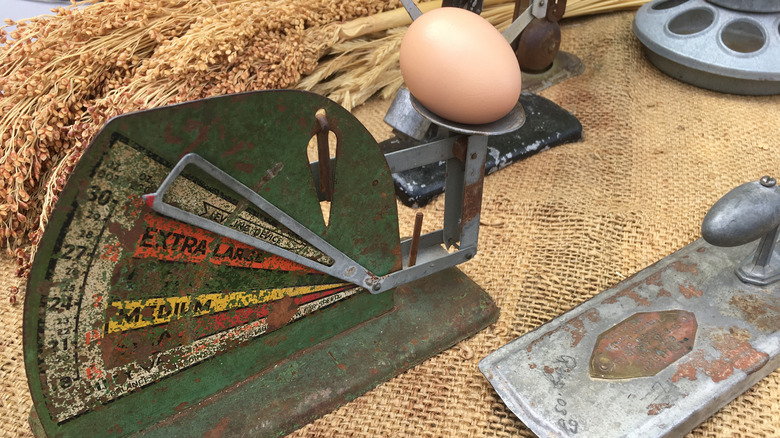
Egg scales were primarily manufactured between the 1920s and '40s. Their purpose was to provide a weight and classification for the egg so that it could be graded and priced accordingly. Now, if you come from a family of farmers, this might have been a common sight on the kitchen counter if grandma sold or traded eggs. Today, these are more of an aesthetic item, as there are more advanced grading machines modern farmers use to scale their products.