

Removing A Tree Stump From Your Yard? Avoid These Common Mistakes At All Costs
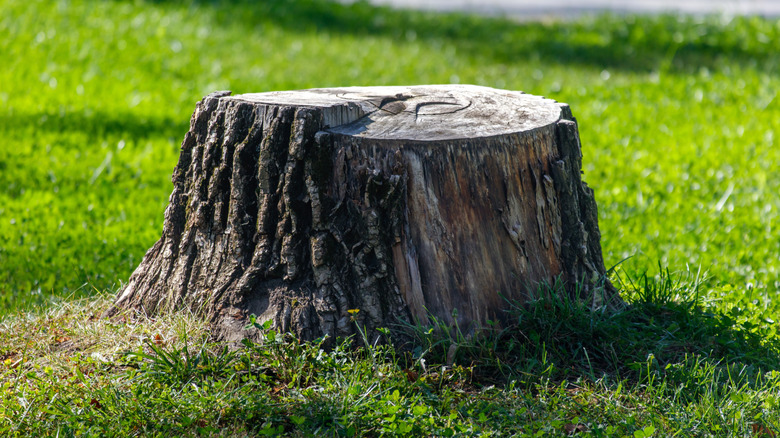
Sometimes, adult problems arise that are out of the ordinary, like getting rid of a stump. While uncommon, if stump removal becomes a task you need to address, like nearly any big job, there are some common mistakes it's best to avoid. One reason that mistakes happen is that all stumps are not alike, and those differences change how you need to approach the job. There is a big difference between removing the stump of a tree that is 5 inches (or less) in diameter as opposed to the stump of a tree that is 18 inches in diameter.
The effort required, and the difficulty encountered, in removing a stump increases exponentially with the increase in its diameter. Roots, tap roots or others, become larger, deeper, and more firmly entrenched. For example, the stump's diameter is an important factor for choosing stump grinding over types of removal. So, how do you remove a stump without making mistakes? Here is a list of just a few errors to avoid should you be faced with the challenge of getting rid of a stump.
Ignoring site safety
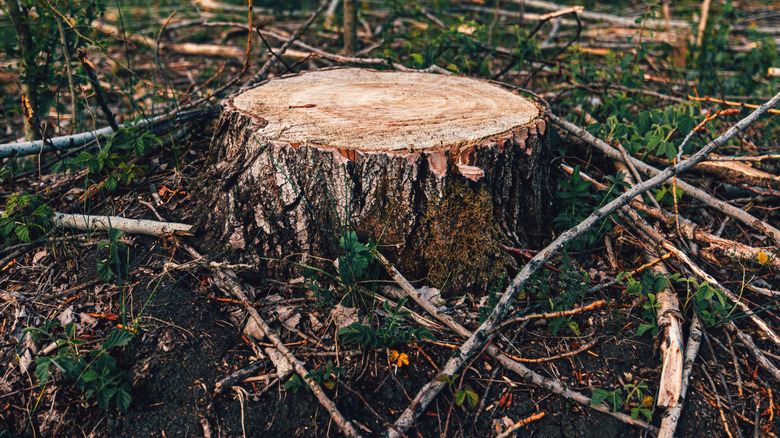
Tree stumps are a bit like icebergs, a good portion of them are out of sight. A primary safety step with any excavation project is to call your local utilities and have them identify where potential gas, electric, water, or sewer lines may intersect with where you are digging. Once you know that you are free of utilities, the next step is to survey around the stump.
A good rule to follow is to have at least 5 feet of clear ground around the stump before you begin work. Remove rocks, logs, or other potential trip hazards. Is the stump growing out of an incline or hill? How will you address that challenge?
Avoiding ground bees or biting ant colonies is also prudent when removing a stump. Check the area for hornet nests, venomous snakes, or other potentially problematic animal homes, or threats. These may sound unlikely, but better safe than sorry.
Failing to make a plan
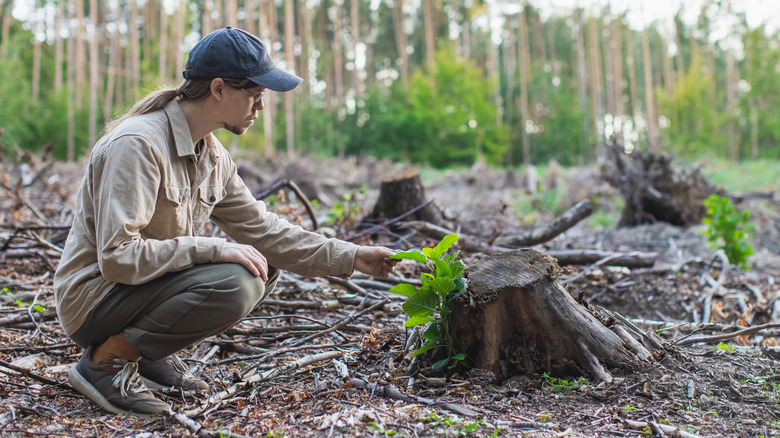
While ready, shoot, aim is a common DIY approach, the obvious problem with it is the lack of a logical plan. Planning your stump removal will help you be more effective and save time. You don't need to employ AI with diagrams, animations and high-tech wizardry in your plan. Simply access the situation and determine your best option for stump removal. Thinking through the site safety process above is the first step. Next, determine which method of removal is best in your situation. Is grinding the stump away best? If so, should you hire the task done or rent a stump grinder? Is digging out and pulling the stump a good idea? Do you have the physical strength and endurance for that challenging task? If the tree was small, maybe yes. If the tree was large, perhaps no.
Ignorance of local regulations can be another mistake. If you live in a true rural area, there are likely few or none to be aware of. If you live in a town or incorporated area, there's likely to be regulations to concern yourself with, such as limits on specific chemicals or burning constraints. It would be prudent to check with your local authorities and your county government as well. A quick web search before you start can save you from violating a regulation and potential expensive tickets or fines.
You may wish to consider; do you even need to get rid of the stump? It will rot away in time, up to 10 years. Or should you speed up that rotting process with chemicals or fertilizers? Take the time to do some research and make a plan.
Working alone or in a hurry
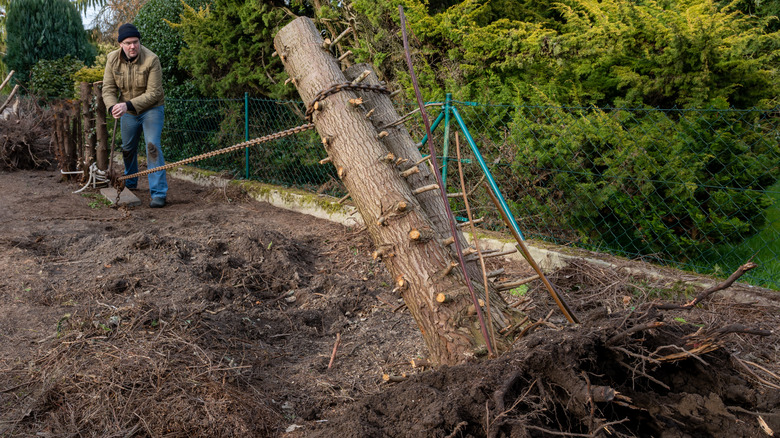
Putting on your work gear and jumping feet-first into a project is how a lot of people roll. But a common mistake for many home maintenance projects, not just stump removal, is working alone on a risky job. Removing a stump does not need to be a two-person task, but you should have someone nearby to check on you from time to time.
Awkward and dangerous situations can sneak up on you quickly. This is especially true when using power tools like a chain saw or a stump grinder. They are powerful pieces of equipment with the potential of causing harm.
Trying to do too much too quickly can also lead to otherwise avoidable problems. Cognitive mistakes can happen when you are tired, and physical accidents can happen if you are rushing. Digging out a stump might take a couple of days to complete, so pace yourself, stay hydrated and don't rush. You'll likely do a better job in the end.
Failing to use the right tools
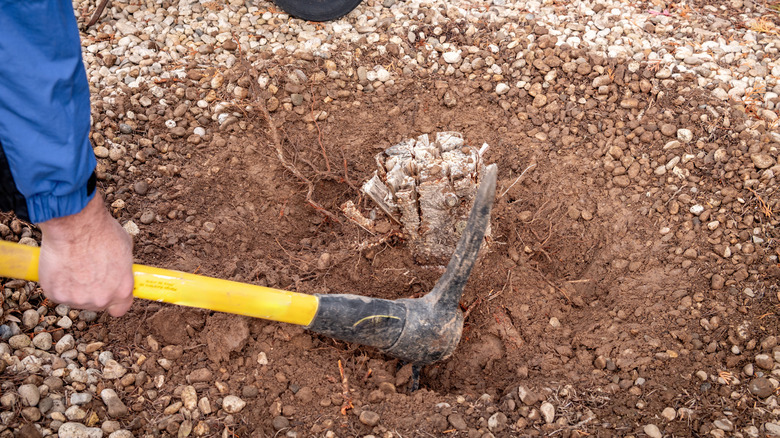
The axe and crowbar that your dad gave you when you bought your house are insufficient for removing a stump of any size at all. A bit like using a squirt gun to wash your car; they are just too small. Proper tools for digging out a stump would be a mattock (a pick like handled tool used for digging and chopping dirt and roots), a heavy-duty pry bar several feet long, and a long-handled spade. If you wish to use a chainsaw, it should have at minimum a 16-inch bar, and it needs to have sufficient power. As the chains will dull quickly as you are cutting roots in the dirt, additional chains are a great idea.
Along with failing to use proper tools, another common mistake is failure to use effective personal safety gear. Chainsaw chaps, eye and ear protection. Closed toed sensible shoes, and sturdy work gloves all have their roles in keeping you safe through the project. It's a good idea to roll up your sleeves when using power tools.
Misusing dangerous chemicals
As mentioned above, there are products to be found that will speed up the rotting process of a stump. Things like nitrogen-based fertilizer or strong acids. If they are being sold to the public, they are likely to be safe if used properly. But if used incorrectly, they may cause problems and harm.
Even products that are safe and effective in one use situation may not be so in another. A caustic chemical may be fine if left alone, but what if you have children or pets with access to the treated stump? As part of your planning, take the time to read about any products you are thinking about using and understand what potential risks, if any, they may hazard.
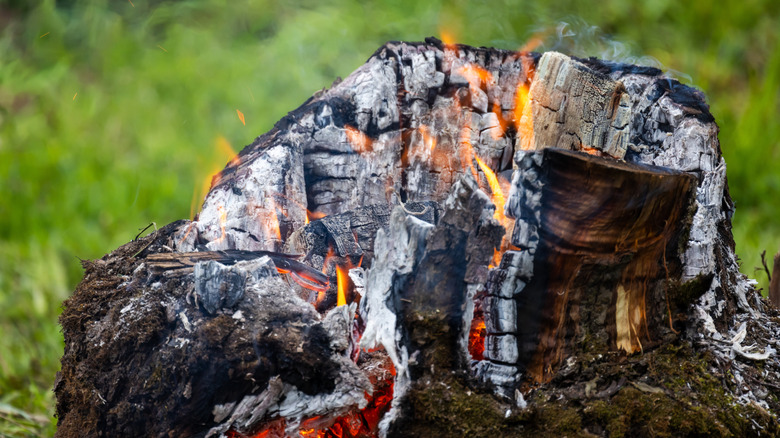
Not exactly a chemical or a product, but burning away a stump (where it's legal to do so), while a common removal method, must be approached with extreme caution. Drilling holes into a stump and using something like charcoal lighter fluid to start the stump burning is a time-tested way to get rid of it. The most dangerous aspect is that the fire can linger unseen in the stump even after you think it is put out. If it fires up again when it is unsupervised, the fire can spread with disastrous results. Care must be taken to prevent this potential problem.