

Got Fallen Acorns In Your Yard? Here Are 20 Genius Ways To Repurpose Them
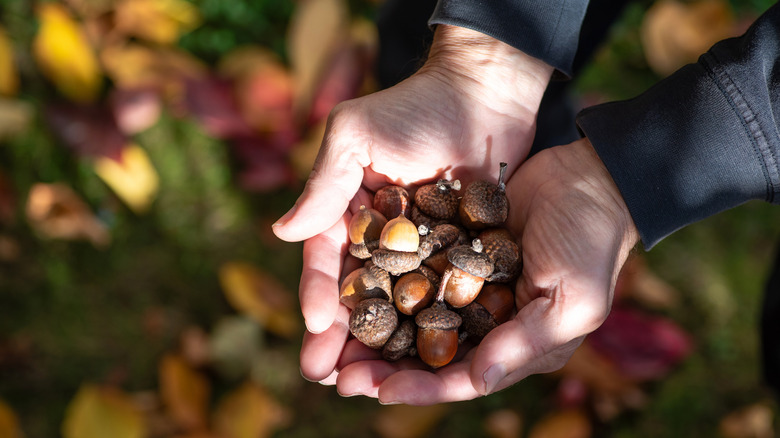
Dropping acorns is a natural part of the life cycle of oak trees. Though it's easy to become frustrated when an oak pelts you with nuts as you walk beneath it, a smattering of these squirrel snacks is unlikely to do much harm to your grass. In other words, embracing the acorns tends to be a better approach than trying to stop your oak tree from producing them. If you think about it, these are gifts from Mother Nature: Not only are they rich in nutrients that can enhance your garden's health, but they can also be used as free craft supplies
If you're going to use your acorns for crafting and decorating, give them a thorough cleaning and a gentle toasting to keep them from bringing dirt, mold, or insects into your home. Get rid of any specimens that have small holes in their shells, as acorn weevil larvae may be camping out inside. Then, wash the remaining acorns in soapy dishwater, give them a good rinse, and place them on a foil-lined baking sheet. Let them bask in your oven for three hours or so at a temperature of 200 degrees Fahrenheit to deal with any hidden bugs. Finally, preserve them for the long haul with a coat of transparent spray paint. If you want to use your acorns to enhance your garden's soil, consider chopping them into smaller pieces, which will help them decompose faster. When this prep work is done, the fun begins.
Put together a woodsy wreath
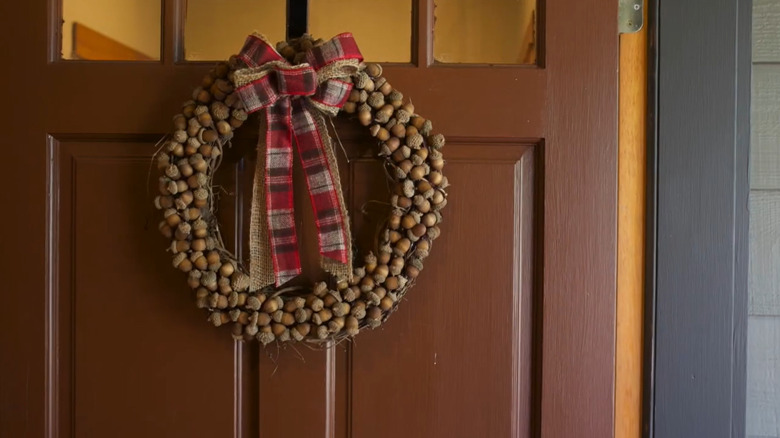
Make a wreath from whole acorns – or just the caps – to infuse your living space with forest vibes. This project is an ideal companion for decor made of other organic materials, as well as a way to bring natural warmth to a space that might feel a bit too clinical. Hot-glue your acorns to a basic twig wreath, or fashion a similar wreath base from dried honeysuckle vines. Blanket the vines in acorns, add a few acorns here and there, or pair acorns with pine cones and rustic burlap ribbon.
Make a candle ring for a centerpiece
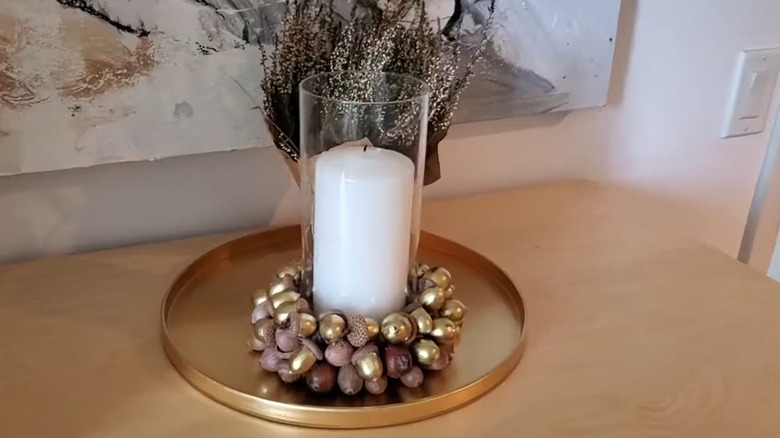
To create an instant seasonal centerpiece, place an acorn-studded ring around a pillar candle, then station both items on a beautiful tray. Fashion the ring much as you would when crafting an acorn wreath, making sure the hole in the middle fits the candle. Consider placing the candle in a clear glass vase as well. In addition to catching wax drips when the candle is lit, this container adds another material to the mix, increasing your centerpiece's visual interest. Customize your creation by painting some of the acorns so that they complement your table setting.
Assemble charming napkin rings
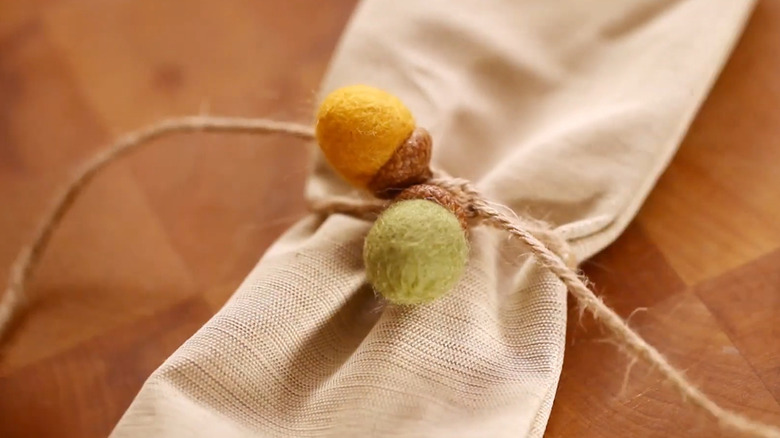
Dreaming of an autumnal place setting for the festive season? Craft napkin rings that put acorns front and center. One simple — and adorable — approach involves making decorative acorns from real acorn caps and colorful wool roving, which is rolled into balls after soaking it in hot, soapy water. After the balls have dried, hot-glue a cap to each one. Then, make pairs of acorns and fix the tops of their caps to each other. Finally, wrap a piece of twine around each of your napkins and tie on a dainty pair of acorns.
DIY some darling garlands
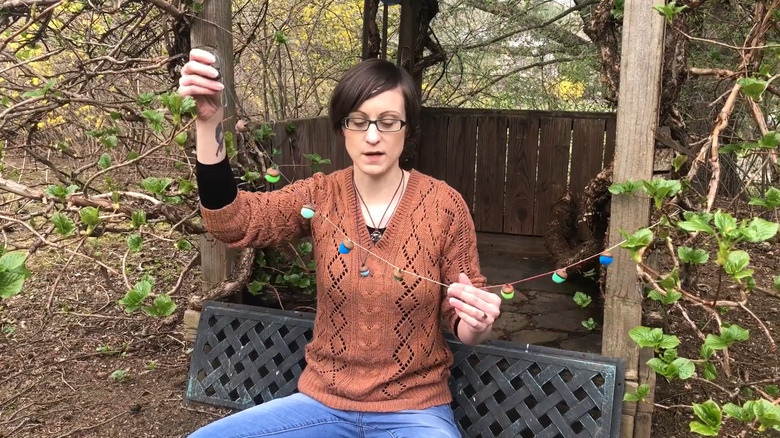
Add pops of color to nature-themed garlands by attaching real acorn caps to vibrant pompons. Unlike whole acorns from the great outdoors, which may require drilling for garland-making, these squishy acorn replicas are easy to string together using yarn, ribbon, twine, or even a spare clothesline. Stretch your string or ribbon into a line and set the caps where you'd like them to go. Next, place a dot of hot glue in the interior of each cap, lay a section of string on top, then use a pompon to safely push the string into the glue.
Create a squirrel-shaped wall hanging
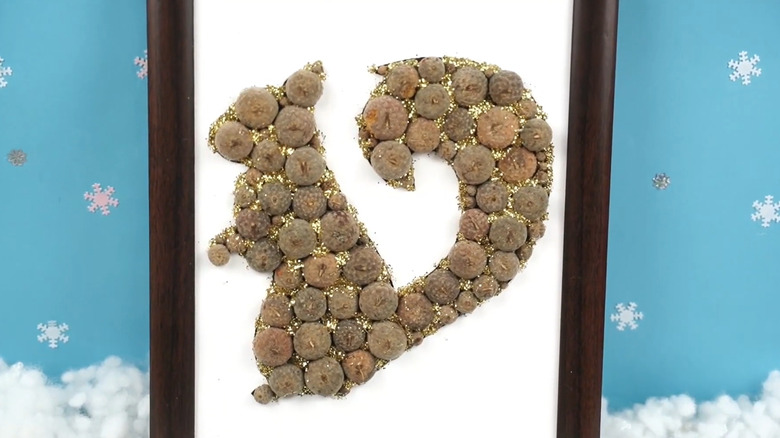
If you're smitten with squirrels and their nutty antics, why not celebrate them with a wall hanging made of acorns? Thrift a picture frame that catches your eye, trace or print out the shape of a squirrel's profile, then glue acorn caps inside the shape. Want your artwork to look more glam than rustic? Paint the caps with a glossy enamel and add a bit of shimmer to the frame. You could also experiment with bold background colors or fill the gaps between the caps with grains of sand or other small, textural objects.
Give a picture frame a cottagecore upgrade
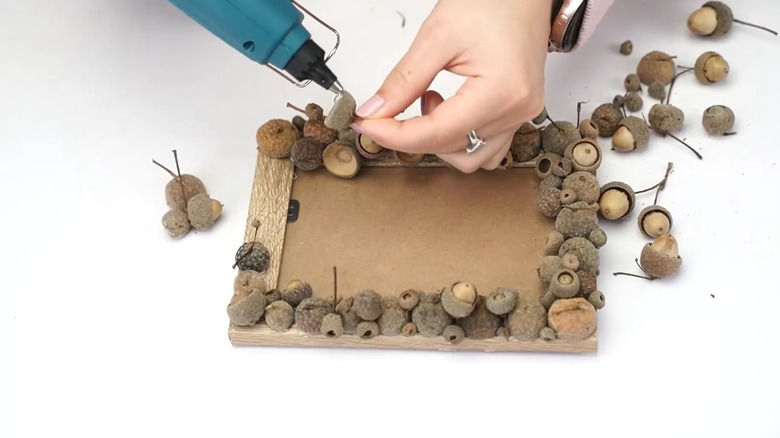
Acorns also make nice embellishments for picture frames themselves, especially if you're designing an autumnal cottagecore space. Find a spare frame with several flat surfaces, slather them in an adhesive, and push the acorns into place. You might also incorporate other natural materials such as tree bark, or wrap the acorn bottoms in vintage floral textiles. Though any type of image can be housed in your frame, consider displaying a painting of something that summons cottagecore's rustic-meets-romantic spirit — perhaps a rose garden in the English countryside.
Make mushrooms for a fairy garden
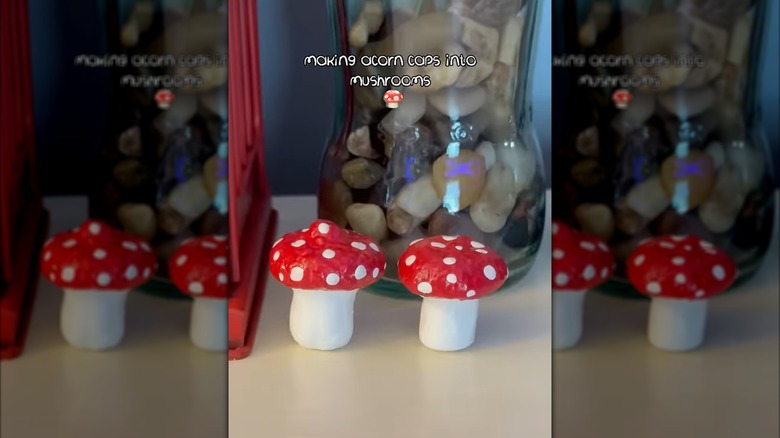
Speaking of enchanted places, acorns are perfect for crafting custom objects for fairy gardens. Many of these miniature scenes feel incomplete without a few mushrooms; if you find yourself yearning for more toadstools in your life, you can create a crop of faux fungi with acorn caps and wine corks. Attach the corks to the caps with a strong glue, then decorate the caps with a weather-resistant paint kit. Make sure to get one with a bright white paint, so you can paint some spots on your mushrooms' caps.
Build some miniature houses
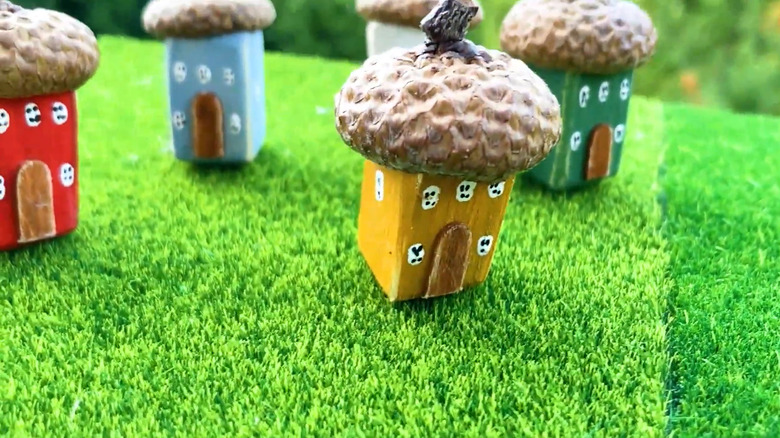
There are almost as many ways to reuse wine corks as there are to upcycle acorns. And you can repurpose both for another fairy-garden project – creating miniature houses. You can attach the corks and caps just like you did for the mushrooms we mentioned earlier, but you'll need to take a different tack with your paint, making each cork a vibrant color before adding some tiny windows and doors. Keep your homes' acorn-cap roofs looking like acorn caps to give your fairy garden an extra dash of whimsy. No corks on hand? No worries — simply swap in some tiny pieces of wood.
Fill your decorative jars, vases, and bowls
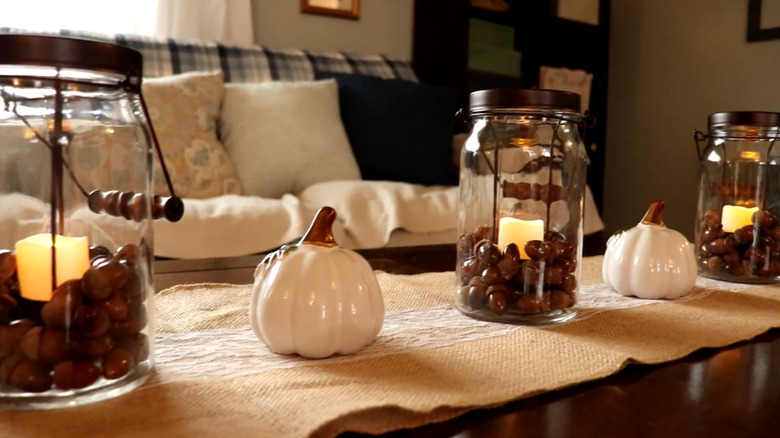
Acorns can add natural beauty to all kinds of display containers, from glass vases to decorative bowls. Looking for a way to add mood lighting to a living space or bedroom? Pour some acorns into a large mason jar and nestle a flame-free candle in the center of the pile. Or, treat your acorns more like easter eggs and utilize them as 3D painting canvases. Use a small paintbrush to embellish the acorns with stripes, flowers, or other graphic elements, then pile your creations in a pretty tabletop dish.
Turn the caps into floating candles

Acorn caps are terrific at holding dollops of wax and itty-bitty wicks. These candles will even float in a dish of water, creating a mesmerizing scene when lit. To make some, gather 40 acorn caps, some candle wicks snipped into ½-inch sections, and ½ cup of beeswax pellets or another product designed for candle-making. Melt the wax over a double boiler and place a little bit of it in each cap, taking care not to overfill. Then, insert wicks in the candles' centers before the wax hardens. Tweezers are helpful for this part of the process.
Craft some rustic trim for your holiday gifts

Make your friends and family wonder if clever woodland creatures wrapped their gifts by pairing acorns from your yard with other eco-friendly materials. Brown acorns are good companions for kraft paper, pine cones, and burlap bows. Glue them to wrapping paper and present tags, or drill holes in them and lace them onto rustic jute twine. Though casual contact with acorns doesn't usually harm people with tree nut allergies, it might be best to avoid using them on gifts for these folks.
Design some miniature acorn dolls
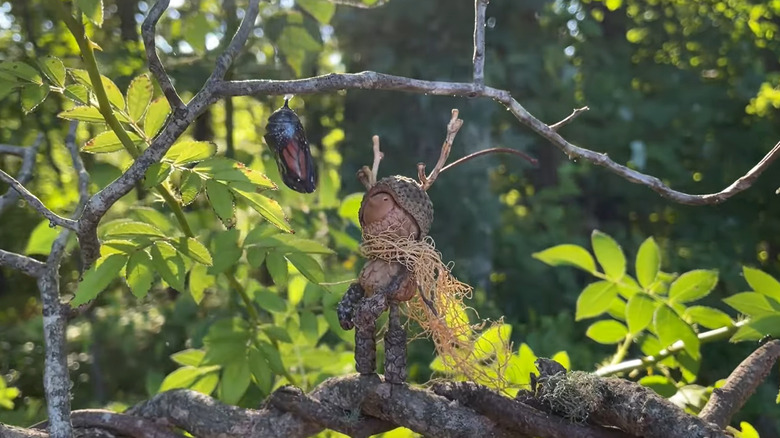
Whether you're seeking something to entertain a young houseguest or just need residents for a decorative dollhouse, acorns are ready to help. They're fantastic building blocks for all kinds of little characters, from snowmen to owls to elves. Hot-glue some acorns into stacks and other formations, incorporating other elements such as sticks and stones as needed. After the glue has set, decorate your characters. Making tiny people? Turn caps into hats, shields, and other accessories, while adding facial features using colored pencils, craft paints, or permanent markers. You can even make your characters into ornaments by attaching twine loops.
Build your own Christmas ornaments
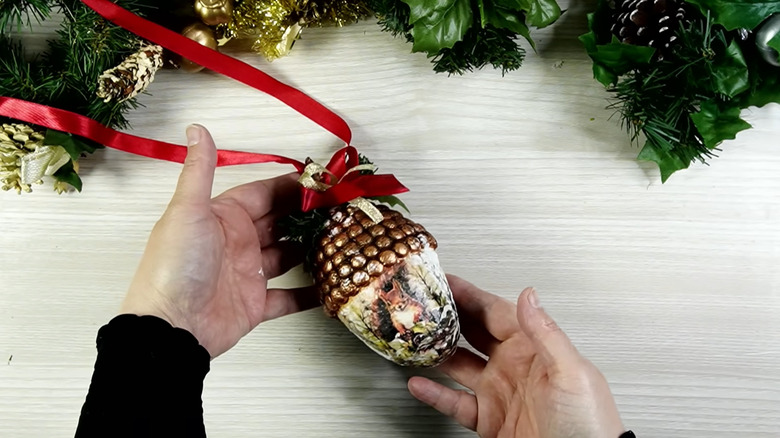
Acorns can be transformed into all kinds of festive-looking Christmas ornaments, from miniature reindeer to large, elegant orbs. Make a stunning spherical ornament by hot-gluing acorn caps to a foam craft ball. Then, spray-paint your creation gold or silver and roll it in glitter after coating it with school glue. Or, decorate each of the caps by hand. You could also make the caps' interiors face outward and paint a face, animal, or holiday symbol on each. For a different style of ornament, attach acorn caps to light-catching marbles, gorgeous pieces of sea glass, or shiny jingle bells.
Brew natural dye for home textiles
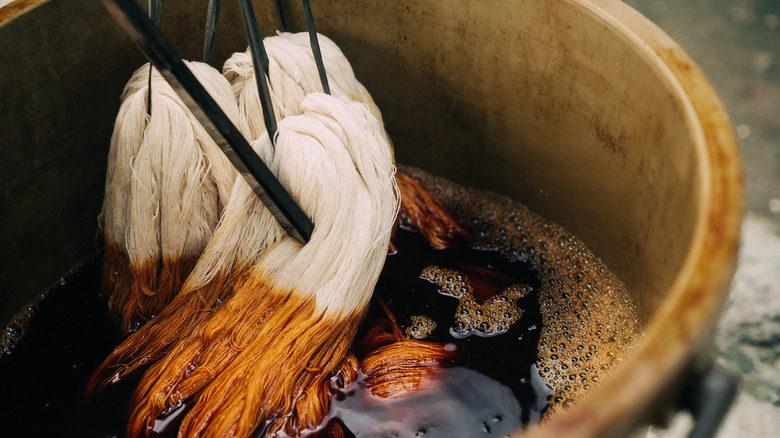
Whether you're a textile artist or simply a repurposing aficionado, you can use your acorns to naturally dye macrame wall hangings, throw pillow covers, and more. To make a rich brown dye, grab a large pot that you don't mind being stained as well as a container of brown acorns that's about the same size as the piece of fabric you'd like to color. Submerge the acorns in water, simmer them for 20 minutes, and let the mixture rest for 24 hours. Then, simmer for another 20 minutes and strain it through a reused bed sheet once cool.
Produce acorn ink for crafting and more
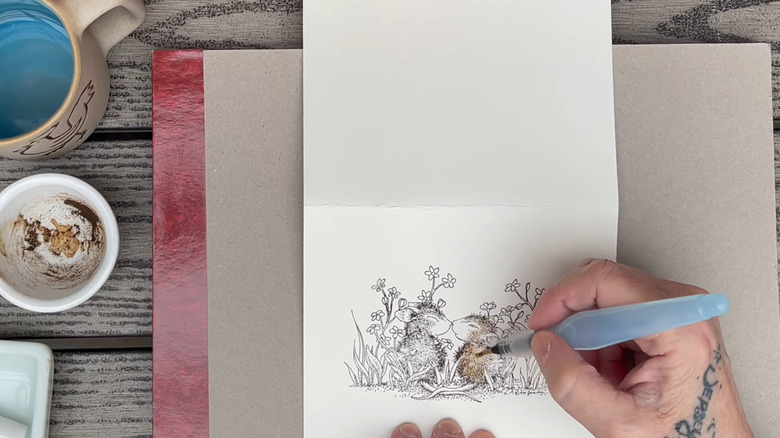
If you have leftover acorn dye, you can turn it into ink to use for a variety of DIY projects, including paintings and crafts involving printable letter stencils. Boil the dye for several hours so that it becomes more concentrated. You'll need about ½ cup of this liquid for the next step, which is pouring it onto a baking sheet lined with a silicone mat and letting it dry completely — it should become a powdery substance. Deposit this substance in a jar, then mix a pinch of it with a few drops of water to make ink whenever you need it.
Create a beautiful wind chime
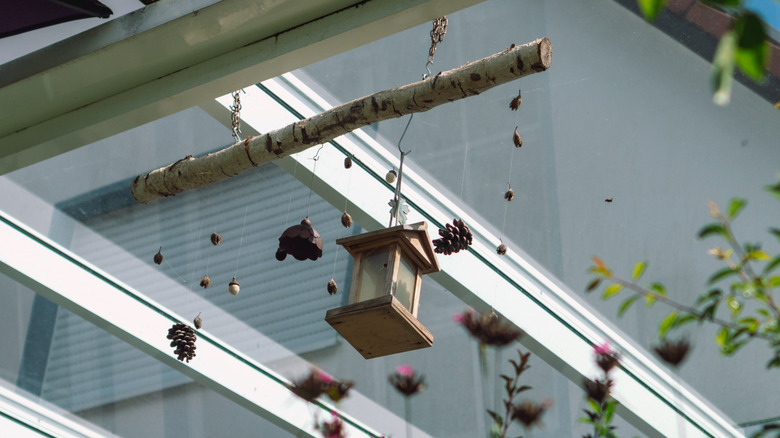
If you like organic looks and percussive sounds, put together a DIY wind chime made from fallen acorns. Find a small branch or wooden spoon to use as a hanging rod, as well as durable string such as jute twine or fishing line. Cut pieces of string that are different lengths and tie them to the stick so they dangle down when the rod is positioned horizontally. Then, secure acorns to the string with knots or glue. Position the acorns so they'll bump together when breezes pass through. You can add even more character by incorporating other objects found in nature.
Add something new to your bird feeder
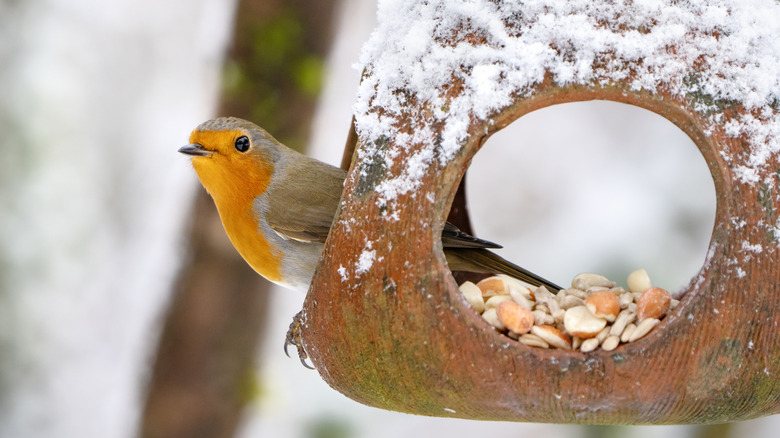
Squirrels love to snack on acorns, but they'll eat almost anything – so consider sharing some with the birds in your backyard. Though they're fussier eaters, many appreciate acorns just as much as squirrels do. Pop acorns into your feeder to attract chickadees, nuthatches, robins, and several other species. Since acorns provide lots of energy, they're an excellent addition to a winter bird buffet. You can serve acorns on their own or make a trail mix that also includes millet, raisins, or black oil sunflower seeds. Just make sure to chop up acorns and other nuts to minimize the risk of choking.
Mulch your garden beds
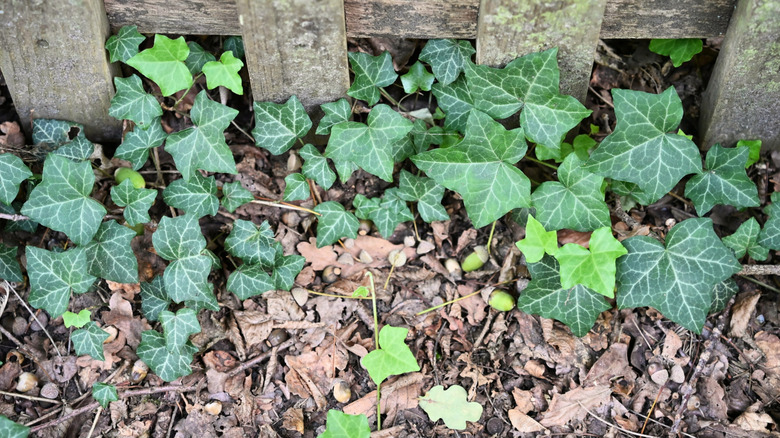
The acorns littering your lawn are useful for mulching your flower beds. This nut mulch may attract some hungry wildlife, but its moisture-retaining, weed-suppressing abilities are bound to benefit your plants. Oak acorns have high levels of tannins that can impede the growth of some other plant species, so consider mixing modest amounts of them into a large supply of another organic mulch. Also, crush them before dispersing them, as this will help them break down and fertilize the soil. Use a heavy-duty food processor to split open the shells and pulverize the kernels inside.
Enrich your compost pile
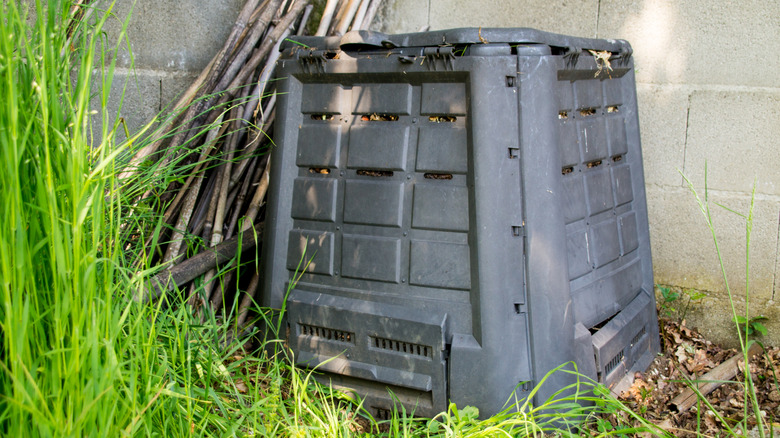
Acorns that have fallen from your oak trees can supply much-needed carbon to your compost pile, but you should spend a little time preparing them first. Their shells are thick and durable to protect the seeds inside, so they can be slow to degrade unless you crush them. Run them through a food processor or smash them with a hammer to accelerate the breakdown process. It's best to soak acorns in water for a few days before depositing them in your composter. This removes the tannins, which might compromise the health of some plants.
Fuel your fire pit

If you're low on wood for your indoor fireplace or outdoor fire pit, consider burning the acorns that your oak trees have gifted you. Keep in mind that acorns don't behave exactly like firewood, though. Whole acorns can take a while to reach the proper temperature for burning and tend to hold heat longer than wood. However, crushing them will turn them into good fire starters. Make sure to wash your acorns to get rid of substances that might pollute the air when you incinerate them. The acorns should also be completely dry before you toss them in the fire pit.