

The Affordable Solution That Makes Filling Deep Cracks In Concrete A Breeze
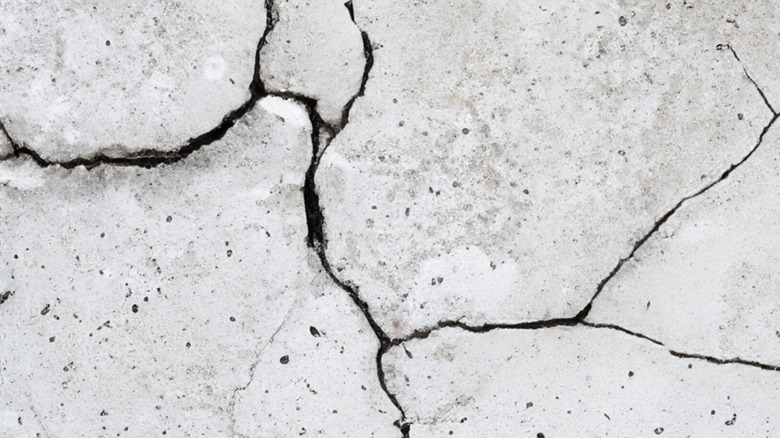
If you listen to experienced contractors, they'll tell you that the only two things you need to know about concrete are that it gets hard and it cracks. As a DIYer, repairing cracks in concrete is a common task that needs to be done from time to time. Filling concrete cracks with concrete patch, a product made specifically for this use, will help extend the life of your concrete slab or foundation by sealing water away from the fracture. Smoothing a crack can eliminate a tripping hazard and improve the overall looks of the concrete surface.
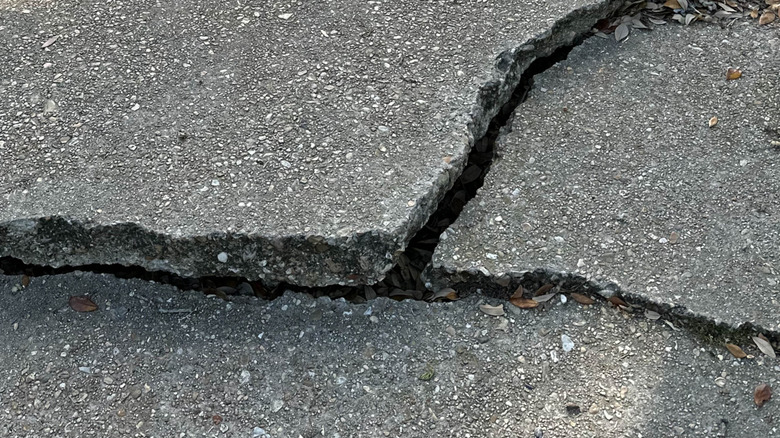
Concrete has been around for centuries and is used in many different ways. As such, concrete can crack in a few different ways. There is crazing; think of a bunch of tiny hairline surface cracks that are very shallow. Narrow stress cracks are usually 1/8 inch wide or narrower, but they will be a bit deeper than crazing. There are also deeper cracks, 1/2 inch wide or narrower but up to an inch deep. We will address the shallower cracks at the end of this article, but for now we will focus on how to repair deeper concrete cracks.
Preparation is the key to patching success
The first step in fixing a deep crack is to clean it well. Use a masonry chisel and a hammer to break free any distorted chips or chunks of concrete. Blowing the crack clean with a leaf blower is a good option. You want the crack clear of any powdered concrete dust or detritus. A power washer is another good way to get all the loose debris out of the crack. If the crack is poorly prepared, your chances of a successful fix are low. Make sure the crack is completely dry. Once again, you can use a leaf blower to help get rid of the moisture.
Concrete patch is a product that can come in a few different formulas: premixed or a powder that needs to be mixed with water before you use it. For a deep crack 1/2 inch or narrower, the two best formulations are either an epoxy/polymer or an acrylic-based formula. Curiously, using actual concrete for the repair is not as effective. It will not bond to the existing concrete effectively and tends to crack and fail.
Applying the concrete patch
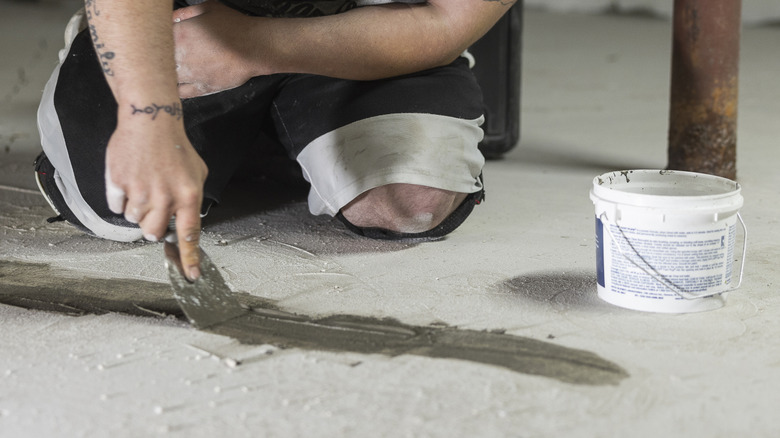
Using the epoxy formulation of concrete patch is generally considered to provide the strongest and most durable crack repair. Because it cures from a chemical reaction, it also cures more quickly, which is another advantage. With that said, you apply the epoxy-based or acrylic concrete patch in the same way. Wear gloves, and using a putty knife or a trowel, work the concrete patch down into the crack. Don't allow air pockets to remain. When the crack is completely filled, trowel the patch smooth and allow it to cure.
The thick viscosity of concrete patch products allows you to use it horizontally, as on a slab, or vertically, as in a cracked foundation. Once it's cured, you can paint it. It will also work to repair small chips or holes in concrete. Follow the packaging directions because with some acrylic-based concrete patches, you need to limit the thickness of your application (meaning some cracks may require multiple applications).
To repair very shallow and thin cracks and crazing, there are caulk-based concrete repair products that are easy and fast to use. But you will need to prepare the surface well for the product to be effective, just like with a deeper crack.
There are concrete repairs that require professional attention. If the crack goes all the way through a slab and the edges are not aligned, that's a problem that is beyond the scope of DIY repair. If the crack will not dry out before you apply the patch compound, the water source needs to be addressed. If your attempted DIY repair fails quickly, there is likely an underlying problem that needs to be fixed.