

Ditch The Vinegar: We Finally Found A Better Way To Clean Greasy Baking Sheets

Thanks to the wonders of chemistry, hydrogen peroxide can degrease, destain, and disinfect all kinds of items in your home. It contains one more oxygen molecule than water, which facilitates the process of oxidation, helping it to remove stains from textiles and blitz bacteria and mold on surfaces. Gentler than chlorine bleach, hydrogen peroxide is ideal for cleaning hardwood floors and even fixing slow-draining sinks. It can also get grease and gunk off your baking sheets. In fact, some people prefer hydrogen peroxide to vinegar when it comes to cleaning their baking sheets, as vinegar can wear away the nonstick coatings found on some aluminum and aluminized steel pans.
You'll need to make sure that you inspect your baking sheets before using hydrogen peroxide on them. If you're dealing with a lot of baked-on grease, gather a few other supplies to make removal as easy as possible; a scrubber sponge is a good tool to start with. If your pans don't have a nonstick coating, consider having steel wool at the ready for those tough-to-remove stains. Also, grab a spray bottle to help you conserve your hydrogen peroxide and apply it evenly. You may want to grab a box of baking soda and a shaker of salt if your pans have grease stains burned onto their surfaces. Finally, get some rubber gloves or other protection to prevent the chemicals from irritating your skin or bleaching the edges of your sleeves.
How to clean your baking sheets with hydrogen peroxide
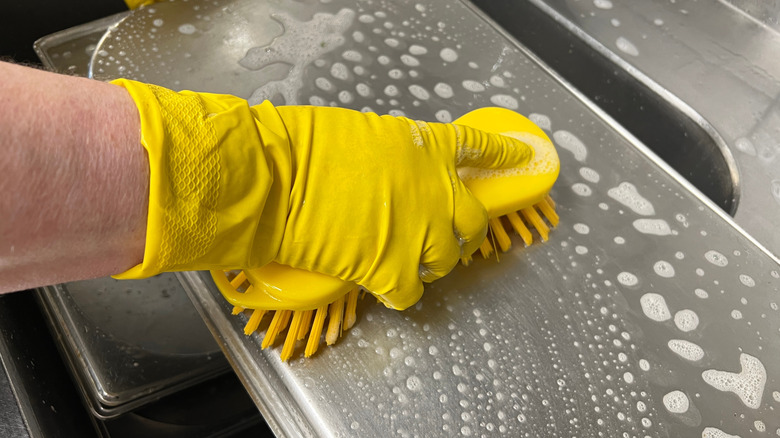
To clean your baking sheets, spray the hydrogen peroxide onto a few paper towels or dishrags, rub the entire baking sheet with them, then place them on the cooking surface for a few hours — or a bit longer, if the grease stains look stubborn. Then, remove the mask and scrub away the stains with a brush or scouring pad and some hot water. Finish the job with a soap-and-water wash followed by a thorough rinse.
Got a tougher job on your hands? Call in reinforcements. If you have baking soda in your pantry, pour a hearty helping onto the greasy pan. You can also add salt, if you have an ample supply. Use your spray bottle to cover the powdery white mix with hydrogen peroxide. Then, add another layer of baking soda and spritz that until it's damp all over. Let this mixture rest on the pan for at least 4 hours before wiping it away with a scrubber sponge. Scrub firmly or break out the steel wool for stains that just won't quit. Or, try an aluminum foil hack that involves scrubbing the stains with a ball of the silver stuff. When you're finished, rinse the pan to remove any residue.
Perhaps most importantly, though, remember that you shouldn't combine hydrogen peroxide and vinegar, as this will create a hazardous chemical reaction.