

The Late 1960s Kitchen Design Trend We Hope Never Comes Back
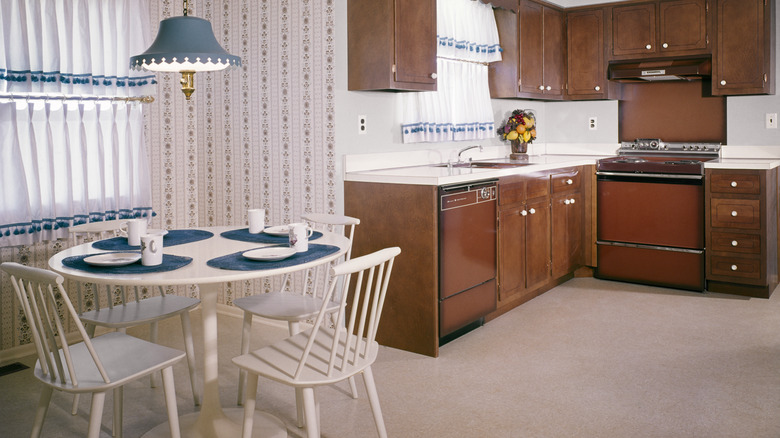
It's no secret that design trends from the late 1960 and '70s have made a comeback in recent years. Homeowners are looking to the colors, styling, and patterns of this time period as a way of bringing character into uninspired spaces. While we can get behind reviving certain vintage elements, there is one '60s kitchen design choice that we hope never makes a comeback: wall-to-wall carpeting.
If you've ever been to the home of a family relative who had carpeting in their kitchen, or if you've seen photos from your parents' childhood of that same kitchen, you may have noticed how weird it seems to have full carpeting in a place where so many messes can occur. Yet carpeted kitchens were hardly uncommon at the time — mostly because carpets became more readily available during the economic boom that took place in the U.S. after World War II. By the end of the '60s and beginning of the '70s, over 400 million yards of carpet were being sold each year.
Carpet were very much "in" as a result, and it served as a status symbol for many families. Though hardwood flooring might be all the rage today, homeowners in the '60s were more than happy to carpet over their old flooring — and this was true in the kitchen, too. While it might not be as utterly egregious as carpet in the bathroom, kitchen carpets are awkward and unsanitary in and of themselves.
What's so bad about kitchen carpets?
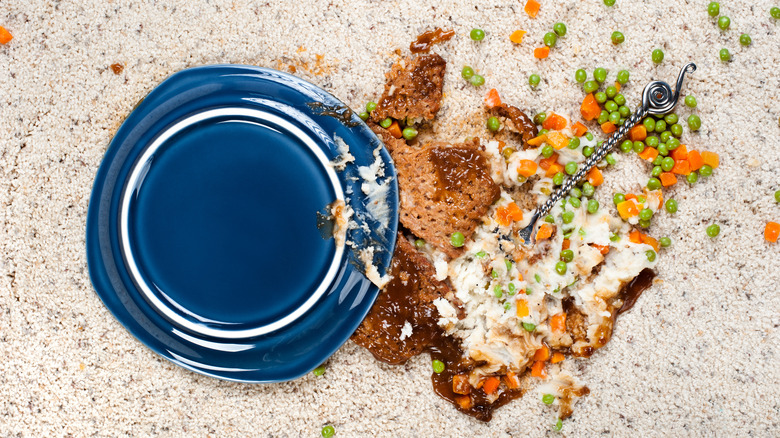
In the 1960s, plenty of carpet brands claimed that they could beat the mess of the kitchen. However, the fact of the matter is that the kitchen is one of the rooms in the house that you should absolutely never carpet. An area rug for the kitchen floor? Absolutely — but never wall-to-wall carpeting. You're much better off using easier-cleaning surfaces like tile or hardwood.
The modern kitchen is a space used for eating, cooking, family art projects, entertaining, and so much more. As such, it is a place where messes frequently happen. Over the course of its life, a kitchen carpet is just going to continue to cling onto messes, becoming more and more stained and eventually looking tired and worn out. If left uncleaned, carpets can also become breeding grounds for allergens, dirt, and bacteria.
Owing to this, a kitchen carpet will need to be replaced far more often than one in the living room or den. That replacement carpet costs money, and it will eventually suffer the same fate as the carpet before it. So, instead, opt for pretty much any other material. Your kitchen will feel a lot cleaner for it — and look a lot better.