

The Reason Your Orchid Has Droopy Leaves And The Best Way To Fix It
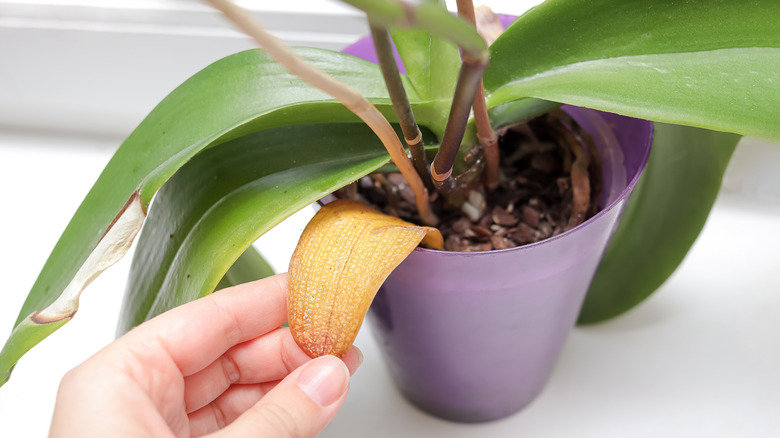
So, the worst has happened: That gorgeous orchid you were given for your birthday six months ago has lost all its blooms and is now looking a little sad. What could be the problem? While it's normal for orchids to enter a period of dormancy after blooming – a period that can last several months — its leaves should stay plump and green during this time. Droopy or yellowing leaves are signs of a deeper issue, usually having to do with water.
Orchids are notoriously finicky when it comes to water. Watering your orchids properly means keeping their soil moist to the touch, but making sure it never becomes waterlogged. Droopy leaves are a sign that the roots beneath the soil are either overhydrated or underhydrated. Yellowing or brown spots may also appear on your leaves when all is not well beneath the soil. An easy way to diagnose the issue is to simply pop your plant out of its container and take a look at the roots. Healthy roots will be bright green or white, and they should look plumped up. Roots that have been given too much water are often squishy, stringy, and black or brown, and the leaves above are likely turning yellow. A dehydrated plant, meanwhile, will have brittle roots, with wrinkled and floppy leaves above.
How to fix your orchid's droopy leaves
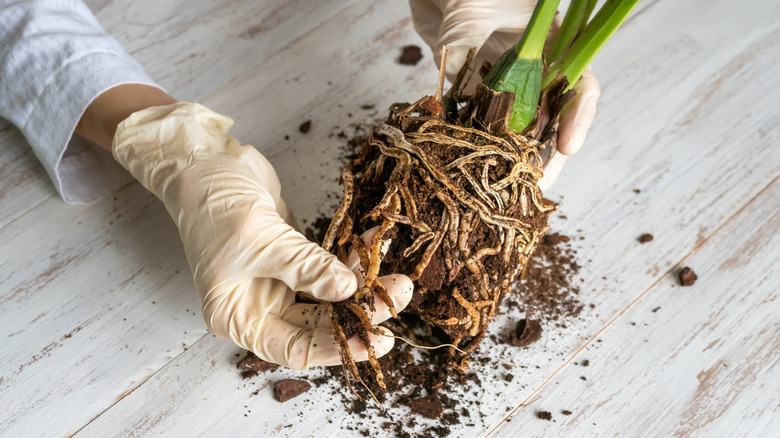
If you're dealing with squishy, waterlogged roots, you'll need to employ a little bit of orchid surgery to cut out the rot. Trim off the dead parts of your roots with a pair of clean, sharp scissors or shears. Shake off the old soil, then repot your orchid in fresh soil, using a well-draining, orchid-specific potting mix.
To fix dehydrated roots, shake off the soil and give the roots a good rinse, but avoid getting water on the leaves. Trim off the dead, brown parts of the roots. If you have a dead or dying flower stem on top of the plant, cut that off as well so that your plant can focus on root recovery rather than blooming. Give your trimmed-up orchid a bath in room-temperature water, submerging the roots about two thirds of the way up. While some orchid enthusiasts recommend distilled or filtered water, others say tap water will work just fine, especially if you leave it out for a day before using it to allow any fluoride or chlorine to evaporate. After this, you can repot your orchid in fresh soil.
While yellow leaves aren't going to green up after fixing these hydration issues, they can be left to fall off naturally. If you have totally brown leaves, however, you may want to cut those off so that your plant doesn't spend energy trying to revive dead growth.