

The Best Time To Repot Orchids — And Why It Makes All The Difference
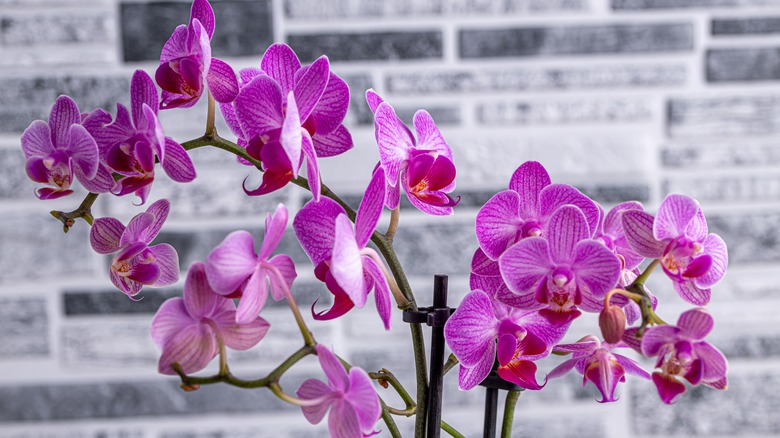
The drama and elegance of a tall, flowering orchid make it the perfect gift for housewarmings, retirement parties, and birthdays. But once you bring home this classy plant, you face the problem of how to care for it. Unlike easy-care houseplants that are great for beginners, orchid care takes a little finesse. One step you can take to ensure your orchid remains happy and productive for years to come is to replant it. Just be sure to wait to upgrade your orchid's pot until after it loses those initial gorgeous blooms.
Orchids will go dormant, usually in the fall but sometimes in spring, and will stay bare for six to nine months before sprouting new flower buds. During dormancy, your orchid may look dead, but you can revive it. This is actually the best time to replant it into a slightly bigger pot, which will allow your orchid to grow bigger and send up more blooms. Ideally, move your orchid into its fresh, new digs after all the flowers have faded and dropped off but before new buds emerge. Repotting allows older, rotted planting material, which can grow fungus or mold, to be refreshed. This also gets rid of any over-accumulation of fertilizers that can damage your plant. You'll want to replant your orchid every couple of years to keep it growing and thriving.
Steps to repotting your orchid
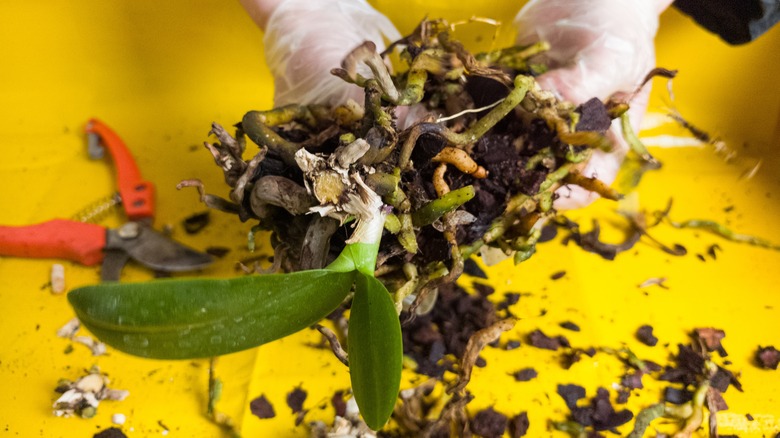
Repotting such a delicate flower may seem daunting, but it isn't rocket science. After gently removing the orchid from the soil, gently break up the old roots of the orchid. You'll also want to clean off any sphagnum moss or other material clinging to the root ball. Wear gloves for this process, especially if you are repotting several plants at once, because orchids are vulnerable to disease that can be transmitted from plant to plant. Rinse the old roots thoroughly and snip off any old, dead pieces before placing your plant into its new home.
To allow an orchid to continue to grow, choose a larger pot for its new home, but not so big that it will retain too much moisture around the root ball. A pot just a bit larger than the root system is a good choice. Orchids thrive in well-drained bark mixes, which allow lots of space and air around their roots. After repotting, it's a great time to brush up on your knowledge about how to care for orchids to ensure a long-lived plant that will return those elegant blooms season after season.