

Get Your Hostas Ready For Winter By Adding This One Thing To The Soil
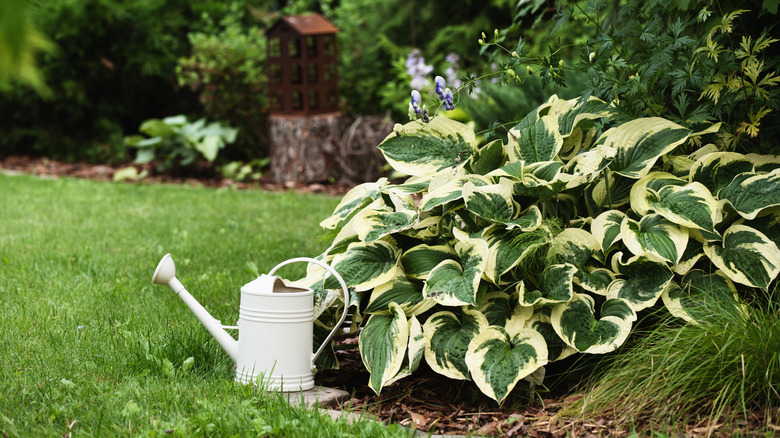
Hostas (Hosta spp.) are revered by gardeners for their ability to thrive in the shady corners of most yards, providing a landscape of lush, broad, variegated leaves. With thousands of varieties to choose from, finding a favorite is easy, and you can even divide hostas to keep them growing forever. As winter descends, these perennials go dormant and sleep away the coldest months — but they aren't immune to damage caused by freezing temperatures. Adding a layer of mulch to the soil in fall, however, will protect your hostas from large temperature swings, meaning you can count on them to come back strong and healthy in the spring.
As hostas are hardy in USDA zones 3 to 9, they'll grow well almost everywhere in the continental United States. Winter mulching isn't necessary in northern growing zones where soil temperatures remain consistently below freezing, but in warmer zones, fluctuations in temperatures can cause freezing and thawing cycles that damage hosta rhizomes. A layer of mulch added in late fall can act as a temperature regulator, and the right mulch will keep the underlying soil from getting waterlogged by winter precipitation.
How to mulch your hostas
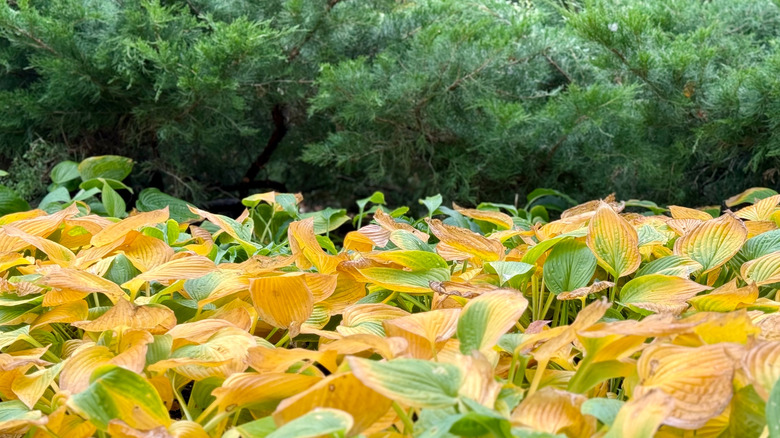
When choosing the right mulch for your hosta garden, you'll need to find a material that enriches the soil as it breaks down — without getting too wet. Pine needle mulch or pine straw work well, as will compost or dried leaves. Wait to mulch your hosta garden until all the green foliage has died off, then cut the plant down to the soil. Removing those leaves gets rid of any lingering diseases, and it's good for dissuading the pesky slugs that thrive in old foliage. Mulch over the rest of the plant, but don't lay it on too thick, as this runs the danger of trapping too much moisture; 3 to 4 inches will do the trick. In early spring, remove this protective layer to allow your hostas to regrow freely.
If they're growing in containers, you can lay mulch inside your hostas' pots — or simply bring them into an unheated shed or garage to provide them with a consistently cold winter environment. Either way, following these tips will ensure that your hardy hostas come back each spring for years to come.