

This Easy Vinegar Hack Is The Trick To A Sparkling Clean Washing Machine
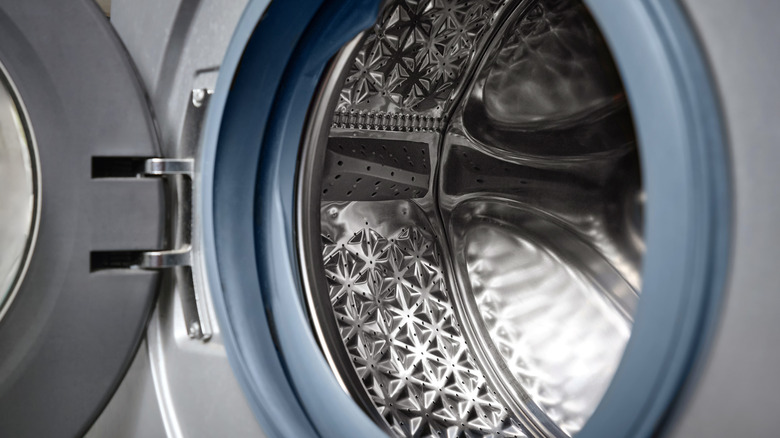
After a long, hard day, nothing beats the delight of crawling into a bed made with freshly clean sheets. Or at least, you thought they were fresh and clean. If your bedtime is soured by musty, dank smells that conjure nightmares of a moldy basement rather than sweet dreams of a spring day, it could be time to clean your washing machine. All you need is some vinegar and baking soda. The good news is, you likely already have these pantry staples on hand to make laundry smells go away, and it will only take a couple of runs of your washer to do the trick.
Vinegar and baking soda are go-to ingredients for a washing machine refresh because they attack odors from two different angles. Cleaning with vinegar is a well-known hack throughout your home because its acidity kills odor-causing bacteria, including those microbes that might be lurking in the nooks and crannies of your washing machine. Baking soda is a gentle abrasive that will scrub your washing machine drum, and it is also very effective at absorbing odors. You'll want to use these two ingredients one at a time, instead of together, to eliminate those odors. Now that you know why it works, let's get started on cleaning your washer.
How to use baking soda and vinegar in your washer, and when you might need a deeper clean
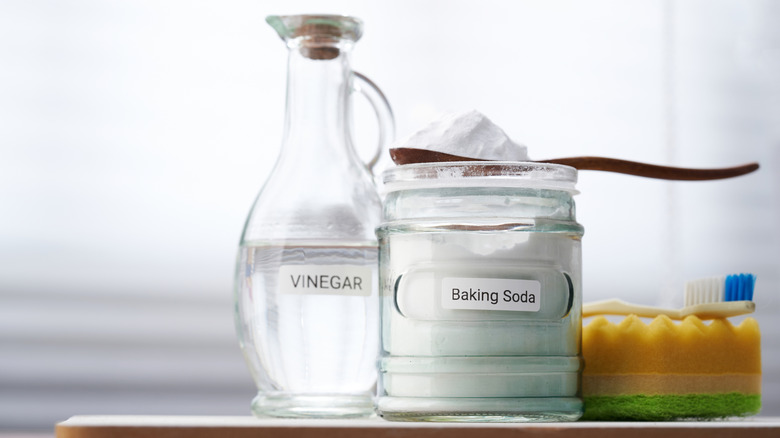
Start your machine-cleaning journey with fresh baking soda (which loses its potency after a year or two in your cupboard), and distilled white vinegar (which is non-toxic to pets and humans). Unlike when you unclog a drain, you aren't going to mix baking soda and vinegar together. First, just add the baking soda. If you have a top-loading washing machine, add 1 cup of baking soda directly into the drum. If your machine is front-loading, then you only need ½ cup. If your washer has a heavy-duty or self-cleaning mode, use that to run a cycle with just the soda. After it is complete, pour 2 cups of vinegar into all the dispensing tray compartments labeled for detergent, softener, and bleach. Again, run a full cycle on its hottest setting.
Be aware that the smell-removing effects of these cleaning wonders don't last forever. And using vinegar too often in your washing machine can actually erode your rubber seals and hoses. If you've tried cleaning your washing machine with vinegar and baking soda but the musty smell keeps coming back, it may be time to do a deeper clean. If your agitator drum can be easily removed, take it out and get to scrubbing with a soft sponge and some dish soap. Clean and dry all around the rubber gasket that seals the door of a front-loader, even using a toothbrush to get into the crevices. Be sure to pull the bottom of the gasket gently toward you and remove any build-up, like pet hair or lint, that collects there. If you can take out the detergent dispensing tray, you can also give it a thorough scrubbing. You'll also want to clean the filter of your washing machine, where gunk can build up. To help prevent stink from creeping back into your washer after all that hard work, be sure to leave that front door or top open between washes so your machine can fully dry out, which will help keep smelly mold and mildew growth from returning.