

Fed Up With Temperamental Hostas? Start Growing This Tough Perennial Instead

For that shady corner of your garden, hostas are a popular go-to ground cover, thanks to their wide-spreading leaves and variety of sizes, shapes, and hues to choose from at the garden store. But hostas can be a temperamental plant, needing winterization to ensure they can survive through very cold temperatures, and cutting back to ensure lush spring growth. An alternative ground cover to consider is starry Solomon's plume (Maianthemum stellatum), a native plant that still brings the lovely green ground coverage you like about hostas, but with less maintenance.
Also known as starry false Solomon's seal or starry false lily-of-the-valley, this perennial is a great choice for those interested in native plant gardening. Unlike hostas, which are native to Asia, starry Solomon's plume is native to northern and western North America, and can be found in the wild everywhere, from forested mountains and along streams to wetlands and even coastal beaches. Hardy in a wide range of USDA growing zones from 3-7, this adaptable perennial is happiest in moist yet sandy soils out of full sun.
Starry Solomon's plume in the garden
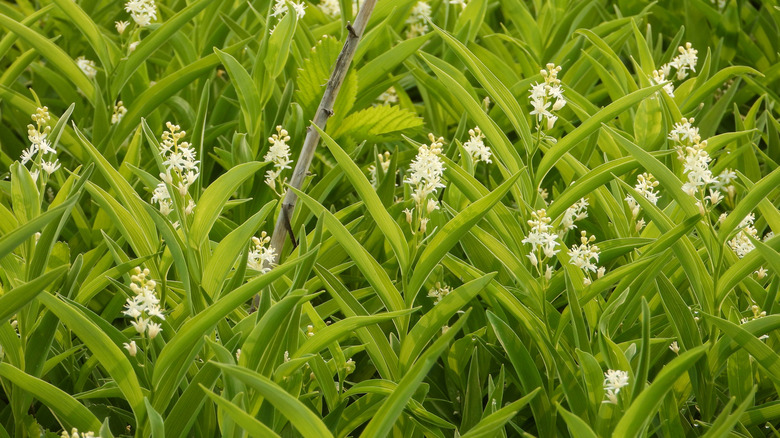
Planting starry Solomon's plume is a great landscaping solution for shady areas, including under tree canopies. It will thrive alongside native companions like wild geranium (Geranium maculatum) and Canada wild ginger (Asarum canadense). It also pairs well with your standard shade-loving hostas and ferns. Your starry Solomon's plume will also add some nice height to your shade garden, with its upright leafy stalks growing up to 12 ½ inches tall.
Once established, this resilient plant needs little ongoing care. If you have the moist yet sandy soil it likes, starry Solomon's plume will easily spread in your garden on its own via rhizomes, so if you don't want it totally taking over you may need to manage it by digging up new shoots as they appear. In the spring, this plant puts out pretty blooms of delicate, star-shaped flower clusters, which are attractive to pollinators.
It also produces edible red berries in the fall, which can be consumed and have a slightly sweet flavor, although they can also act as a laxative when eaten raw. The shoots, leaves, and roots are also edible, and the plant has a long history of medicinal use by indigenous peoples. Native wildlife also love this plant, whose leaves are browsed by bears and elk in high elevations and whose berries enjoyed by ruffed grouse. Starry Solomon's seal will die back in the winter, but needs no special winterization or care, making it a great alternative to fussier shade perennials.