

5 Easy Tricks That Make Cleaning Your Dryer Vents A Breeze

On the long list of annoying household chores, cleaning the dryer vent must be near the top. Located at the back of the machine, the dryer vent is the ductwork that takes hot, humid air from the drying chamber and channels it outside. Just like the lint trap, which must be cleaned after each cycle, the dryer vent needs to be kept in working order for the machine to work at its most efficient.
There are several reasons why you'll want to make cleaning your dryer vent a part of your regular house cleaning regimen. For one, a vent that is clogged will not syphon air and moisture as efficiently, causing clothes to remain wet after the drying cycle finishes. Aside from being frustrating, this can lead to higher energy costs. A far more concerning reason, though, is that the buildup of lint inside your dryer can pose a fire risk. In fact, according to data published by the Federal Emergency Management Agency (via Consumer Affairs), 4% of all home structure fires are caused by dryers, many of which have not been properly cleaned.
The good news is that, if you're equipped with the right tools and knowledge, cleaning the dryer vent doesn't have to be a difficult affair. All you need to do is follow a few key tips to make this job an absolute breeze.
Invest in a shop vac
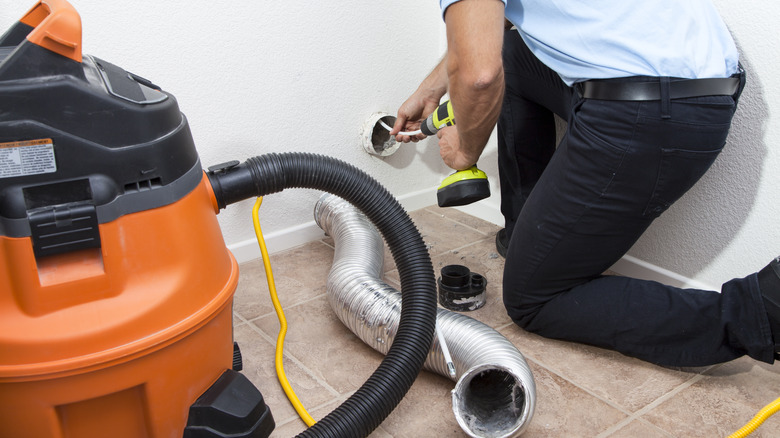
Investing in a shop vac is essential for home maintenance. Different from standard vacuums, shop vacs are heavy duty and perfectly suited for scooping up larger debris items, thick messes, and liquids. You can even transform one into a leaf blower if you feel so inclined. However, it's the vac's high powered suction that is going to come most in handy in terms of cleaning your dryer vents.
Cleaning the lint out of a dryer vent requires the power a shop vac provides. It should easily pull all of the lint out of the vent, and it can even clear larger blockages like bird nests. You can also use your shop vac to clean out the ductwork in the wall, as well as the flexible vent pipe that connects to the opening at the back of your dryer.
Shop vacs are also helpful in that they can be lengthened with the use of hose extensions; this is especially useful if you have a longer vent pipe. The hoses are handy when it comes to cleaning the exhaust port at the back of the dryer, too. And if you've neglected to clean your vent and allowed lint to back up all the way into the dryer, the shop vac's hose will help you reach further into it.
Use a brush to loosen debris
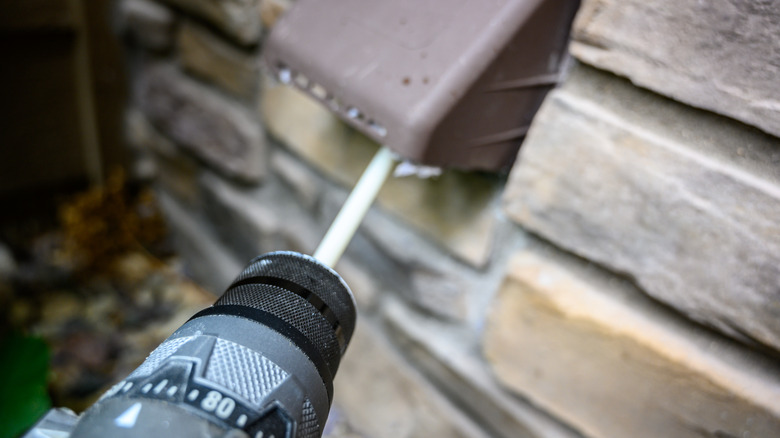
While the shop vac is the most useful tool for cleaning your dryer vent, it's not the only one you'll need. Using a brush to clear debris in the duct vent is just as important to the success of your operation. On its own, the shop vac will be able to pull up any blockages that have been built up, but there could be excess lint that has managed to stick firmly to the walls of the vent — and you can use that brush to get at this.
After your first round of vacuuming, insert the brush into the vent and loosen any caked-on lint or debris. It should come off fairly easily, after which you can vacuum it up. A standard, extendable duct-cleaning brush will work perfectly for this; they're sold in kits, which you can find online or at any good hardware store. You can even attach the end of the brush to a power drill, which will increase the speed of brushing to ensure that you get a thorough clean in half the time. If you have a shorter vent, a toilet brush will also make an excellent alternative.
Gravity is your friend
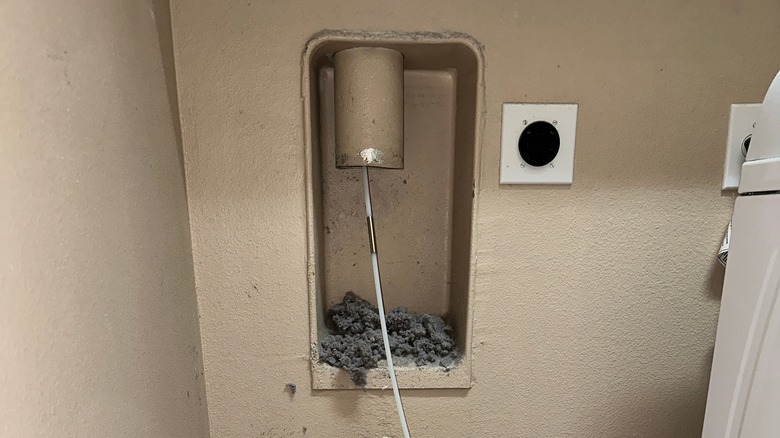
When it comes to cleaning your dryer vent, gravity is always going to be your friend — and there's one little trick you can use that will help you determine which direction to clean your dryer vent from.
While more homes are being built with ground-level laundry rooms, many still have their laundry systems in the basement. In these cases, the dryer needs to be vented upwards towards the exterior wall of the house. If this is true for your dryer, you're actually going to want to start your cleaning process from the outside. Once you've moved the machine and disconnected the vent line, head outside with your brush and push the built-up lint downward into your basement.
Here's where physics comes in handy. When you start brushing from a higher vantage point, the lint will automatically fall because it's being pulled down by gravity. It will then collect in a pile at the end of the vent pipe or on the basement floor, where you can easily vacuum it up.
Cap your exterior vent

Lint is hardly the only thing that can get lodged in your dryer vent. Rodents might build nests in your vent, for example, creating massive, unsanitary blockages and causing potential fire and electrical hazards. Similarly, birds are known to make nests inside dryer vents, which can lead to the same issues.
If you've got infestation problems in your dryer vent, it's going to take a lot longer to clean it — and it may even require specialist removal. Thankfully, the simple solution of capping your exterior dryer vent will prevent these issues from occuring. Dryer vent caps allow the air to escape from the vent while simultaneously preventing anything from getting inside, and they often come with a grid specifically designed to keep critters out. While you'll have to remove this cap during cleaning, they are easy enough to maintain and reinstall, and they'll save you the massive headache of having to remove a bird or rat nest from inside your dryer vent.
Keep a regular cleaning schedule
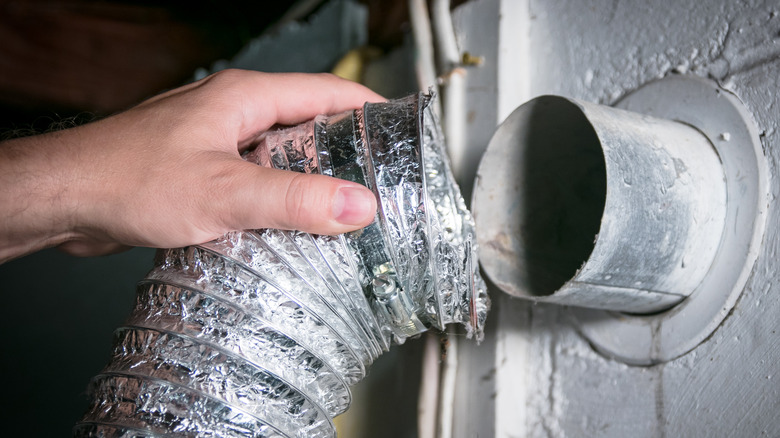
Finally, you should make sure you're consistently cleaning your vent. Now, unlike the lint trap, the dryer vent doesn't need to be cleaned with each successive load of laundry — that would be an absolute nightmare. Nor, however, should you wait until your dryer is giving you the tell-tale signs that you've waited too long to clean the vent.
Instead, keep your dryer vent cleaning regiment on a six-month schedule. You can extend it to once yearly if you so choose, but cleaning twice a year or more will improve the performance of your dryer and make cleaning the vent each time a whole lot easier. Depending on the size of your family, if you have pets, and how much laundry you do on a daily basis, buildup could accumulate a lot quicker. That might just mean you need to be on a three-month cycle instead of six. Either way, you should always clean the dryer itself, as less buildup and debris will gather in and around it — and this will make cleaning the dryer vent a much, much easier job.