

Not Vinegar Or Dish Soap: This Mop Water Add-In Keeps Floors Looking Like New
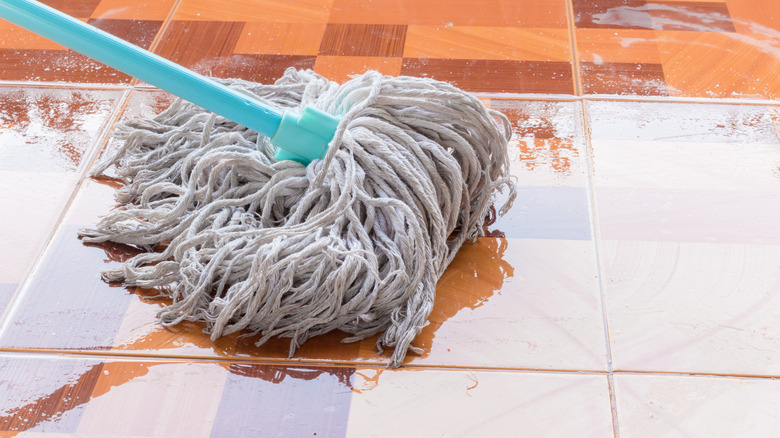
Floor cleaning is one of those "do it and move on" tasks. While you might get the satisfaction of a job well done, the goal is to create a clean and healthy environment for you and your family. To do this, you'll want to use a convenient cleaner that not only removes dirt and grime, but also disinfects your floors. No, we're not talking about vinegar or dish soap — this household item is hydrogen peroxide. Often sold in those ubiquitous brown plastic bottles, hydrogen peroxide is a versatile product: It can clean your toilet, it'll fix all kinds of laundry stains, and, yes, it can be used as a floor cleaner, too.
Hydrogen peroxide cleans by breaking down organic matter. Even dirt, which is mostly made up of minerals, will have an organic component mixed in. Break down that component, and the dirt will be lifted up into the water and washed away. And that same process is how hydrogen peroxide kills germs and viruses. These chemicals breaks down the cell walls of the pathogens, killing them and allowing them to be picked up in the mop water. Hydrogen peroxide is also mildly acidic with a pH of between 3 and 6, which means it can help break down grease. This one-two punch is the key to why hydrogen peroxide is gaining popularity as an alternative to commercially produced floor cleaning products, which may have unwanted additional chemicals or scents added to their formulas.
One important thing to know, however, is that, once you expose hydrogen peroxide to air by opening the container, it will react with the air and turn into water within a few months. Use it or lose it.
How to use hydrogen peroxide to clean floors

Get started by mixing ¾ cups of 3% hydrogen peroxide (as is commonly sold at stores) with 1 gallon of warm water. Thoroughly rinse your mop head with the solution, then mop the floor, allowing the water to sit on the surface for a few minutes – this will allow the bleach to break down organic compounds in the dirt. Then, remove the water by "dry mopping" and wait for the residual water to dry. You do not need to rinse the area with clear water; hydrogen peroxide will not leave a residue. As the mop water gets dirty, replace it with the same solution of hydrogen peroxide and water.
This mixture will work well on vinyl, luxury vinyl, most hardwood floors, tile floors, and some types of stone flooring. However, it's always best to test out any cleaning solution on a small discrete sample of your floor to make sure it will not harm the surface material. Marble is one type of floor that may react poorly to the acidic nature of hydrogen peroxide, so be cautious there. Some folks also recommend adding a small amount of dish detergent to this mixture, and this will probably do no harm. Never mix hydrogen peroxide with vinegar, though, as it will create a caustic acid and gas.