

Forget Fussy Fall Mums: This Colorful Perennial Grows Beautifully Almost Anywhere

As beautiful as chrysanthemums, commonly shortened to mums, are in your fall garden, there is no real doubt that they can be exceptionally fussy. Most of the mums that sit about in pots on autumn walkways are what are known as florist mums. They are grown as annuals, purchased when in bloom, and only last a short while until cold weather withers them. Even if you purchase the other variety, garden mums, you have to take considerable care to make sure they survive over the winter. So, if you're tired of the same old mums giving you trouble every year, why not forget about them and grow asters instead?
Despite both mums and asters being members of the same Asteraceae family, they could not be more different when it comes to care and maintenance. Sure, they look similar and are equally beautiful. However, asters have distinctive features that make them the better choice for growing in your fall garden.
Asters are the undefeated rockstars of the fall garden. Their characteristic multi-petaled blooms come in a wide array of colors, including creamy whites, deep or light blues, subtle purples, and vibrant pinks. There are over 600 varieties to choose from for planting. Some of the most common and popular include the New England (S. novae-angliae) and New York (S. novi-belgii) asters, and the blue wood aster (S. cordifolium).
Asters are hardy and easy to care for
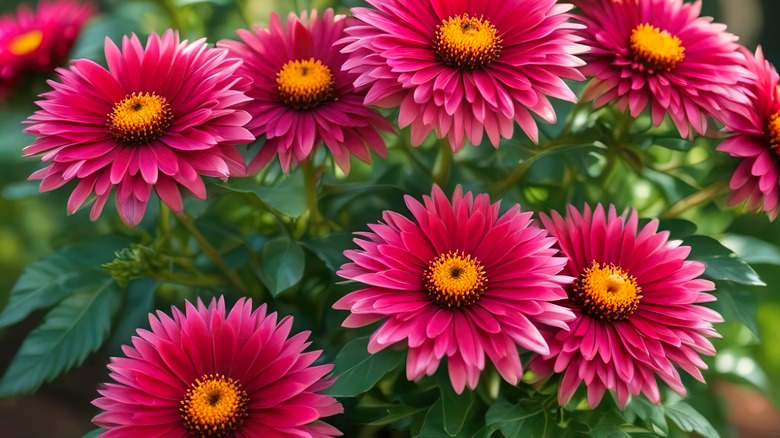
In terms of how to grow and care for asters, it's important to know that they are far more cold-tolerant than mums, and therefore won't wither when temperatures drop. They can grow practically anywhere and withstand some pretty cold autumn conditions. They are right at home in the lower register of the USDA hardiness zones, being hardy from warm zone 8 all the way down to chilly zone 3. And, being natural perennials, you won't have to worry about your asters not returning next year.
Another benefit of the asters over the mums is that asters are very drought tolerant. Mums, especially ones in pots, require frequent watering in order to remain vibrant. Asters enjoy a healthy watering, but can go for longer periods without being watered. They are also repellent to deer, which means that you won't be coming out in the morning to see that your beautiful flowers have been decimated by the roaming venison.
Besides the fact that they are far easier to take care of than mums, there are lots of other benefits asters bring to the garden. One is that these plants attract butterflies, honey bees, and other beneficial pollinators. The more pollinators you can get into your garden, the healthier it's going to be. While mums do attract pollinators, the popular double-blooming varieties don't provide the nectar or pollen that pollinators so love.