

Grow This Versatile Veggie In Your Kitchen All winter—It's Easier Than You Think
We may receive a commission on purchases made from links.
Though crops are usually associated with farmland and other sprawling outdoor spaces, a surprising number of them are willing to grow inside your house. Kumquats and Meyer lemons are a couple of fruits you can grow indoors, and basil is one of the easiest herbs to cultivate in your kitchen. When it comes to raising vegetables in your abode this winter, peas (Pisum sativum) are a reliable and versatile choice.
Nurturing peas indoors removes frost and sweltering heat from the picture, lowering your chances of losing your crop to the weather. Plus, growing peas inside gives you lots of control over their water intake and essentially eliminates the possibility of weed infestations. When planted outside, they might also be targeted by hungry slugs and cutworms, but unless you have a pet that loves dining on pea pods, the plants are pretty safe from nibbles as well.
Start them in outdoor containers in USDA hardiness zones 2 through 11, bringing them inside when temperatures are headed below 40 degrees Fahrenheit, which may kill them, or above 85 degrees Fahrenheit, which halts their growth. Or, give them an entirely indoor existence. The main challenge facing indoor growers is sunlight. A bright, south-facing window is likely to be your best source of natural light for pea plants, which crave direct sun. If this isn't available, a good alternative is providing 10 to 12 hours under an LED grow lamp each day. Position the lamp 6 inches above the soil, gradually raising it to 12 inches as the plants get taller. To simplify this task, be sure to select the right type of pea plants.
Plant and pot considerations for your indoor pea garden
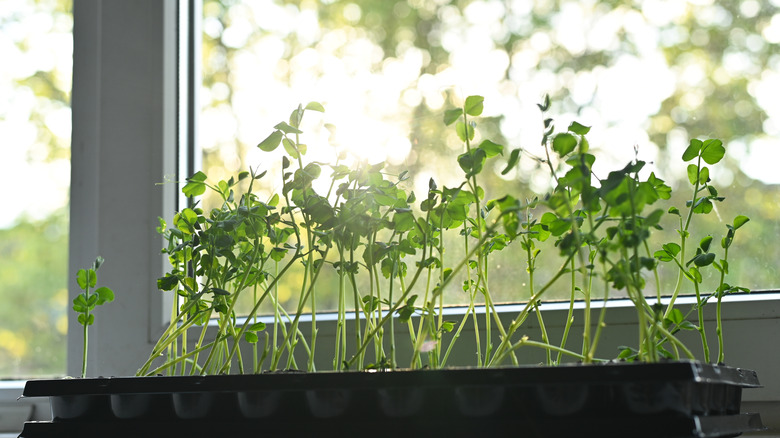
Opt for pea varieties that have a bushy growth habit; they're less likely to need supports to stay upright. Dwarf shelling peas, such as the 1-foot-tall 'Tom Thumb,' are ideal for growing near windows and rarely need stakes or trellises. If you'd like to harvest edible pods, try container-friendly, semi-dwarf 'Sugar Daddy' snap peas. For optimal growth, keep your pea seedlings away from drafty areas and try to maintain a temperature of 60 to 70 degrees Fahrenheit in the room where you've set up their containers.
Speaking of containers, a series of small, round pots tends to work well for growing peas indoors. Leave some space between them to promote airflow and make sure they have drainage holes, which discourage water from stagnating and promoting root rot. If you're eager to grow a whole row of pea plants, consider using a long planter box filled with a moisture-retaining growing medium, such as Back to the Roots organic indoor potting mix.
Most types of peas take just a couple of months to produce a tasty harvest after you sow their seeds. Expect to pick all of the peas from a particular sowing session within a week or two of each other. If you're drawn to the taste or nutritional benefits of microgreens, harvest some of your peas as sprouts. While you're at it, plant other seeds to grow as microgreens as well. Sunflower sprouts are almost as fond of bright light as peas, so they make good countertop companions in a microgreens setup.