

The Secret To Attracting Hummingbirds Next Spring? Plant This Flower Duo In October
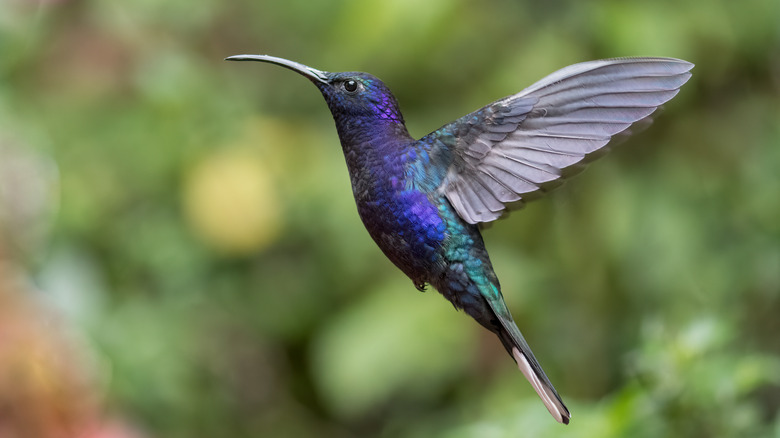
Hummingbirds are magnificent. They are the smallest bird in the world, and every single one of the over 360 species of them is a delight to watch flit around your garden at speeds of over 33 mph. Not only are these little birds great to watch, they're also great for the environment because they serve as the primary pollinators for many different plants. To bring these delightful creatures to your garden, use one of the surefire ways to attract hummingbirds to your yard and plant dianthus (Dianthus spp.) and salvia (Salvia spp.) in your garden this fall.
Dianthus, also commonly called carnations, is a beautiful family of flowering plants with bright blooms in many colors. But if you're seeking to attract hummingbirds, it's best to stick to red and pink varieties. One variety of dianthus, the Jolt Pink, is particularly adept at attracting hummingbirds with fragrant, long-lasting blooms.
Salvia is another plant that attracts hummingbirds with its tubular flowers. When speaking of the herbaceous varieties, salvias are also known as sage. If you choose the perennial varieties, they are great for planting in the fall for spring blooms. While both dianthus and salvias are great flowers that attract hummingbirds, by planting them together, you're making a great step to start your hummingbird garden. Let's talk about planting them.
Planting dianthus and salvias
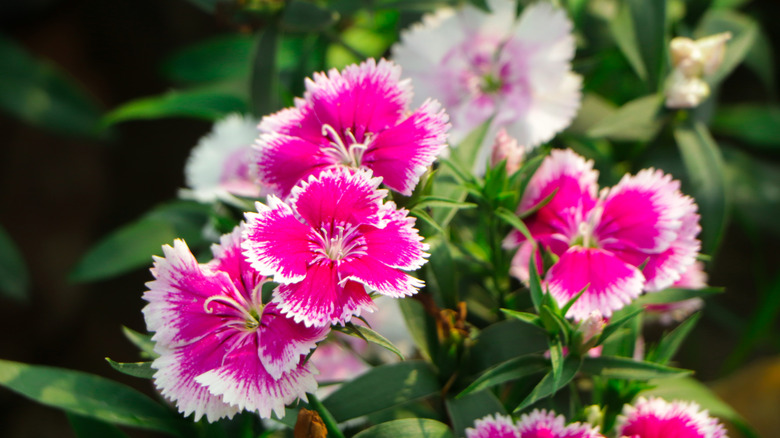
To get your spring-blooming dianthus ready for the hummingbirds, start by planting it mid-fall, like October. When seeding outdoors, you will only need to lightly cover them with soil. If you want to plant the Jolt Pink variety, they are hardy in zones 7-11 and prefer full sun to partial shade. They need slightly alkaline, well-draining soil with a high amount of organic material to thrive best. You should only water when the soil is dry and fertilize during the growing season, using a balanced fertilizer. Dianthus are deer-resistant, so you shouldn't have to worry about any unwanted snackers for your beautiful flowers.
For the best spring blooms with salvias, you should find a perennial, such as the Evolution Salvia (Salvia farinacea), that will best attract hummingbirds. These can grow up to 20 inches tall, featuring blue blooms. Hardy in zones 8-10, evolution salvias grow best in full sun to light shade. They should be planted about 18 inches apart in rich, well-draining soil. Like the dianthus, salvias are deer resistant, so you won't have to worry about your hummingbirds losing out on their sweet nectar.