

Read This Before Letting Leaves Sit On Your Flower Beds This Fall
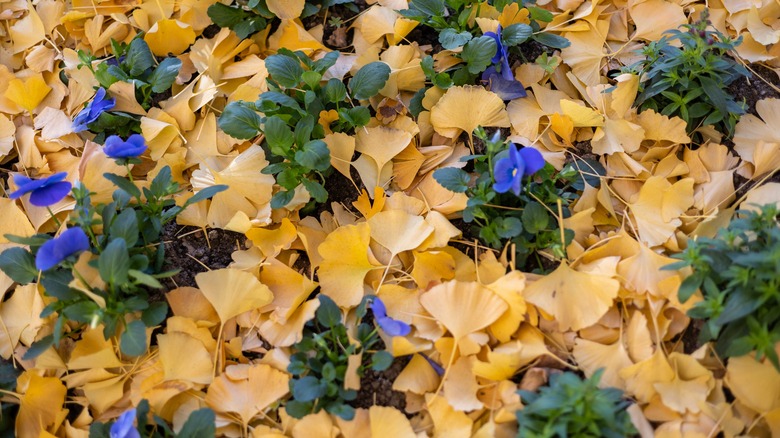
Often, letting the leaves stay on your flower beds can be highly beneficial. The leaves act like a mulch, which will naturally suppress weeds, provide insulation, and maintain moisture levels in your soil. Eventually, the leaves will break down, decomposing and boosting the nutrients in your flower bed. While these are strong benefits to letting the leaves be this fall season, there are some special instances that may require leaf removal.
First, if the leaves in your yard are bigger than the plants and cover them in the bed, you risk smothering them and reducing your plant's access to air and sun. It is best not to cover any evergreen perennials, as they don't go into dormancy over the winter. Only allow the leaves to cover plants that go dormant and won't be entirely covered. If you want to use fallen leaves from the lawn as mulch, mow your leaves down — this will shred them to a perfect size for mulching your flower beds.
If the pH of the leaves on your flower bed doesn't match the pH needs of the plants in the ground, you should probably remove the leaves to avoid adjusting the soil's pH balance. Additionally, if the plants in your flower bed prefer leaner, dryer soil, you should remove some of the leaves, as their decomposition will make the soil very rich with organic material. That being said, if the pH matches, do leave the leaves, as they will further boost the growth of the plants in your flower bed. Finally, be aware that leaves can harbor harmful pests, so if you find that your plants are contracting diseases or pests, you should remove the leaves and dispose of the plants.
Other consideration and how to best use leaves on your flower bed
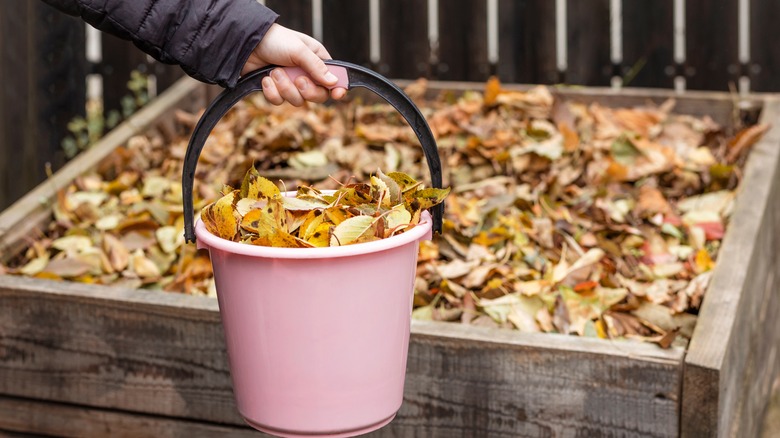
If your garden is free of all the caveats that might hold you back from letting the leaves stay on your flower beds, then by all means, let them stay and reap the benefits. You will have fewer weeds, moist soil, and pollinators aplenty, all while keeping the environment a little cleaner when you don't dispose of leaves in a landfill. To begin, you can start by mixing the leaves directly into your soil, in addition to slow-release fertilizer, to attract beneficial worms and microorganisms to your soil. Additionally, you can use the leaves to create compost that will boost your soil with nutrients. If you don't want to do anything to your leaves, just leaving them will still have plenty of the aforementioned benefits.
You can also keep the leaves if you like hummingbirds and other pollinators, such as butterflies. For hummingbirds, the layer of leaves provides a home to many insects that they love to eat, creating a buffet for those delightfully fast visitors. After spending the growing season in your garden, many butterflies may actually choose to spend the winter in your leaves. Still have a few too many hundred leaves around the garden? You can also frame leaves to create original botanical art.