

Don't Cut Back Hostas Too Soon — Here's The Best Time For Lush Spring Growth
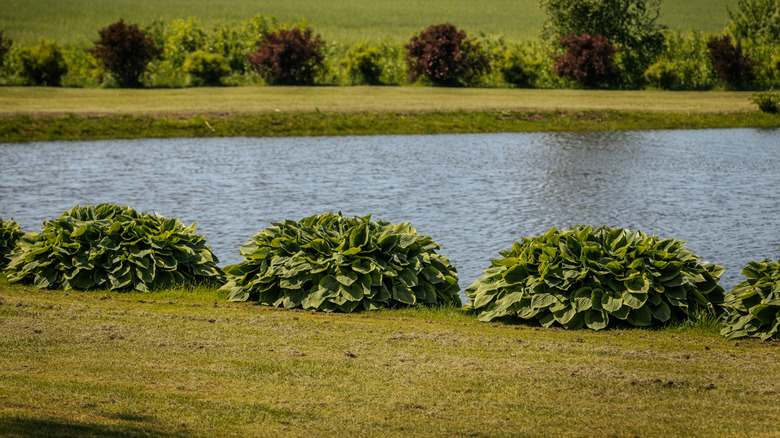
Hostas are lovely, easy-to-grow perennial plants that make so many yards look fresh and beautiful. They are both stunning in their variety but curiously nearly invisible due to their ubiquity. One of their shining characteristics is that they grow well in shaded areas. For those of us who grow just a few hostas or have large, verdant patches of them gracing our yards, the question of when and how to prune their leaves is important to address. While hostas are durable plants, trimming them at the proper time to enhance their regrowth in the spring will also aid their overall health and life. Experts agree that fall is the time to cut back your hostas.
There is one thing that is key to remember: Don't cut back the leaves if they are still green and growing. You need to wait until they start turning brown. The exact timing of that will vary depending on where you live. In the far north, frosts will arrive sooner, killing the leaves and starting the process. However, those growing in warmer climates will continue to look good longer. A good reference is when the leaves on your trees turn colors and start to fall to the ground, you can start trimming back your hostas. So, let's dust off your pruning shears and get busy.
How to properly prune your hostas
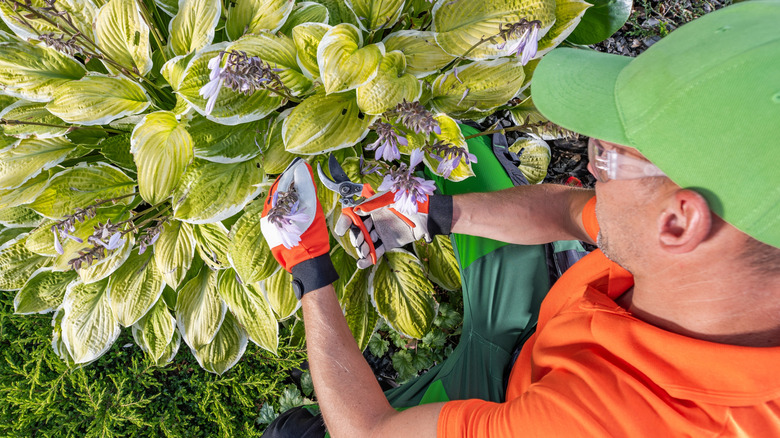
Before you dive into trimming back your hostas, it is important to check your plant. The key is that you can't wait too long after the leaves turn brown before cutting them. The reason is that decaying leaves will gather parasites. Also, if your hostas leaves are turning yellow and brown, you may be dealing with a disease. While trimmed healthy hosta leaves will make great compost material, diseased leaves in the compost pile can cause the disease to spread. Destroy the diseased leaves and treat for any parasites that you find.
Now, let's get started pruning. Wearing sturdy gardening gloves, hold your favorite pair of pruning shears in your dominant hand, and with your other hand, grab some leaves and trim the plant down to about an inch from the ground. Then, compost the trimmings. After a frost, the exposed remainder will feed the roots via photosynthesis. If you live in a very cold climate, a layer of mulch is a prudent protection against winter kill. It is not required, but it will add some nutrients as well as protection. If you choose to use mulch, remove the mulch layer in the spring before the hostas start growing again.