

Forget Rakes: There's A Better (And Easier) Way To Remove Leaves From Your Yard
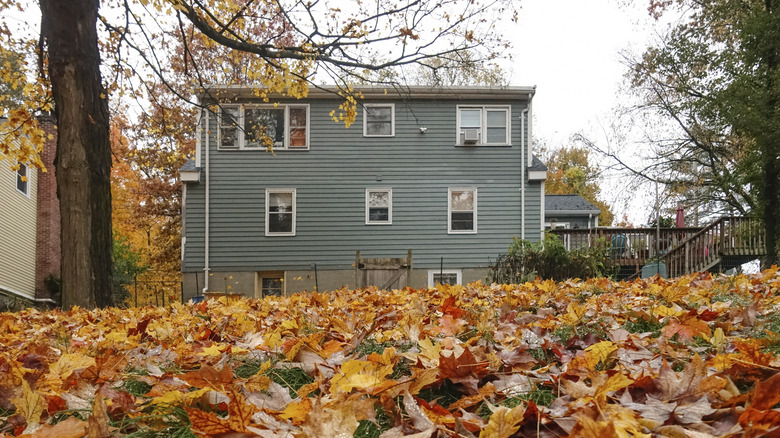
As the leaves begin to start making their way from their branches to your yard this fall season, they start to leave a bit of a predicament. While there certainly are benefits to native biodiversity if you "leave the leaves," it's also not great for the grass itself, as this risks damaging your grass by smothering it or allowing snow mold diseases. Raking, on the other hand, leads to different problems. Thankfully, there is a third (and better) way: If you want to save time and naturally boost the nutrients in the ground, mowing the leaves is the best solution.
Mowed leaves decompose quicker into your lawn and provide important nutrients. They also create insulation for the ground, which helps retain moisture, keep the ground warmer, and suppress weeds. These leaves also serve to boost biodiversity in your yard and strengthen the soil underneath your lawn. Due to all the benefits, you can save time and money by mowing your leaves and leaving them in your yard. As a result, you won't have to buy and apply as much fertilizer or water your lawn as often.
A large part of why mowing is better is the controversy behind raking fall leaves. In 2018, the Environmental Protection Agency found that yard trimmings accounted for 35.4 million tons of municipal solid waste, which was 12.1% of all municipal solid waste. Of the yard waste, leaves occupy the largest portion by volume. In landfills, your leaves won't decompose as quickly as they would in your yard, and when they decompose with non-organic material, significantly more methane is released. Mulching is far more environmentally friendly.
How to mulch your leaves with your mower
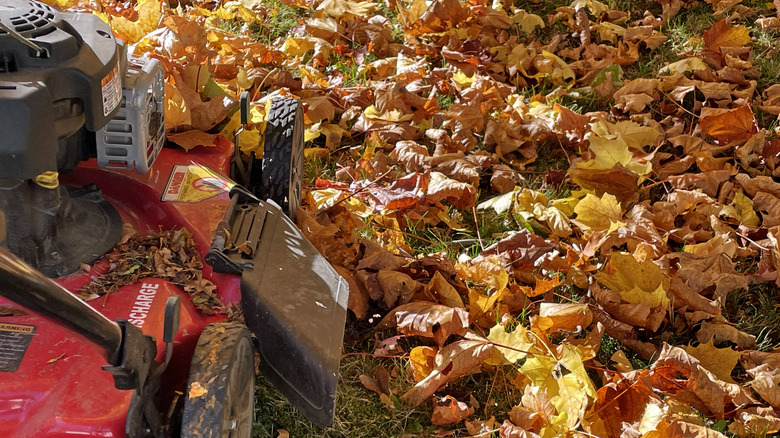
While a mulching mower might be the best type of mower for your leaves, any mower should still work with enough passes. You should go over the leaves multiple times to ensure they are broken up into small pieces. When you can see approximately half an inch of grass above the leaves, you will know that you are done. You want to make sure the leaves don't mat together, as then they won't decompose as quickly or evenly. Once the leaves are in small pieces, the microorganisms will begin decomposing them and prepare your yard for the next leaf mowing once the cover is thick again.
If there are simply too many leaves to mow down completely, you can always take some of the mulched leaves and use them in your garden beds. When using fallen leaves as mulch, you should apply about 3 to 6 inches of shredded leaves on your beds. By the time your natural mulch has decomposed in the spring, it will have also acted as compost and boosted the soil in your beds as well as your lawn. You can also compost the leaves if you still have too many. For the best results, you should mix the compost with 20 parts leaves to one part vegetable scraps.