

Stop Weeds From Growing Between Cracks And Pavers With An Easy Homemade Mixture
We may receive a commission on purchases made from links.
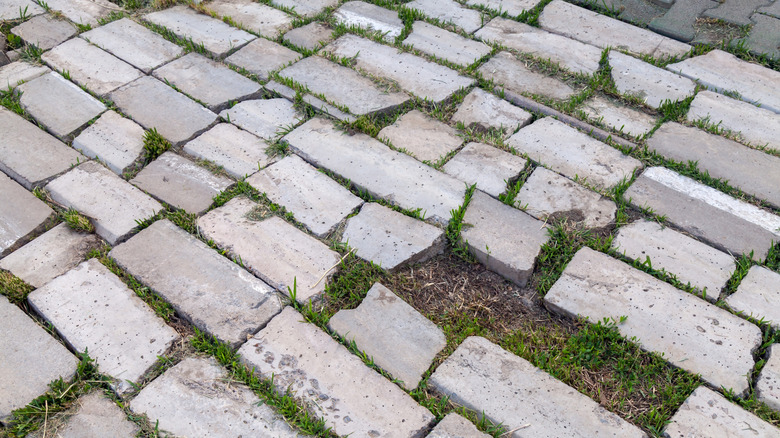
Some plants like thyme make great ground covers to plant between flagstones, pavers, even cracks in sidewalks or driveways. But without those ground covers blocking the emergence of rival plants, you're likely to find weeds growing there instead. Weeds are natural opportunists, growing in any little bit of soil they can find, even soil that you didn't even know was there. You can run to your nearest garden centers and spend $20 or so on some synthetic weed killer to rid you of the problem, though many chemical weed killers come with problems of their own, including health hazards and unwanted environmental side effects. Weeds also increasingly develop resistance to herbicides, making them less effective over time. Fortunately, you don't even need to leave your home to find a simple, safe alternative to those toxic-by-design weed killers. It's right there in your kitchen: Dish soap.
Just as simple soap and water wash away dirt, kill germs, and break down grease, dish soap and water can make life difficult for plants, which is why it's an especially useful herbicide for weeds growing between cracks and pavers. Soap is made of fatty acids and alkaline substances. As research published in Frontiers in Plant Science explains, the fatty acids in soaps strip away the waxy surface of some weeds, causing the leaves to dry out and the plant to die. There are other natural methods of suppressing weeds, including killing weeds with vinegar, but soap sprays were found by multiple studies to be more effective than vinegar, and you probably didn't need a scientific study to tell you that dish soap smells better, too.
Preparing and using a dish soap herbicide
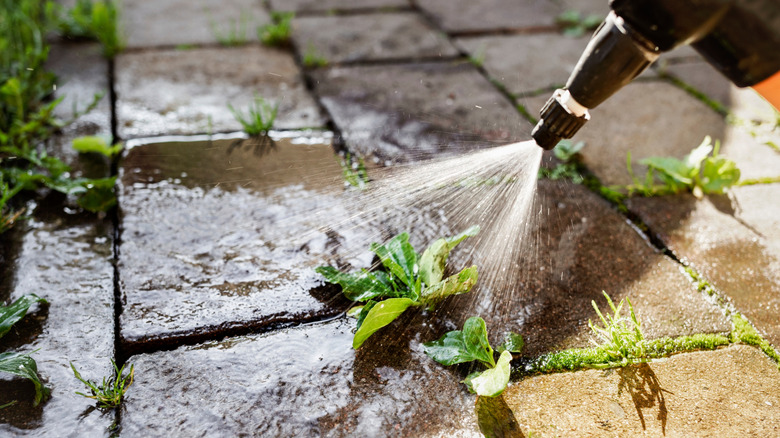
Making a soap spray is as easy as mixing soap and water in a spray bottle. Various studies used liquid dish soap, while others used dish soap powders. Use whichever you have at hand. A study published in Agronomy used powdered soap in a spray at 5% and 10% concentrations. Research published in the journal Crop Protection used a liquid soap spray (Dawn) in 5%, 10%, and 20% solutions, and found that it killed weeds regardless of concentration.
Anyone who has washed their hands knows that soap rinses away pretty easily, which is why it's best to apply your herbicidal soap mixture on a warm sunny day with no rain in the forecast. If your weeds survived the first spraying, you may need to reapply the soap, especially after a rainstorm. For the same reason, soap does not remain in the soil after it washes off the plants' leaves, so repeated application is necessary to prevent weeds from re-emerging. A weed management article in Insects found that a monthly spray of organic soap kept an area 80% weed-free.
It's a rare homeowner who is weed-free, and at times, you'll discover that the best way to get rid of weeds is to get down on your hands and pull out the weeds by hand before they get a chance to produce seeds. But keep a spray bottle filled with water by your kitchen sink, and once a month during the growing season (especially early on), squeeze a little dish soap into it and spray those cracks where weeds have a habit of appearing.