

Bring More Hummingbirds To Your Garden By Planting This Sweet-Smelling Flower

It's not hard to delight in the sight of hummingbirds hovering in the air, flapping their wings dozens of times per second, gracefully sipping nectar from a flower, then darting away so quickly it's hard to follow their flight path. Weighing less than a marshmallow and often endangered, hummingbirds need lots of food to keep their wings flapping and their species thriving. There are a number of surefire ways to attract hummingbirds to your yard, even without a feeder, like growing hummingbird-friendly plants in your garden. This is a win-win situation — a win for the birds and a win for your garden, as hummingbirds are important pollinators for many of your plants. This fall, you can plant Ismene bulbs (Hymenocallis spp.) so that hummingbirds have sweet-smelling flowers greeting them in late spring to mid-summer. And once its flowers die back, its foliage remains green through most of the growing season, keeping your garden looking fresh.
Also called spider flower due to its flowers looking something like a spidery daffodil, Ismene is native to South America and the southern United States. It produces trumpet-shaped flowers perfectly suited for hummingbirds' long probing beaks (as well as butterflies' proboscises). Ismene is easy to grow, works well in rain gardens or rock gardens, and is resistant to deer and rabbits. And you'll be delighted by its scent: Plant it in a spot near a sidewalk or other public walkway, and you'll delight your neighbors as well. Its main downside is that ingesting its bulbs can induce nausea, vomiting, and diarrhea in humans, so keep the bulbs away from young ones who might be tempted to eat them.
Planting and growing Ismene
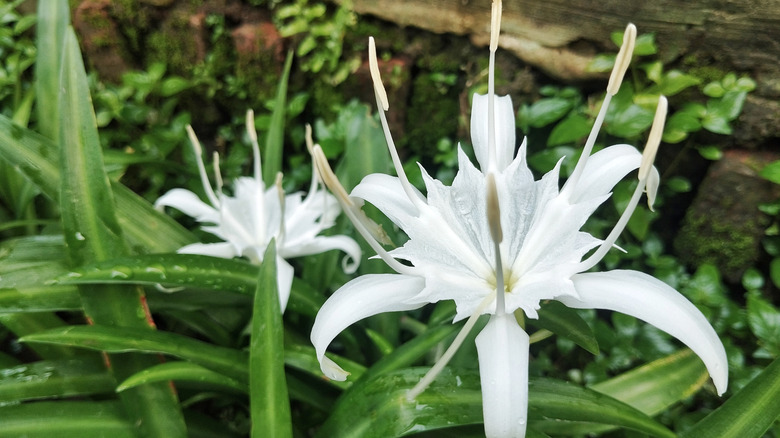
There are some 60 perennial species of Ismene. While most are hardy only in USDA hardiness zones 8 to 11, some are hardy in zones 5 and 6 as well. Plant these onion-looking bulbs in full sun to part shade in rich, well-draining soil of any pH. Native to swampy areas and moist woods, Ismene does best in moist, even wet environments, so don't let the soil dry out. The plants will grow 1 to 3 feet tall and produce white, yellow, or even red blooms that make great cut flowers. Ismene will naturalize in a garden, but the plant is not considered invasive. Blooming in late spring to mid-summer, it makes a great companion to ironweed, another flower that turns your yard into a hummingbird hotspot that blooms in late summer to fall.
If you live in the appropriate hardiness zone, you can plant them with the base of the bulb 5 inches deep in the ground, spacing them 8 inches apart. Don't cut them back until the stems turn brown so that they can absorb as much sunlight as possible through their green leaves, allowing them to send that energy back into their bulbs. In cooler environments, you can either plant your bulbs in pots (roughly one bulb per 5-inch pot) and bring them indoors to overwinter, or, somewhat similar to how you care for gladiolus after it blooms, you can dig up your bulbs once their stems have turned brown, leave some soil around the bulbs and roots, then store them at 60 to 70 degrees in a dry medium like sawdust, rice hulls, or coconut coir.