

Avoid Disaster When Selecting Wood 2x4s: The Twisted Problem Of Big Box Lumber
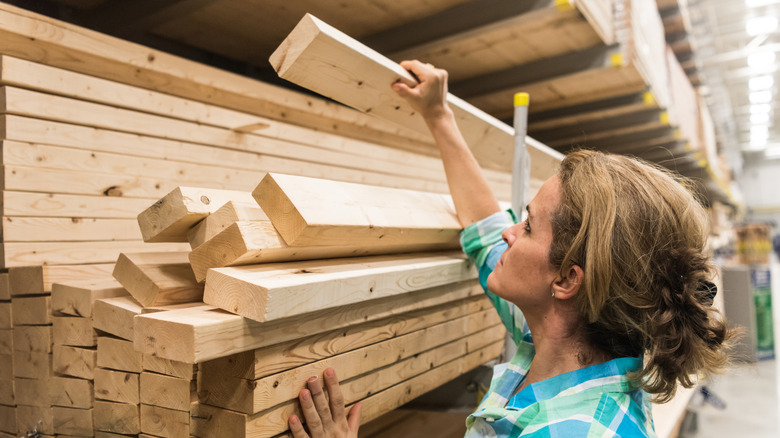
DIY woodworking projects are among the most practical and satisfying home improvement efforts to be found. As a professional woodworker, I've helped countless people successfully make shelves, step stools, cabinets, storage boxes, shoe racks, and so much more. Before you start cutting and joining for your project, the first task is to procure the lumber you will be using. Buying lumber can be intimidating for many folks, mostly because they are unsure how to judge the quality of the wood. One concern is the fear of buying substandard wood that will twist or warp. This concern may be exacerbated by the horror stories of folks purchasing substandard lumber from big box stores. What's a DIYer to do? No worries, I've got your back.
Many DIY woodworking projects are built from softwood lumber. Softwoods are species like pine, spruce, cedar, redwood, Douglas fir, and others. This lumber is perfectly good for making woodworking projects as long as you purchase the higher-quality grades of softwood. It comes in dimensioned sizes, like 1x4, 2x4, 1x6, and so on. Those names roughly correspond to their true dimensions. For instance, all types of 2x4s measure roughly 2 inches thick by about 4 inches wide. At big box stores, the lumber would be considered "select" and graded either C or D. If you are buying at a standard lumberyard, you'd also ask for select lumber in either C or D grade. It will be smoother and have fewer and smaller knots than lower grades. It does cost slightly more, but the increase in quality is worth it.
Straight talk on twisted lumber
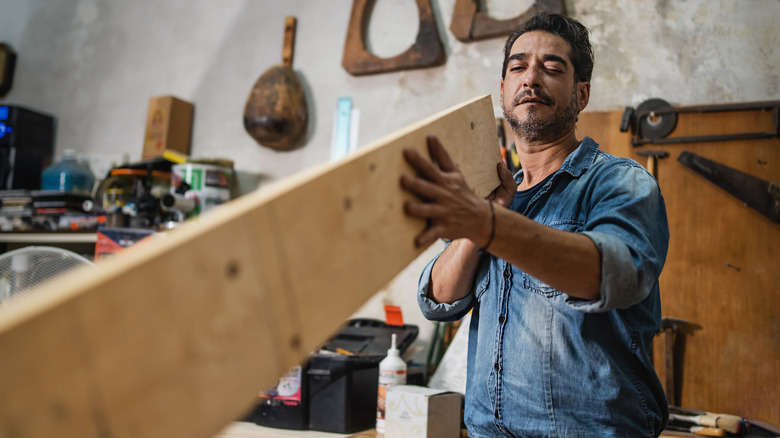
The main takeaway in this guide to buying lumber is that you want it to be flat and straight, not warped. You also want it to stay that way, not twisting after you put it to use. The two most common causes for milled wood to distort are improper drying and internal stress caused by the conditions that the tree grew under (leaning over, growing on a steep slope, etc.). The good news is that by the time you are buying your lumber, those defects will be obvious. Look at the board — if it is not straight and flat, don't buy it. Can a board warp once you get it home? Yes, but it's preventable with proper storage. Wood is hygroscopic, meaning it will continue to absorb or lose moisture depending on the environment it's stored in. Put a piece of lumber on the ground, and the side touching the ground will absorb more moisture than the other side, causing it to warp, while the same board in your garage, propped up on sawhorses, remains flat.
Lumber you buy at a lumberyard or a big box store is kiln dried after it's harvested. A lumber kiln is like a big oven that gently heats the wood and blows air over the lumber, removing excess water from the wood fibers. Proper drying will reduce warping. If a board is going to twist, cup, crook, or bow (the terms woodworkers use to describe specific types of warps) it will be apparent after drying. Like I said, don't buy those boards. Cracks and other flaws can also be seen after drying.
Other factors that affect flat lumber
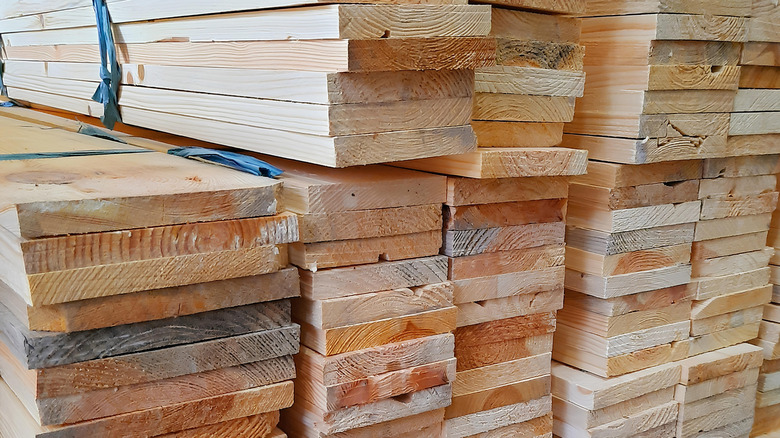
One of the challenging things about harvesting lumber is that trees are round and lumber is square, or at least rectilinear. When you slice boards out of a round tree trunk, those rings present specific patterns on the rectangular or square end (the end grain) of each board. If the rings run edge to edge across the width of the board, that's called plain sawn. If the pattern goes 90 degrees from the plain sawn look, that's quarter-sawn. There is also a pattern called rift-sawn, but think of it as mostly quarter-sawn. These differing cuts show up on the face of the board by creating grain patterns that woodworkers call "figure." Are one or the other, plain sawn or quarter-sawn, patterns more or less likely to warp? Yes, plain sawn wood is more susceptible to distortion. But the good news is that you will see it after the drying process, so you can avoid using it.
All of this makes selecting good lumber sound very cut and dry (pun intended). But there is a saying that I like to quote: There are only three things in life you can't avoid: death, taxes, and wood movement. The hygroscopic nature of wood never stops. But even so, wood is a great material for DIY projects and has been for centuries. Carefully select straight and flat lumber at the point of purchase, keep it dry as you store it, and you won't have to worry about warping.