

How To Keep Purslane Out Of Your Yard So It Doesn't Take Over
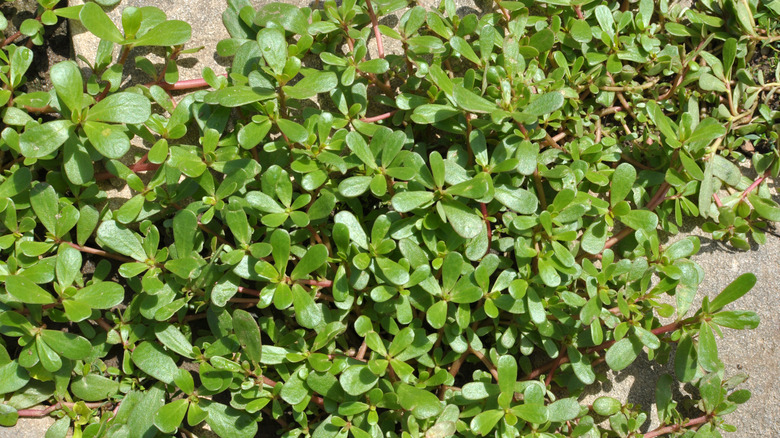
Don't confuse your purslanes. The purslane you're likely to find in garden centers is Portulaca grandiflora, a gardener's favorite commonly called portulaca or moss rose. It's a multi-colored beauty often grown in pots or as a ground cover. By contrast, common purslane (Portulaca oleracea) is hardy in USDA hardiness zones 2 through 11, meaning it grows just about anywhere in the United States and is often considered an invasive weed. It's also known as moss rose but is often called the less flattering name of little hogweed. It pops up in lawns and in bare spots in gardens, and grows all too rapidly for many people. It can also cause tremors and kidney failure in dogs and cats. Fortunately, with some diligence and weed control tricks, you can prevent common purslane from running wild in your yard.
Common purslane is an annual that is relatively easy to identify. It's a succulent with oval leaves that are waxy and firm. Initially growing low to the ground, it sends reddish stems out from a central point, then spreads out and up from there, reaching up to 16 inches tall. Small yellow flowers can emerge at any time of the year. Common purslane is self-pollinating and is a prolific seeder, so be vigilant in removing the plant before its flowers turn to seed. Otherwise, your problems multiply exponentially.
How to keep purslane at bay
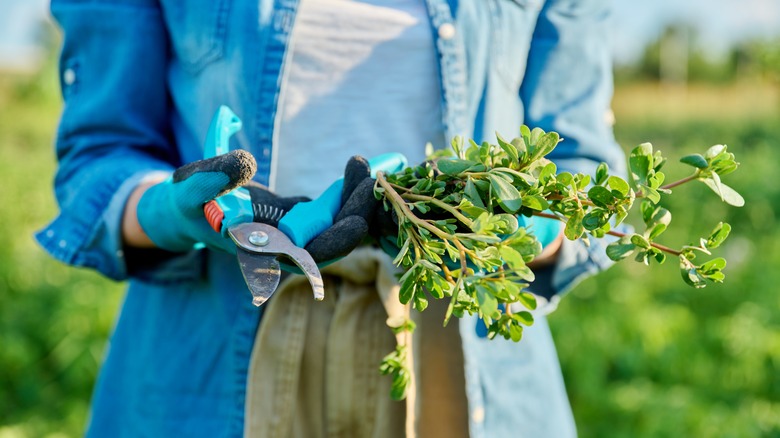
Getting rid of purslane is not an easy task. If your purslane invasion is pervasive, you may need to create a blank slate in your garden. While common purslane can grow in nearly any kind of soil, it needs full sun to thrive. Kill off the plants with plastic or cardboard until everything is dead, which can take 2 to 3 months. If your invasion is less severe, use the best way to get rid of weeds and pull out any visible plants by hand. Common purslane has a taproot that you'll need to fully remove to prevent it from regenerating itself.
Common purslane is a popular food in many parts of the world, and with proper plant care, you can grow it for culinary purposes. It's full of antioxidants and omega-3 fatty acids. After you've dug up all your purslane, perhaps profit from your efforts by cooking it or serving it in salads. Why use toxic chemicals to get rid of purslane when you can harvest it for dinner?
A healthy garden or lawn is often the most effective weed control. Once you've rid yourself of any visible purslane, the best way to keep it at bay is with healthy plants that don't let purslane get established. In a garden, plant an easy-to-grow ground cover that will cover a large area, then lay down a 2- to 3-inch thick mulch between your plants to keep purslane seeds from germinating. If purslane is growing in your lawn, water your grass regularly and raise the blade on your lawnmower high setting to allow the grass to shade out purslane before it has a chance to take over.