

The Unexpected Household Staple That Doubles As A Powerful Weed Killer
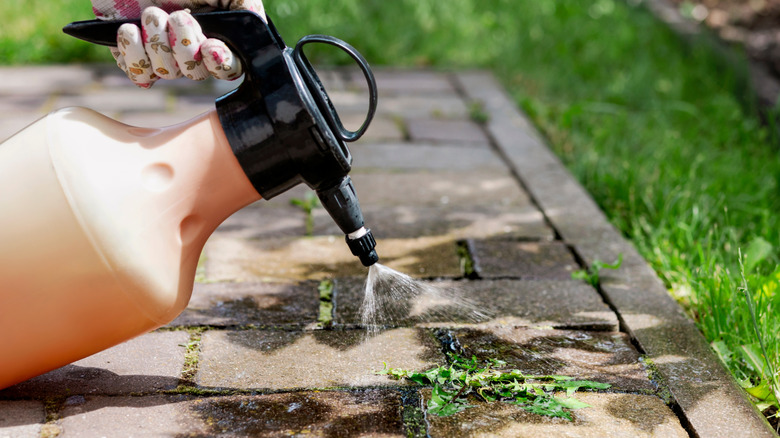
"What is a weed? A plant whose virtues have not yet been discovered," is a quote attributed to Ralph Waldo Emerson. That may be true, but until those virtues come to the fore, we will continue to consider weeds as backyard enemy number one. Getting rid of those weeds is a problem with many possible solutions; the question being which is best for you. You may shy away from industrial herbicides, especially if you have kids or pets. One possible household chemical that folks often overlook is borax. Commonly employed to boost laundry detergent power, borax can also be employed to kill weeds naturally, just like other household staples, baking soda and vinegar. Both borax and baking soda are desiccants that remove all the water from the plant's cells, killing them effectively.
Borax, or sodium borate, is a white crystalline powder that is found in nature. It is powerfully alkaline with a PH a little north of 9.05 (compared to baking soda at 8.4). As each ascending number in the PH scale is ten times larger than the previous number, borax is considerably more alkaline (chemically base). That increased alkalinity means it is much more deadly to plants, and can even kill certain pests such as ants. It also means that care should be taken to keep the powder away from your skin and to avoid breathing it in (it can irritate mucus membranes).
How to kill weeds with borax
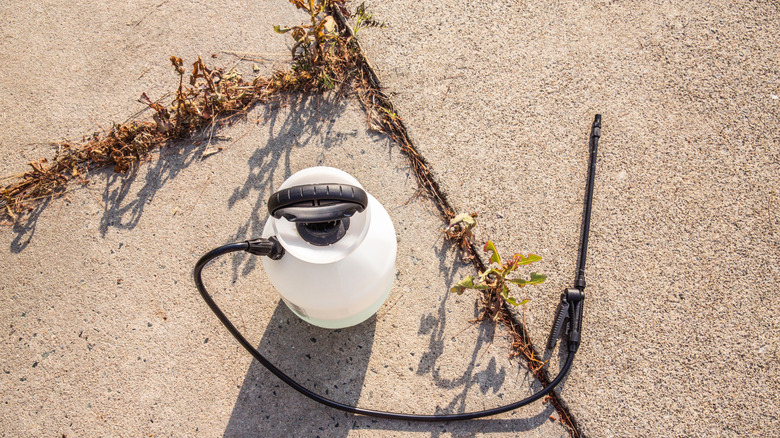
Before you get started, it is important to know that borax does not care which plant it is killing. Take great care to keep it away from plants that you care for. A good recipe for creating your borax-based herbicide is to put 10 ounces of borax powder into 4 ounces of warm water, then dilute with 2.5 gallons of water. Mix the solution, pour into a garden sprayer, and apply it to the weeds you wish to kill. It will work best early in the spring as it will kill young plants more effectively than well-established adult plants. Avoid multiple applications for areas of vegetation, as this mixture may keep anything at all from growing for a long time if it is over applied. Speaking of its power, keep children and pets away from the affected area.
To make the mixture even more effective you could add a couple of tablespoons of dishwashing soap to the solution. This will act as a surfactant, helping the mixture to stick to the plants more tenaciously, which will make it more deadly.
A closing note. Several websites will recommend adding vinegar to the borax solution. Chemically, this is a bad idea. As mentioned, borax is highly alkaline, and vinegar is acidic. If you mix them together, the two "opposite" PH ratings will counteract, making the whole mixture more neutral and less effective. With that said, vinegar by itself is an effective weed killer, too.