

Want A Dark Green Lawn Fast? This Simple Fix Works Wonders

For many homeowners, a thick dark green lawn is their balm of Gilead, bringing peace and a wholesome feeling of goodwill to their lives. But woe to them should their lawn thin and yellow, a catastrophe of biblical proportions. How can a lawn fade from verdant to pale green? Is it a curse that needs to be countered? Nope, as usual, it's a science thing. Healthy lawns need the right environment to thrive. Sufficient water, non-compacted soil, proper mowing techniques, weed killing action, and proper nutrients. That last one often means fertilizer. One of those important components not included in every type of fertilizer is iron. All plants need certain minerals, and grass needs an appropriate amount of iron.
Iron is critical to the development of chlorophyll in green plants, which is the key component of photosynthesis. A plant uses photosynthesis to take carbon dioxide, water, and the energy from the sun to create sugars and oxygen. In fact, photosynthesis is the key to supporting life on Earth. Stepping back to your lawn, iron supports increases in chlorophyll, which in addition to keeping us all alive, makes your grass much greener. Also good.
Get dark green grass by adding iron to your lawn
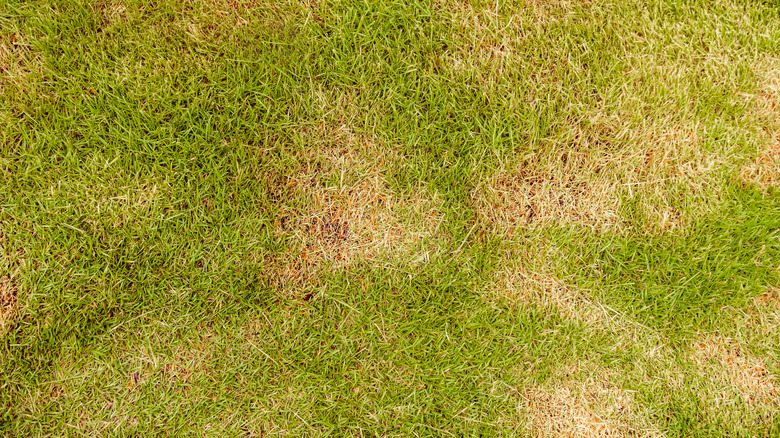
Adding iron to your lawn does not increase grass growth. It is a mineral, not a traditional fertilizer. It will make your grass stronger, thicker, and healthier because photosynthesis literally feeds the plants from their roots to the blades of grass. With that said, one of the easiest ways to get iron into your grass is with a lawn fertilizer that has iron added to the mix. Dry fertilizer with iron spread across your lawn should develop a dark green color over a week or so. Liquid fertilizer with iron will produce the dark, chlorophyll-generated color much more quickly, in as little as 48 hours.
As with all lawn treatments, moderation is the key to success. If you use too much iron supplement on your lawn, it can be as bad as not having enough. (Too much can allegedly turn the grass gray!) One really useful tool is a soil testing kit that can give a homeowner a lot of information (soil pH or the soil's acidity, nutrient levels, and moisture levels) about their soil, including its iron content. It's far better to know if your lawn is iron-deficient and then be able to retest to see if iron levels have been restored after you have treated it.