

The Affordable DIY That Hides Ugly Wire Shelves And Instantly Upgrades Any Closet
We may receive a commission on purchases made from links.
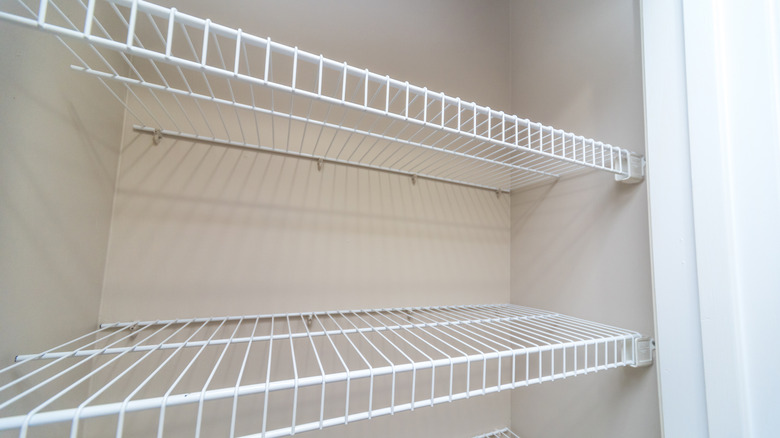
If you feel like you're constantly at war with your wire shelving, you're not alone. It's a common feature in pantry, bedroom, and hallway closets, though not exactly a fan favorite. For starters, small objects like accessories and toiletries can slip through the gaps, potentially limiting what you can keep in the closet. Wire shelves can also be a nuisance to clean, as dust can collect between the rows of metal. Plus, from a design standpoint, the shelving can be unsightly to look at. So much so that you might consider creating a custom closet and swapping out the wire shelves. But if that's not in your budget, you'll be glad to know it's possible to cover the shelving with a wallet-friendly project.
The idea, which was shared by @meagannichole on YouTube, uses foam core board to hide the wire shelves. The foam board is also covered in an attractive material to make it look aesthetically-pleasing in the closet. When placed on the wire shelves, the wrapped foam core provides a flat surface to store your items while enhancing the style of your space.
What you need to make wire shelving covers
The first step is to measure your wire shelving. This way, you'll know how many sheets of foam core board to buy. You can find foam boards at stores like Dollar Tree, Michaels, and Walmart. (If possible, buy a few extra sheets in case you need to redo one of the coverings.) You'll also need material to cover the foam core board. In her YouTube video, user @meagannichole chose marble contact paper. For best results, make sure you know how to lay contact paper to reduce the risk of bubbles and creases. However, the project is also a clever way to use peel-and-stick wallpaper throughout your home. Check out Wallism or Spoonflower for stylish, design-forward options.
You can also use fabric, though there are several things to keep in mind. Use waterproof fabric (such as nylon, oil cloth, or laminated cotton) if you plan to store toiletries or liquids on top. Not only are these options easy to wipe and clean, but they're also wrinkle-free. Alternatively, if you're craving a more natural look, cotton or linen work well. But take note: These options absorb moisture, so they're best for clothing or accessory closets. They're also more prone to wrinkling, so be sure to iron these materials before wrapping them around the foam board.
How to cover your wire shelves
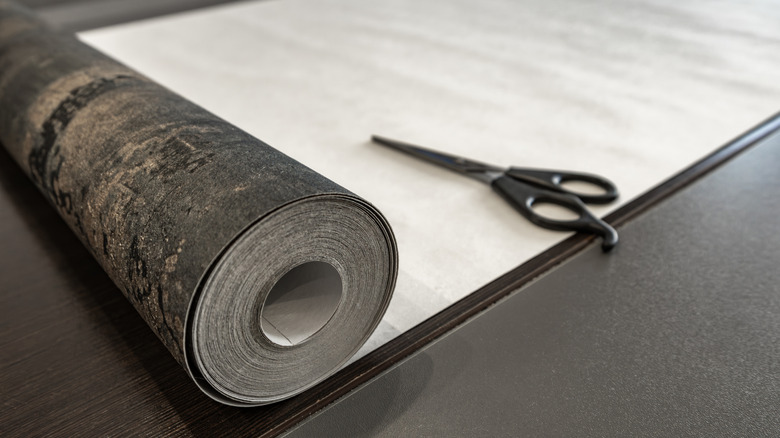
To start lining your foam board, use a makeshift straightedge (like a ruler) to trace a rectangle on the board according to the length and width of each shelf. Next, on one of the long sides, add a few extra inches. This will create a "lip" to cover the front of the shelves. User @meagannichole suggested adding two inches, but to be safe, measure the front of your own shelf to determine how much to add. It's best to cut foam board with a craft knife, then make the lip by scoring along the long side of the original rectangle. This will allow you to fold over the excess foam board, creating a lip. Another option is to skip the lip and glue a strip of wide ribbon, fringe, or lace trim along the edge to hide the front of the shelf.
Now, here's where your shelves will come to life! Cut a sheet of contact paper or peel-and-stick wallpaper large enough to fit your foam board, then peel off a small part of the backing. Stick it on the foam board, section by section, sliding a squeegee or ruler outward; this will help remove air bubbles. If you're using fabric, tightly wrap it around the foam board, then staple it along the back. Place the cover on the shelf and, if needed, take the back of the lip to the front of the shelf to keep it flat.