

Why You Should Stop Killing Spiders In Your Home
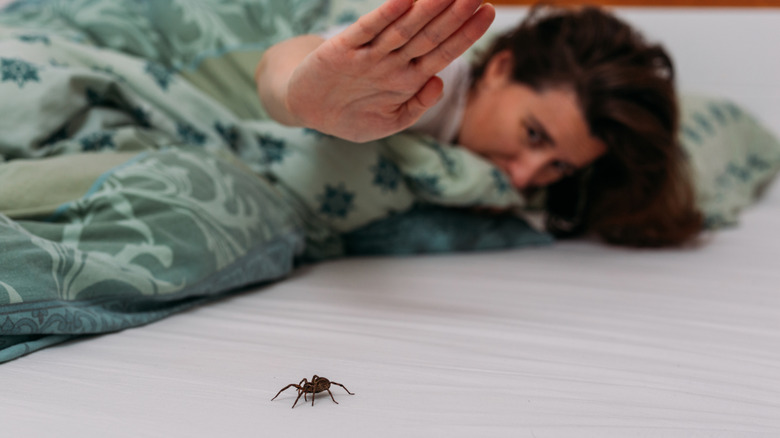
Ironic, isn't it, that some of humans' greatest phobias are about animals that are important to the health and well-being of our species? Bees pollinate about a third of all human food while snakes prey on disease-carrying rodents and other pests. But tops among the animal fears is arachnaphobia, the excessive fear of spiders. Which is unfortunate, since spiders feast on flies, ticks, fleas, and humanity's deadliest enemy, mosquitoes. Perhaps it'
s time to take a deep breath, put down your shoe or rolled-up magazine, and let spiders be. There are ways to keep spiders at bay without killing them.
It's no surprise that people fear spiders. Evolution probably explains our fear of spiders. Some carry disease. They crawl in often erratic patterns. They have eight legs rather than the six that insects have. And they're everywhere. There are some 1,200 different species of spiders in the United States. Some have evolved to live only within human dwellings. But contrary to our instinctive fear of them, spider bites are very rare and only happen when spiders are provoked. Although most spiders in the United States contain venom in their bites, their fangs aren't long or strong enough to penetrate human skin. Even when they do, spider bites are rarely dangerous, especially compared to mosquito bites. Ask your physician or veterinarian: Allergic reactions to spiders are rare. Alone among the most common spiders you'll find in your home, black widow spiders and brown recluse spiders are indeed dangerous, but they cause on average fewer than eight deaths per year in the United States.
The importance of spiders to humans
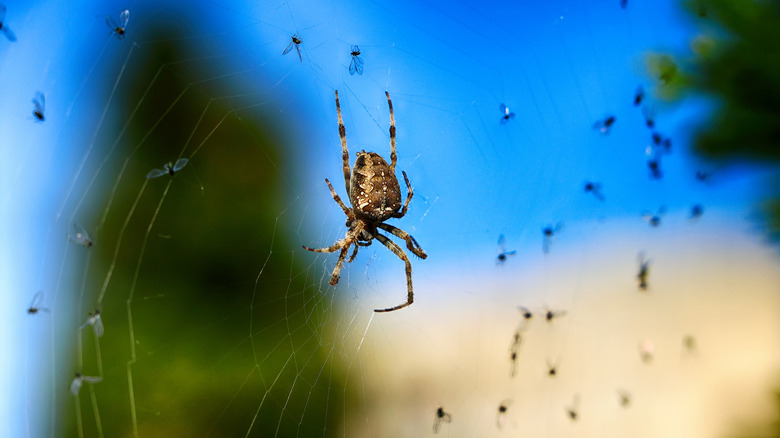
On the scale of value to humans, spiders are far more beneficial than they are a threat. It's hard to under-estimate the importance of spiders to our lives. Consider that $4.6 billion is estimated to be spent on mosquito repellent in 2025 (per a report published by Mordor Intellicence). Imagine how much we'd have to spend, or how much more we'd itch and scratch, if a single spider did not on average each over 2,000 insects a year. Spiders only eat live prey, ridding humans of pests while they might still harm us.
Spiders are also an important indicator of the health of an environment. A study in Global Change Biology found that a diversity of spider species is a sign of a healthy, biologically diverse plant community, especially in urban environments. Another study published in BioControl found the same thing in both rural and agricultural landscapes. The latter study found that the more diverse the spider community, the more productive the nearby crop fields. This should come as no surprise: Spiders eat pests that eat crops.
The same relationship applies on the smaller scale to your yard. Spiders are one of the best natural pest-control remedies for gardeners, as they prey on bugs that attack flowers and garden vegetables. One study of California gardens, published in Ecological Applications, found a 40% to 90% reduction in pest species when ants and spiders were present. There's a clear benefit to having spiders around. Learn how to distinguish between the rare dangerous spiders and the vast majority of beneficial ones, and you might find yourself better able to live alongside spiders in your home. If not, there are at least ways you can cope with your fears without resorting to arachnid murder.
Natural alternatives to killing spiders in your home
Preventing spiders from ever entering in your home probably is a futile task, but there are things you can do to reduce the temptation. Making your home less inviting to spiders' prey is the first place to start. Remove food from common areas to reduce its attraction to flies and other scavengers. To avoid finding brown recluse spiders in your yard, regularly mow your lawn and trim back overgrowth. Don't leave standing water around – this is where mosquitoes lay their eggs. Keep wood piles away from your property to keep ticks away. Caulk and seal seams in your home – foundations, window and door frames – where bugs may enter, and make sure your window screens fit snugly in place and don't have tears in them.
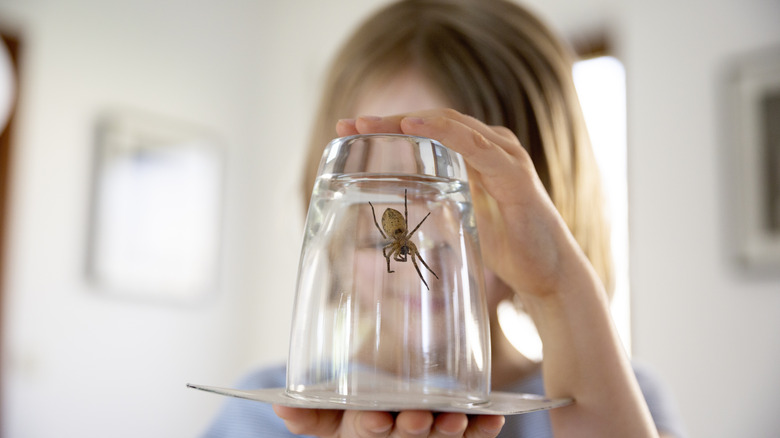
Inside your home, you can reduce the number of places spiders may hide by regularly spraying your houseplants with a fine mist of water, dusting and vacuuming corners of rooms, bookshelves, and other crevices, and removing cobwebs. If you see a spider in your home, don't just pick it up. Spiders bite when they're provoked. Wear rubber gloves if you prefer. Make sure that the spider isn't highly venomous: If so, call a professional to rid you of the problem. If it's otherwise harmless, you can trap the spider inside an upside-down glass, cup, or jar, slide a stiff piece of paper or cardboard underneath the opening to create a temporary lid, then release the spider outside. You can also create sticky traps with tape or glue, but this runs the risk of killing the spider. To drive spiders away rather than having to remove them yourself, however, you can spray vinegar in strategic places, grow strong-smelling herbs that spiders dislike, or diffuse essential oils to repel them.