

Popular Products You Should Never Use To Clean Granite Countertops
We may receive a commission on purchases made from links.
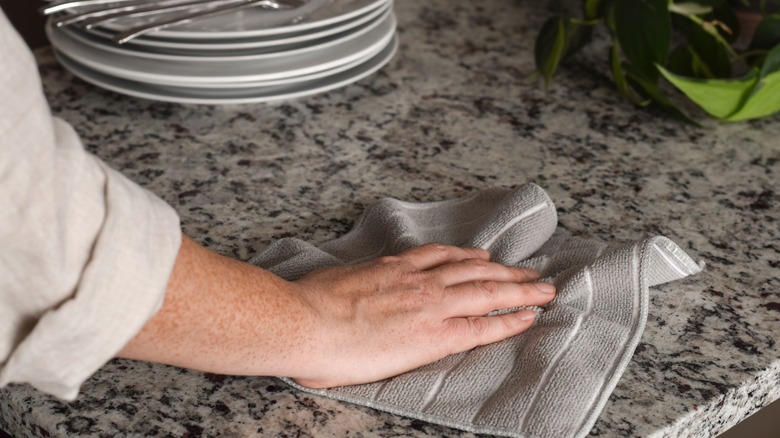
Granite countertops: they're hard as rock! Probably because they are rock. Granite countertops should stand up to the worst abuse and the most powerful cleaning chemicals we can get our hands on — but nope.
Yes, granite is technically rock, but that is, in fact, why we need to be discriminating in what type of cleaners we use on our granite countertops. Granite is the most common igneous rock, it's a mashed together matrix of feldspar, quartz and other minerals. This mixture is strongly affected by acids that can break down the minerals. For that reason, using acidic cleaners like vinegar on our granite countertops is a very bad idea. In fact, there are many types of countertops you should never clean with vinegar. But what other cleaning products should we avoid?
Before we start naming names, here's some additional background on granite countertops that may be useful. The benefits of granite countertops are many; they are long lasting, resistant to heat, and hard to scratch. Granite countertops are fairly durable. They are beautiful and are also environmentally friendly with a low carbon footprint if locally sourced, and they can be recycled. Further, if they are damaged, they can be professionally restored. While they are expensive, they also add considerable value to your home if you choose to sell it. There are many reasons to choose a granite countertop.
Avoiding both ends of the pH spectrum
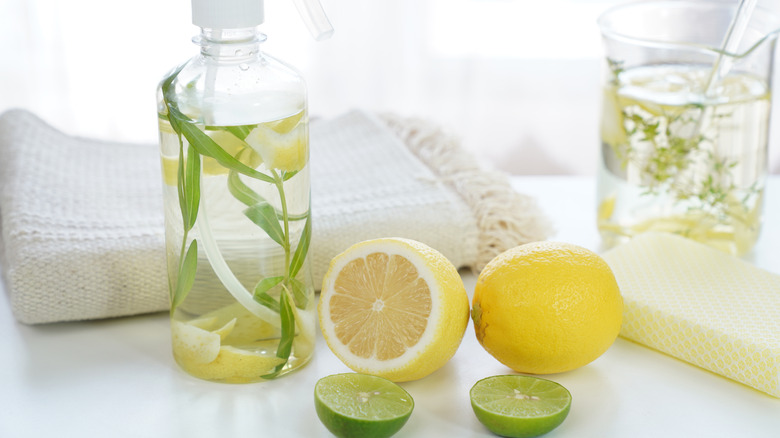
To protect a granite countertop, you should always have it sealed, but even after doing so, acidic cleaners can harm both the sealer and the granite. Acids etch the surface as they break down calcium carbonate, an essential component of granite, which coarsens the surface. Etching erodes the polished look and texture, often adding a cloudy white hue. Vinegar is indeed a great cleaning product, but you need to know how to use it. On the other end of the pH spectrum are alkaline products, which can also damage the sealant on a granite countertop.
Some cleaning products on the acidic list are vinegar, citrus cleaners with lemon, orange, or other citric acid ingredients. On the alkaline list: baking soda (sodium bicarbonate) and borax. Stronger alkaline cleaners are bleach and ammonia. Glass cleaners often include either ammonia or acidic acid in their mix, so avoid them. In addition to these chemicals, also avoid highly abrasive products, cleansers, and steel wool or other abrasive pads.
What to use to clean your granite countertops
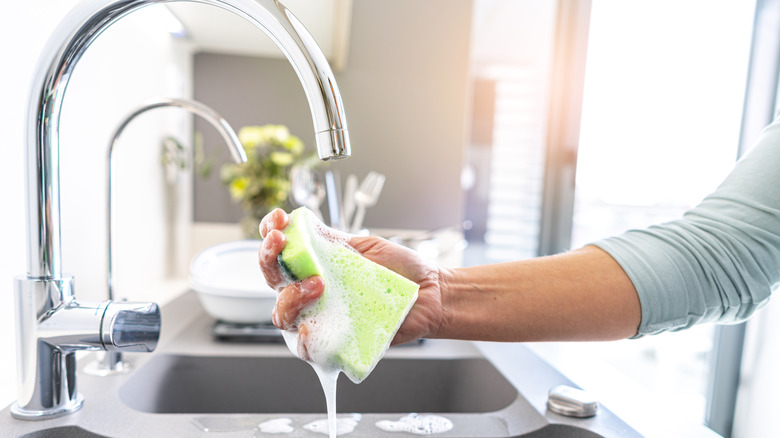
Warm water and a pH-neutral dishwashing soap are your best bet for cleaning granite countertops. Because granite is naturally stain-resistant, that is all you'll likely ever need. Use a sponge or microfiber cloth to spread the soap around and wash it off with water, drying completely when done. With that said, there are scores of commercially manufactured products designed specifically to clean granite countertops that are highly recommended, like Method granite cleaner spray from Amazon. Your granite countertop provider will likely have a recommendation for the ideal product to use on your countertop. (Some might require it to preserve your warranty.)
Should the worst happen, and your granite becomes etched or harmed in some way, the good news is that it can be repaired by a professional. It is not cheap, but it's doable. Most of us like our granite highly polished because it looks so clean an chic. But there is a "honed" finish, more matte in appearance, that many homeowners choose because it shows scratches and blemishes less obviously, while still delivering a beautiful granite look.