

Downsides That Might Change Your Mind About Buying A Side-By-Side Refrigerator
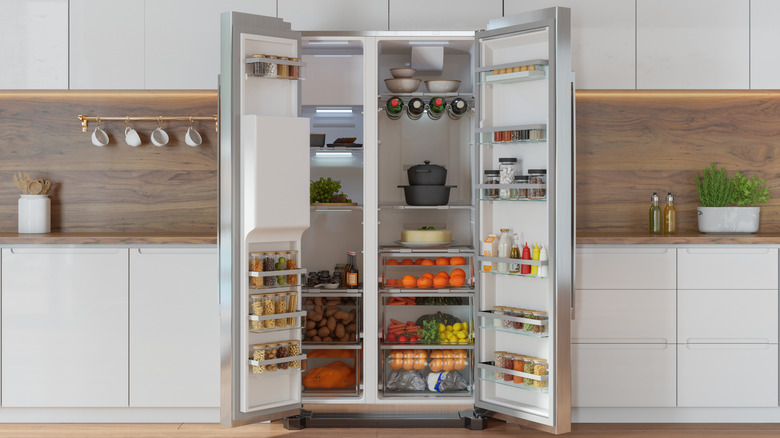
When you are deciding on a new fridge, you won't just want to research the best refrigerator brands, but also features and styles to choose the right option for your space. Besides just cost, aesthetics, and size, you also want to make sure that the fridge is functional for your space. This can mean a few different things, but one consideration is often reducing the frequency that you have to bend over, which leads many people to choose a side-by-side model as it allows you to keep your most used cooled and frozen items at a reasonable height since each side functions as either fridge or freezer from top to bottom.
While there are some benefits to choosing this option, there are also actually a pretty long list of reasons that this popular style could end up being more of a pain than a pro — and why you may wish to forgo the side-by-side model for another one. To help you out, we looked into exactly why the side-by-side design has gained a negative reputation. If you need more information beyond the basic layout and features — like whether you should purchase a smart fridge — that may require some additional reading.
Why you should sidebar the side-by-side
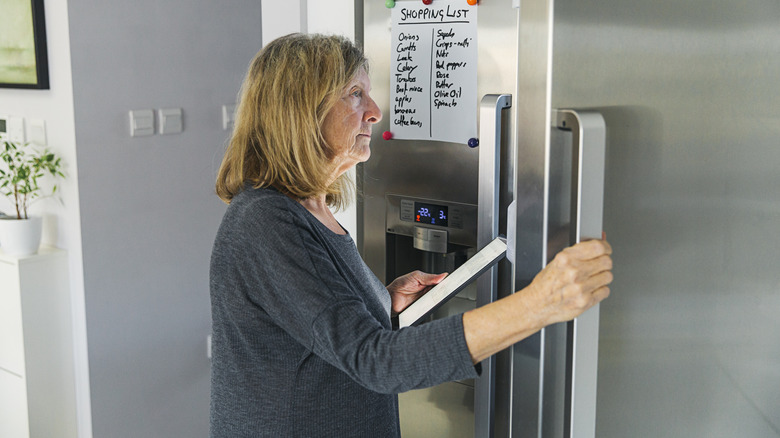
Though something like specific product recommendations do heavily come down to preference, there are some definitive facts that aren't really arguable. One of the biggest issues with side-by-side refrigerators is that they just aren't very practical. Though it may seem like it would allow for more storage because of the vertical space, in actuality, it generally offers less storage, especially when it comes to wider items like pizza boxes. Side-by-sides also tend to be less energy efficient because the large doors cause a rapid loss of cold air, which must then be compensated for in order to maintain the ideal temperature. Plus, they tend to generate more heat, which can increase the temperature of your home, forcing you to use more energy to cool your living space.
These are also not always the easiest to use. Ironically, this style, which generally has a smaller interior capacity, also tends to have a larger footprint, so it's not the best choice for small spaces. Because the doors swing open, you will have to have the right amount of room around the fridge that will allows you to open it wide enough to access the interior while not marring anything outside of your refrigerator.
What you should get instead
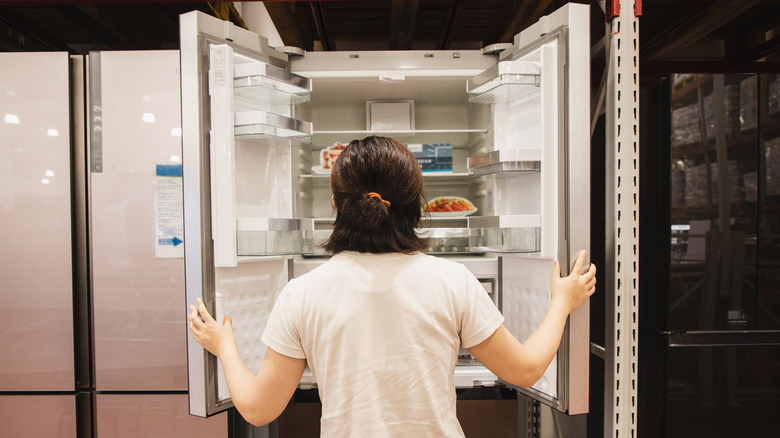
There are quite a few options to be had here, but there are some that are definitely more popular — and efficient — than others. Models with the freezer on top are some of the most affordable and practical designs on the market. They offer ample storage space for their size, and are generally a pretty standard and reliable design. Models with freezers on the bottom are also a popular choice and can offer some of the most storage space — though they can be a bit pricier than the previous option.
If you want to make sure you're getting the best use of your space and are choosing a model that is practical, it's hard to go wrong with a French door model. These tend to look a bit more upscale and also require less room to open (since only the top portion of the refrigerator has side-by-side doors), which means you can use a French door fridge next to walls a lot easier than true side-by-side refrigerators. They also tend to be more energy efficient, and many will come with an internal water filter and ice maker, which takes up less room than the external ones often seen on side-by-sides.