

The Best Way To Keep Dandelions From Spreading All Over Your Lawn And Garden
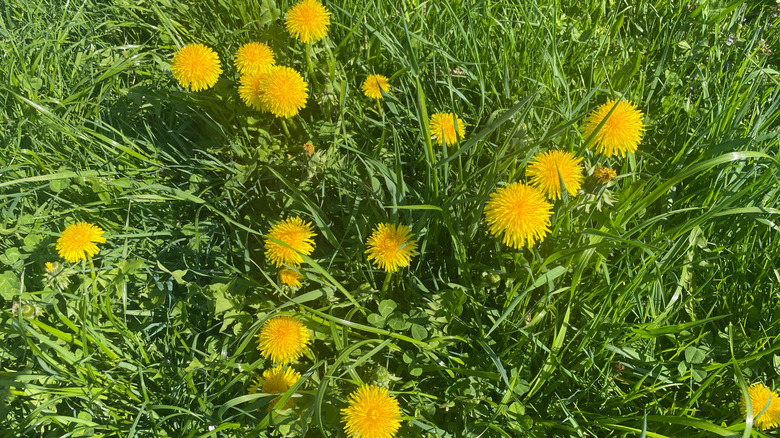
Forget about ever preventing dandelions from showing up in your lawn and garden. Unless you seal off your property from wind, dandelion seeds will blow into your yard. The key is to keep dandelions from taking over your lawn and garden — and that's something you can accomplish with some understanding of the life cycle of dandelions and doing what you would normally do to create a healthy yard: weed, mulch, and support the healthy development of the plants that you want to grow.
Having nothing but dandelions and other weeds in your yard might cause your neighbors to worry about their homes' resale value, but a few dandelions in your yard is not a sign of failure. Dandelions provide early spring food for hungry bees, and their seeds are fodder for songbirds like goldfinches, sparrows, and chickadees. They attract beneficial insects like ladybugs, which eat nuisance bugs like aphids. Dandelions' deep taproots help break up compacted soil and bring nutrients up from deeper layers of the soil, creating great growing conditions for other plants to thrive. So, learn to live with a few dandelions here and there while practicing the good gardening techniques that keep them from becoming an eyesore.
How dandelions grow and spread
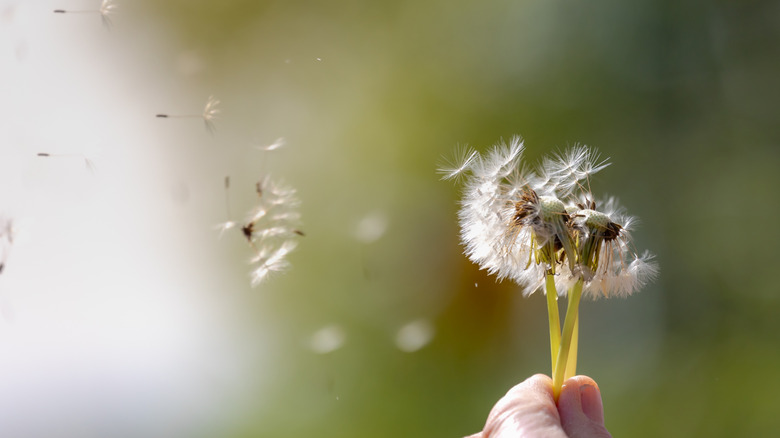
Dandelions (Taraxacum officinale) are perennial plants that grow in USDA hardiness zones 2 to 11, meaning just about anywhere in the United States. They are opportunists, growing in full or partial sun in a wide variety of soils from clay to sand and from acidic to alkaline. Their long taproots can find water that other plants cannot reach. Dandelions can tolerate drought and get a head start on the competition by emerging before other plants have had a chance to establish themselves.
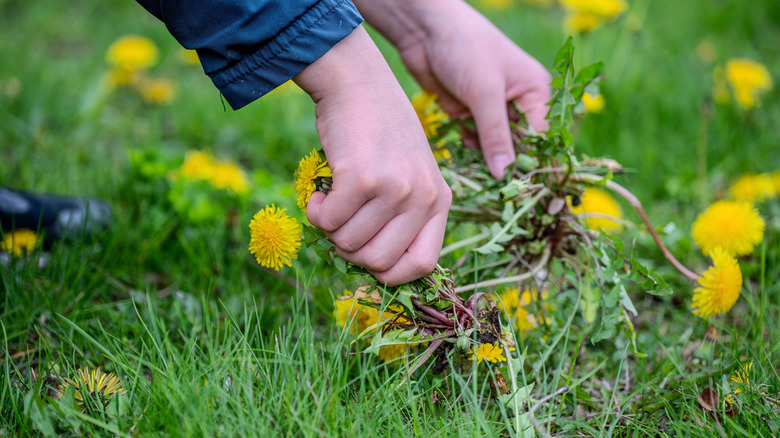
Your best method of eradication is to dig them out. Get rid of dandelion weeds by pulling them out at the root before they have a chance to produce seeds. Mowing the visible parts of the plant will bring only short relief, as the plants can regenerate from taproots that can grow 4 inches below the soil surface. Once removed, place your weeds in a sealed plastic bag and send them to the landfill. Better yet, learn how you can eat them. Dandelions can be eaten raw in salads, cooked, preserved in jams and dried for teas. In World War II, people even roasted their roots when coffee was hard to come by.
Two key things you can do to prevent dandelions from taking over your yard
Dandelions are also self-fertile, meaning they don't need pollinators to produce seeds. They do so at a rate of over 150 to 200 seeds per flower, and they can rebloom up to 10 times a year.All the factors make dandelions prolific spreaders. Allow a few of them to go to seed one year, and you can have a problem on your hand for years to come. Catching dandelions early is the key to preventing their spread. Once they produce the fluffy seed heads that tempt kids and adults alike to blow on them, it's all over.
So, before trying anything else, you can attempt to shade them out from the start. Growing a healthy lawn or garden will starve young dandelions of the sun that they need to continue growing. In early spring, overseed your lawn with grass seed and water it in regularly. Once the grass has emerged, let it grow. The best way to mow your lawn to prevent weeds from taking over is to raise your mower blade to at least 3 inches so that the grass grows high enough to shade out young dandelions. In a garden, grow shade-producing plants in full or part sun to prevent dandelions from taking root, and lay down three or more inches of mulch on bare spots to deprive the young plants of sunlight. Dandelions have adapted to many different environments, and you'll surely never be rid of them, but these two steps can keep dandelions from becoming a nuisance.