

Ditch The Curtains & Try These 5 Chic Solutions To Cover Sliding Glass Doors Instead
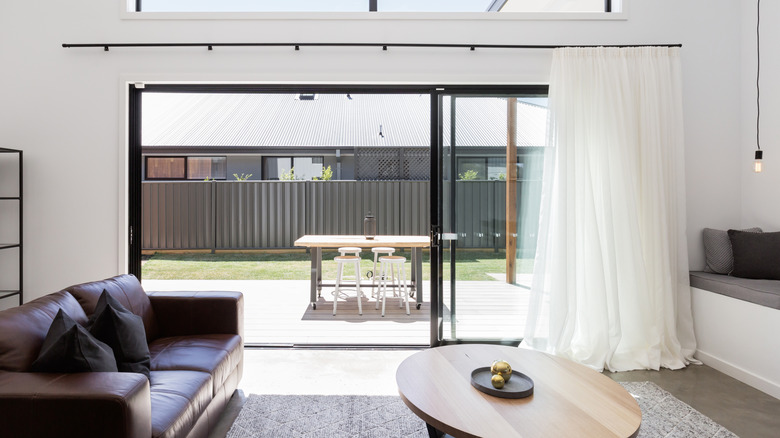
When homeowners are looking for ways to increase privacy or regulate the temperature of their home, one of the first go-to options is curtains. However, while these versatile fabric hangings are excellent for a variety of windows, they aren't the best when it comes to sliding glass doors. They can be cumbersome by getting caught up in the door track and can often make your space feel cramped because they make it hard to control how much light is let into the room. But, don't despair! Curtains aren't the solution for covering sliding doors.
There are a variety of unique window treatment ideas, which can help you separate your indoor space from the outside. And, many of them come with a range of additional benefits you may not have previously considered. For example, installing sliding shutters gives you the ability to control how much light enters your room. Alternatively, cellular shades not only add privacy but also increase the energy efficiency of your home by using their layered design to improve insulation. So, if you're fed up with the hassle of having curtains alongside your sliding doors, but you're at a loss for what to use instead, check out these attractive and helpful options.
Stylish shutter
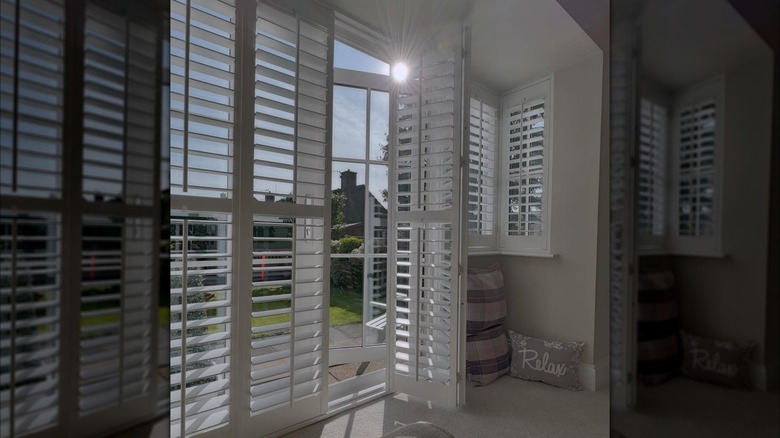
Shutters aren't just for farmhouses anymore. They're now a chic and practical way to make sure your indoor space feels perfectly private. And while you may be picturing the classic cabinet-style open set, there are actually a variety of different types you can use in front of your sliding doors. The first option is bifold. These shutters fold into themselves as you open them, meaning they store nicely on one or both sides of the door when not in use.
Another way to use shutters in this location is to opt for a sliding set, sometimes referred to as "bypass shutters." These work in much the same way as sliding doors do — by moving along the inside of a track. This means that they are easy to open and close, and they have a sleek, clean profile, which goes perfectly with the existing doors. You can create a set of custom white shutters to fit perfectly into your space by working with a window blinds specialist.
Vertical blinds
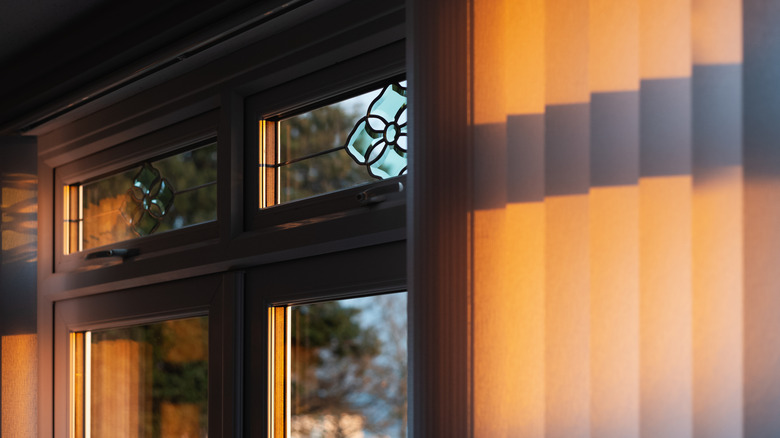
Think vertical blinds are boring and a bit too outdated? Think again! These handy spacesavers have evolved over the last few decades and have actually increased in popularity over recent years due to their versatility and wider range of styles. If plain white blinds make you think too much of office spaces, why not go for a stylish textile option like these Levolor fabric blinds from Home Depot to infuse a bit of softness? Or try out this faux wood set of vertical blinds from Arbor to add an earthy feel to your space.
Whatever style you prefer, vertical blinds are an excellent way to get privacy for your home when you want it. Their rotating action means you can block the glare from sunlight during the hottest times of day while still allowing enough light into the room. In addition, vertical blinds collect less dust on their slats than horizontal ones and offer full coverage of the doors from top to bottom. Individual slats can also be easily replaced if damaged, making them a great option for busier households. This also makes them more environmentally-friendly as you won't need to swap out the whole thing if a piece gets broken, thus reducing unnecessary waste.
Cellular shades

Cellular shades are a particular type of pleated window covering known for their sleek design and functionality. Their double-walled construction creates extra insulation, which is perfect for homes that lose a lot of heat or air conditioning through their sliding glass doors. In addition, the pleated nature of these blinds means that they fold up tightly, creating a narrow profile and making them less obtrusive than other options.
You can choose your cellular shades to be in a vertical design — such as these vertical cellular shades from Costco — which make them easy to open and close in front of your sliding glass doors. Alternatively, you can opt for a horizontal style to cover each panel of the sliding door. These shades can be more fragile than blinds, so you likely need to give them a frequent going-over with a fresh Swiffer duster in order to keep them tidy.
Glass treatments
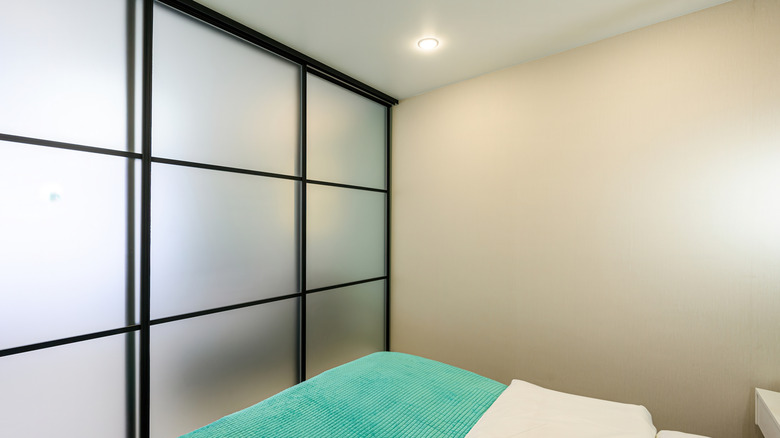
If you have found that using a traditional method for covering your sliding doors is just too bulky or cumbersome, why not treat the glass instead? There are plenty of ways to make windows and doors less see-through with only a simple application process. For example, frosted glass is a great way to ensure that you're still allowing light into the room while keeping your space private. You can achieve this look using contact paper, a specialized spray paint, or a simple peel-and-stick vinyl option like this frosted privacy film from Walmart, which also blocks up to 91% of UV rays. As a bonus, many of these frosted glass techniques are temporary and therefore renter-friendly.
If you'd like to add a little more flair to your set of sliding doors, you can even go for a vinyl which features an attractive design. Many options, like this floral green window film from Amazon, are great for adding a touch of color while blocking harsh glare from the sun and increasing the privacy of your space. Keep in mind, however, that treating the window itself means that you won't be able to open and close them like you would with blinds or shutters. So, if you'd prefer to be able to adjust the amount of light in a room throughout the day, this may not be the best option for you.
Outdoor alternatives
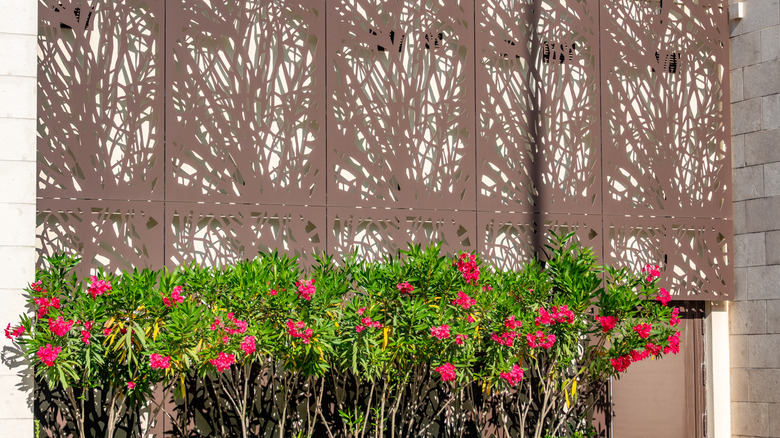
Did you know that your solution to covering your sliding glass doors doesn't actually have to be inside? There are a variety of ways to screen your doors using outdoor materials that look great and don't eat into your inside space, either. For example, you can plant shrubs or trees outside in order to make your own creative plant solution to increase privacy, block sun glare, and improve the look of your outdoor space, too. You may want to consider using a mature deciduous plant like a hydrangea bush (Hydrangea macrophylla). This is because their leaves will protect your room from overheating in the summer, and their bare branches will allow much-needed light into your house during the winter. It's a win-win! Just keep in mind that using plants as a screen does not offer complete coverage, as you need to leave room for egress from the doorway, and if you are looking for a higher level of privacy, then this option may not be for you.
Another outdoor alternative is to purchase a garden screen. Typically used as a decorative piece, these are also a great option for screening your doors from the outside. You could choose a bamboo one for a more natural look or a decorative metal version like this outdoor screen from Wayfair to add a bit of flair. However, doors should always remain unobstructed in case of emergency, so any plants or decorative screens should only be placed to the side in order to allow easy access. A safe outdoor option to keep the doors clear could be to add an awning, which would block sunlight and could also add a level of privacy, depending on its height.