

8 Common Kitchen Stains That Can Be Fixed With A Little Bit Of Vinegar
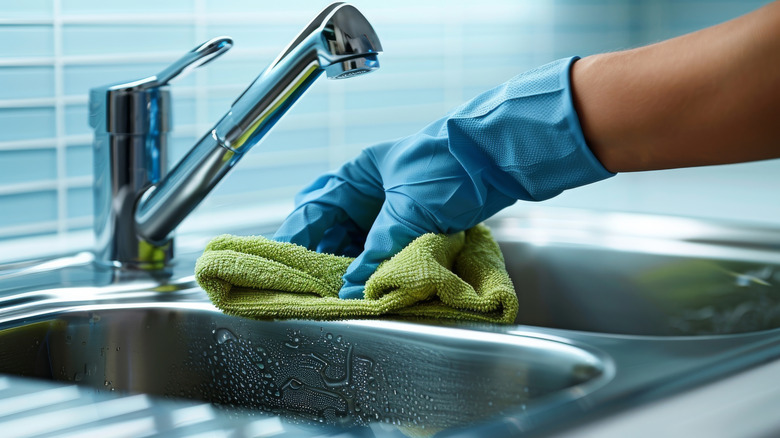
Vinegar cleaning hacks are everywhere right now, and it's for good reason. This household ingredient serves as a fantastic alternative to chemical cleaners, predominantly due to its antibacterial and acidic nature. A form of diluted acetic acid, vinegar is a mild enough substance that you don't have to worry about it potentially harming surfaces or textiles, while at the same time it is acidic enough to break down stubborn stains and spots that elbow grease and soap aren't equipped to tackle. This is particularly helpful in the kitchen, where all manner of stubborn food stains, grease, or even — oops — that dropped glass of red wine, can leave its unwanted mark.
Deploying vinegar on these common kitchen stains will save you a whole lot of time and effort. Sometimes, these tricks will call for a specific kind of vinegar while other ideas employ vinegar in combination with other household products. All in all, most vinegar kitchen cleaning tricks require things that are readily stored in your cupboard, however. With that said, don't underestimate what this mild acid can do to help clean dirty kitchens.
Grease stains on appliances
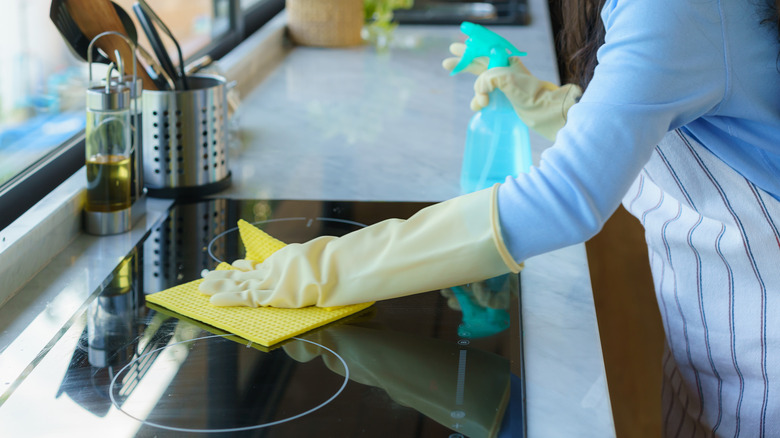
Vinegar's aforementioned acidic properties will help break down that solid, caked-on residue that food and grease tends to leave on ovens and stoves and makes the grime softer to wipe away. For maximum effect, spray a distilled white vinegar and water solution directly onto any stubborn grease stains, and let it sit for few minutes before trying to scrub. Swipe away with a damp towel or sponge, then again with a dry cloth. To make it even easier to clean, this trick works best if the surface is still somewhat hot from use — as long as it's cool enough to safely touch.
Limescale stains on appliances
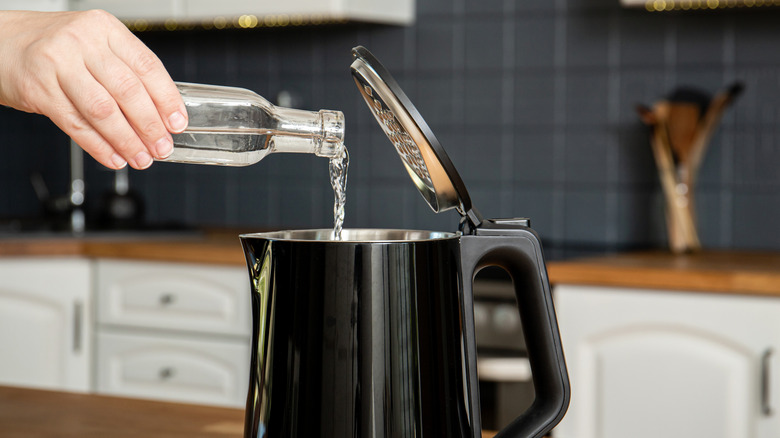
Certain appliances that use water regularly, like tea kettles or coffee makers, are susceptible to limescale build-up as a result of the minerals that exist in tap water. White vinegar works well to descale those appliances, removing those unattractive, splotchy stains. Mix up a one-to-one ratio solution of water and vinegar, then pour the mixture into your kettle or coffee maker. Run the appliance as you normally would, and then pour out the mixture. Flush out any lingering vinegar smell with water.
Tackle burn residue on pans
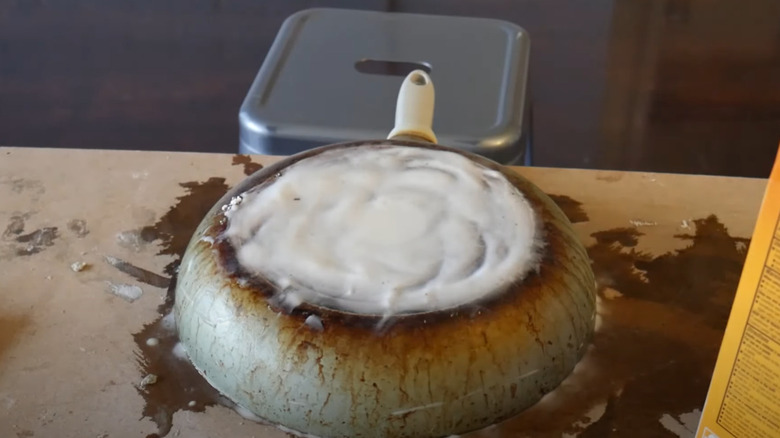
You've likely noticed the underside of your cookware is darkened with a patina of burns and food residue. To restore some of the original shine, flip your cookware upside down, and place it on a towel or in the sink. Cover the stains with ample amounts of baking soda. Pour white vinegar slowly onto the baking soda, and let the chemical reaction fizz away. While normally baking soda is a cleaning product you shouldn't mix with vinegar, if applied carefully, this trick will deglaze the patina and stains, making it easier to wipe away.
Wine stains on kitchen mats

It happens to the best of us — you pour yourself a glass of red wine while cooking, or you need a splash of wine for your recipe, and suddenly, it spills onto your kitchen mat, dribbles onto your dish towel, or drops all over you. Luckily, vinegar can save you from long-lasting stains. First, dab the stain with a sponge rinsed in cold water, then soak the fabric in vinegar as a sort of pre-wash. The vinegar should effectively break down and lift the wine stain so that it comes out in the regular wash.
Sludge stains in the sink
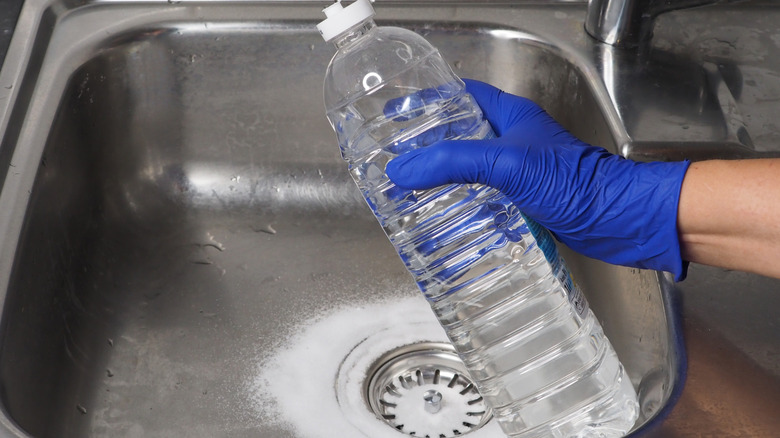
Sludge stains and discoloration from grease in your sink is a sign of a well-loved kitchen, but a baking soda and vinegar trick can get your sink shining again. First, sprinkle the baking soda on the stains and then spray a water and vinegar mix straight onto the baking soda. Allow it to set for a minute or so, and then scrub lightly. You can also use this baking soda and vinegar duo to naturally clean a smelly drain, but as mentioned before, use said combo in moderation since it causes such a volatile reaction when mixed.
Splatter stains in microwaves
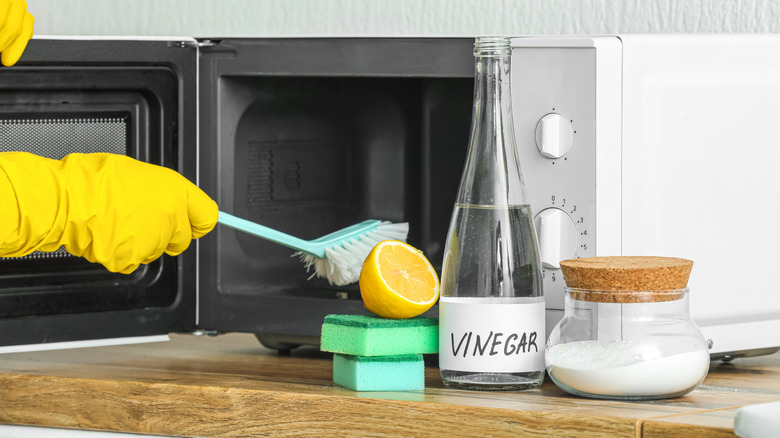
Microwaves are the likely site of many mystery splatter stains, but vinegar can help tackle those crusty spots. Mix another solution of water and vinegar in a microwave safe bowl, then heat up the solution for up to three minute — enough for the inside of the microwave to get steamy. Once sufficiently heated, remove the bowl and then swipe the stains away using a sponge or brush. Replicate this trick with either lemon or baking soda to deodorize if you're not a fan of the smell of heated vinegar.
Mildew stains on kitchen surfaces
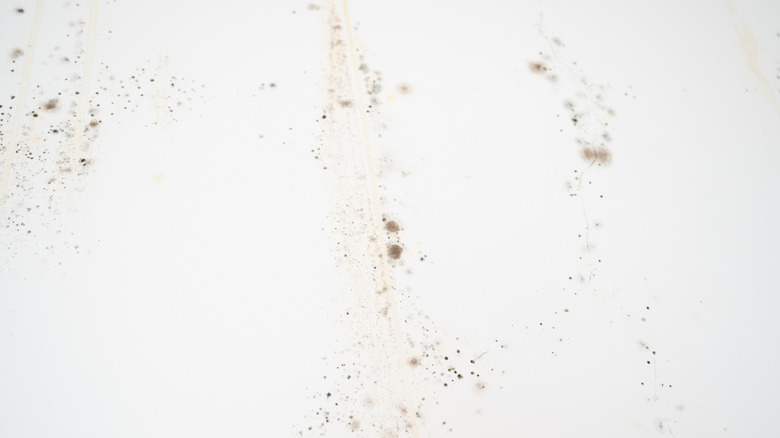
Kitchens can be naturally humid places given the steam from cooking, coffee making, or running water in the sink. It's not uncommon, therefore, for mildew to build up on backsplashes, or even on the wall. To solve this, pour distilled white vinegar into a spray bottle and spray directly onto the mold or mildew. Let the vinegar sit for at least an hour before wiping the area up. Wipe with a damp cloth or sponge afterwards, and make sure you dry the space as much as you can to discourage further growth. Make sure to test this on a small area of the wall first, to make sure it does not damage any painted surfaces. For larger mildew and mold stains, be sure to call in a professional.
Stains and odors from fish

Cooking fish is tricky because it can leave some unpleasant sights and smells in the kitchen. From fish fluids spilling onto counters or fishy aromas taking over, it's best to nip the scent in the bud by using vinegar to deodorize any areas where fish juice has spilled or stained. For this idea, try using an apple cider vinegar for a streak-free cleaning method for places like countertops. Mix water and apple cider vinegar together, then soak a cloth or paper towel. Wring it dry, then wipe down all the surfaces that the smell or leftover fishy stains are clinging on to.