

Steal This Aluminum Foil Railing Trick Next Time You Paint Walls To Save So Much Time
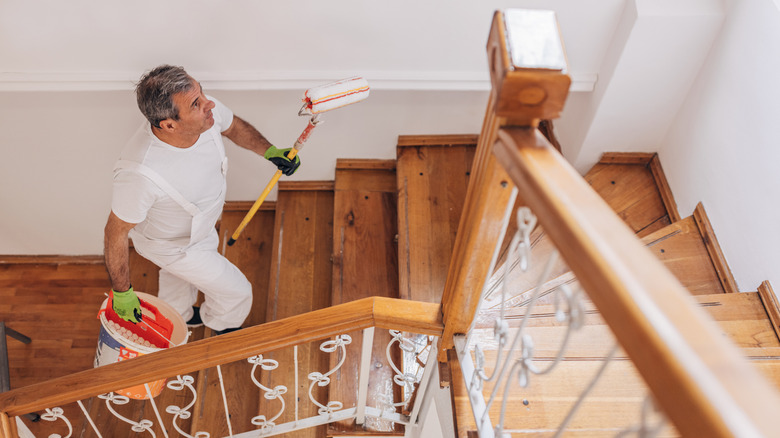
Painting the wall around your staircase might seem like a great makeover idea. That is, until you realize you'll have to somehow coat the walls behind the railings without accidentally marring your pristine banister. And trying to get the angle just right can be akin to walking on eggshells. You can, of course, loosen the screws and take off the entire thing to easily paint your walls. But if you'd rather not get your tools (power or manual) out or aren't sure about putting the handrail back in, try a genius aluminum foil home hack to paint your walls and save time: covering it entirely to protect it from rogue paint drips.
Now, you may be wondering how this will save you time. Can't you just do the same thing with painter's tape and call it a day? While you can, this trick is better because aluminum foil can easily assume the shape of the object it's wrapped around. So, you won't have to spend mindless minutes wrapping a roll of tape around your banister. Simply tear off a few strips and cover the entire thing in a fraction of the time. Plus, foil doesn't absorb paint, so the surface beneath will remain clean and dry. Moreover, if you have a few more walls to paint behind the rail, you can simply wipe them with an old rag and reuse the same strips again — provided you peel them off cleanly. You can even cover your doorknob with the same aluminum foil when painting a door. And if you don't have any other immediate projects in mind, it's quite easy to store the used foil strips. This will minimize wastage and allow you to get the most out of a roll.
How to protect your handrail with aluminum foil when painting walls
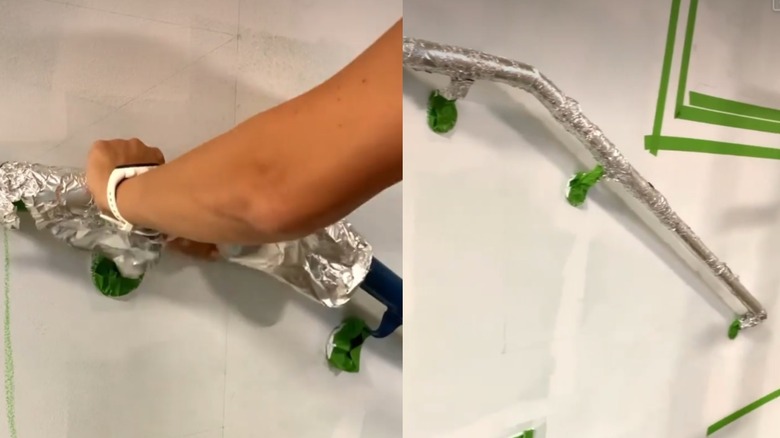
Take your roll of foil and tear off generously-sized strips. When you have a few, start wrapping them around your handrail. Don't take any chances and ensure you cover the banister entirely (yes, even the underside). To ensure they remain in place, press them down tightly so they mold well to your railing. You can even have two pieces overlap a little, so no paint drop finds its way through the tiny gaps between two strips.
Tear off separate pieces to cover the volutes (the spiral decorative piece at the end of your rail) or a rail cap (the rounded ball on top of a rail), as cleaning them later can be a pain. Extend the grooves and other details the same courtesy to minimize cleanup later. When you're sure the entire surface is covered, you can start painting the walls without worrying about the rail getting dirty. And don't take it off until you're sure the paint's cured entirely or you're sure you didn't miss a spot somewhere beneath the rail. Be gentle and straighten out the strips with your hands before using them again or storing them away for future use.