

Keep Your Indoor Peace Lily Thriving All Winter With This Simple Placement Tip
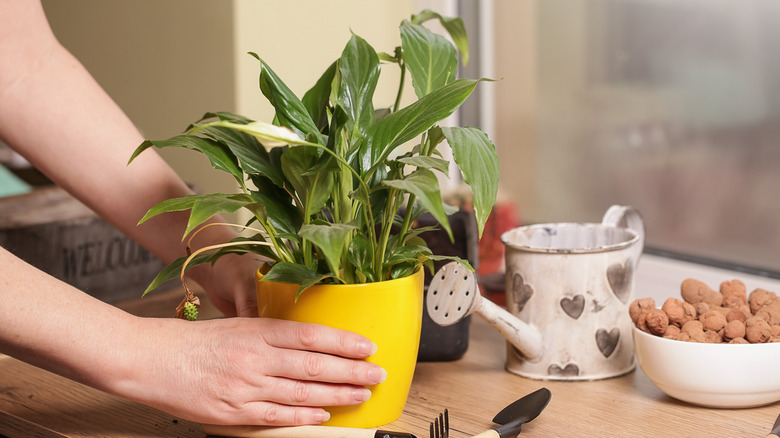
Peace lilies (Spathiphyllum) are undoubtedly a popular choice for indoor plants due to both their aesthetic value and ease of care. Such features can be especially helpful during the winter months, when cooler temperatures and shorter days make it challenging to keep some plants happy. Yet this doesn't mean the plant will thrive in all winter conditions, and the right care is essential to helping your peace lily live as long as possible. One way to keep your peace lily happy this time of year may be as simple as keeping the plant away from direct sunlight, cold drafts, and hot air from heat vents.
First, placing a peace lily right next to a window may seem like an attractive option, but you should know that this plant does not care for direct sunlight. The South Dakota State University Extension recommends placing the plant near an east-facing window for morning light or a north-facing window for indirect light. During the winter, make sure your peace lily still receives bright, indirect light on shorter days. If your own peace lily plant is by a south- or west-facing window and cannot be moved, consider putting up sheer curtains if direct sunlight reaches its leaves. These can filter the sunlight and help prevent scorched leaves.
Peace lilies prefer warm conditions (with some caveats)
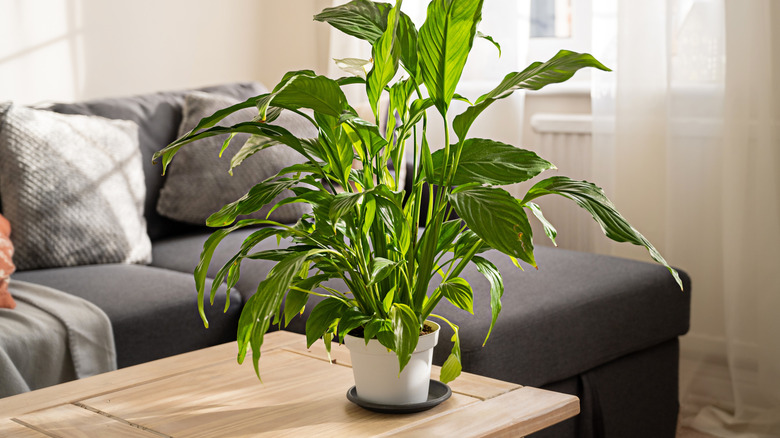
As a perennial tropical plant native to parts of Central and South America, the peace lily thrives in warmer temperatures and is sensitive to cold. You'll want to protect it from colder areas of your home and exposure to cold drafts near doors. At the same time, it's a mistake to crank up the heat without giving your plant's placement a second thought. Keep it away from vents, space heaters, fireplaces, radiators, and other heat sources. Direct exposure to hot air can damage its leaves. You'll also want to place your peace lily in a location between 65 and 80 degrees Fahrenheit, avoiding areas at or below 55 degrees, according to South Dakota State University Extension.
If your peace lily is turning brown at the tips, it may be receiving too much light, not enough humidity, or inadequate water. Check the light, humidity, and soil moisture before deciding whether moving the plant will help. A different spot may help if it receives direct sunlight or sits in the path of hot air, but watering issues need a separate adjustment. Keep tabs on your peace lily's watering needs and avoid common mistakes people make when watering it. Lightly water until the soil is damp, but not saturated. Allowing the soil surface to dry slightly between waterings can also help prevent root rot. With the right spot and a little attention to watering, you can help keep your peace lily healthy through the winter.