

Keep Your Garage Toasty In Winter Months With A Home Depot Solution

We may receive a commission on purchases made from links.
Winter is a great time to get some indoor DIYs done, but bracing the cold in the garage can make it extremely unenjoyable, especially if you're spending an entire Saturday at the workbench. If you're tired of dealing with numb fingers, it's time to turn up the heat. One way to make the space warmer is with a natural gas heater — it's small and a lot less expensive than a wood stove or other types of heating installations. And one practical option available at Home Depot is the ProCom 10,000 BTU Natural Gas Ventless Blue Flame Heater. The product requires no ventilation and no electricity, meaning it can hold down the fort and keep it comfortable during a power outage. The trade-off is that it does need a natural gas connection, and even though it comes with feet, it doesn't have the flexibility of a portable electric heater that's able to move from room to room.
For the most part, buyers found the setup easy, with one mentioning in the reviews that the lowest setting was enough to keep their space nice and cozy. Another reported that the pilot sometimes stuck and the heater didn't light right away, but overall, the item has a positive 4.5-star rating. How well it warms your garage will depend in part on the size of the space, the insulation level, and how much heat escapes through the door. The unit is capable of heating 250 to 400 square feet, a good fit for a one-car garage or a small, well-insulated two-car unit and a fine supplement to work alongside other affordable garage-heating solutions. Selling for $129.10, it could be a cost-effective option if your home already has a natural gas line to hook into.
What to know before using the ProCom heater in your garage
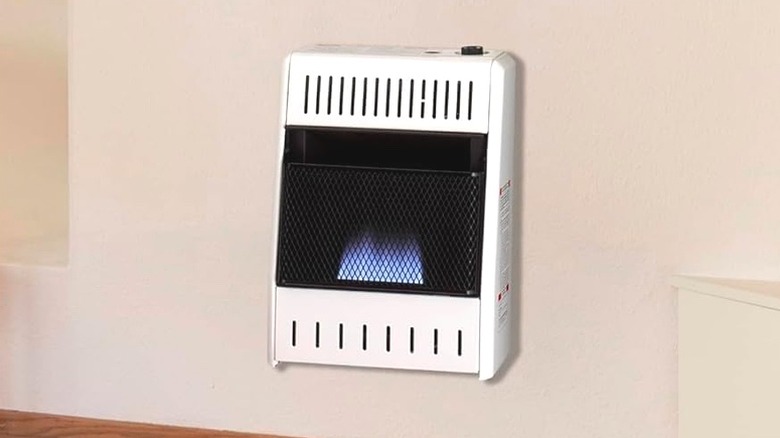
Make a plan before you install the ProCom gas heater in your garage. The pilot and burner must sit at least 18 inches above the floor and out of the path of any vehicles driving in or out. If you don't want it freestanding on a riser, the unit comes with wall brackets, so another option would be to mount it to the wall. The manual also states the heater works best if it is installed in the coldest part of the room (often near a window) for more consistent warmth throughout the space and that you should make sure there is good airflow and ventilation in the space to ensure a fresh supply of oxygen. Since ventless gas heaters tend to produce a lot of water vapor, keep tabs on the humidity in the space. It may not be an issue for dry winter air, but you might need to bring a dehumidifier into the mix to prevent excess moisture and potential mold damage.
Remember that there is an open flame involved, so if your garage doubles as storage for any sort of flammable liquids (which many do), keep them far away from the heater, and don't run it when flammable vapors may be present. The unit should be used as supplemental heat for the time you're actually in the garage, so don't go running it around the clock. If you're ready to say goodbye to cold garages, make sure this heater makes sense for your space. With new gas lines and pro installation running a few hundred dollars at least, you may want to consider an electric alternative if you don't already have the right fixtures in place.