

The Old-School Laundry Habit Boomers Grew Up With That Could Save Money Today
We may receive a commission on purchases made from links.
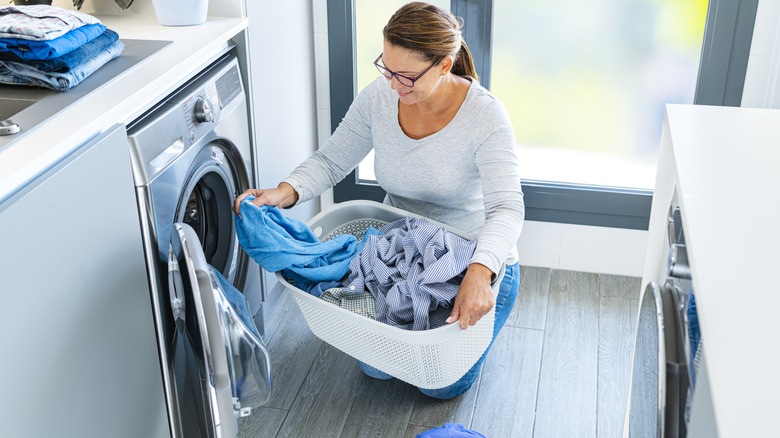
Your dryer is probably one of the biggest energy hogs in your home, consuming anywhere between 1,500 and 5,000 watts, depending on its make. So, if you run three loads a week, this appliance alone will end up consuming hundreds of kilowatt-hours (kWh) of power annually. This, in turn, will translate to tens of dollars on your utility bill. Though it may not seem like a huge amount today, it adds up over time. And the pocket pinch will be higher if you run your dryer more than three times a week. So, if you'd like to make your home more sustainable or just cut down your electricity bill, try an old-school fix your parents or grandparents likely relied on: hanging your laundry on a clothesline outdoors. It uses zero electricity and costs very little to set up.
Plus, saying goodbye to your dryer will help your clothes last longer. It's because exposure to high heat and the tumbling action inside a dryer's drum is tough on your clothes, causing the fabric to shrink, fade, and thin over time. Bonus advantage: sunshine and fresh air will leave clothes smelling clean without any dryer sheets. So, you'll save money on that as well. If you're ready to give it a try, you'll need a few basics, such as a sturdy line, a set of durable clothespins, and a spot that gets decent sun (though not direct sunlight) and airflow. However, if your HOA rules forbid you from having a clothesline in your yard, you can set up a simple foldable rack like the Mainstays Oversized Steel Clothes Drying Rack on your balcony or in a guest room. But if you don't have room for a drying hack, a retractable line is a space-saving laundry room hack that will save the day.
Line dry your clothes the right way to make the savings stick
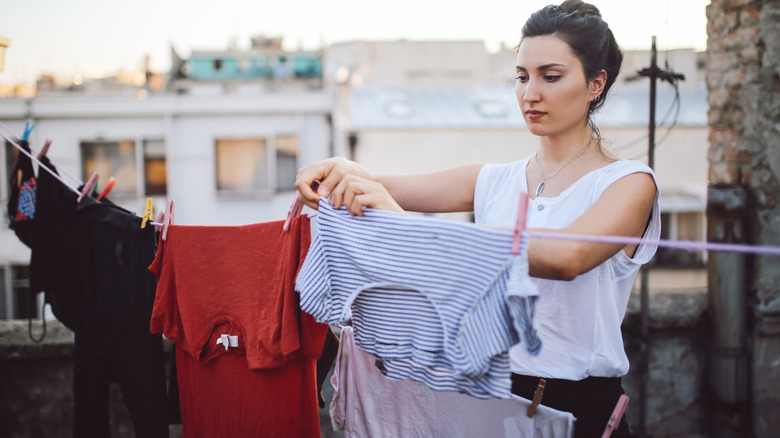
Line drying works best on a warm, breezy day. Thesun does the work that your clothes dryer was billing you for. Time your wash for the first half of the day to make use of all the free sunlight. And before hanging your wet garments from a clothesline, snap each piece out in the air. This will smooth creases, and remove excess water and lint.
But don't treat all fabrics the same way when line drying your clothes. For example, heavy (think jackets) or stretchy items (your gym clothes) can sag out of shape on a line, so always try to lay them flat on a foldable rack. As for your regular clothes, you can hang dresses by the shoulders and pants by the waistband. T-shirts need to be hung upside down from the bottom hem. For button-down shirts, fasten every button before pinning them up. This will help them hold their shape and dry with fewer creases. To minimize your ironing time, feel free to smooth any remaining wrinkles with your hands. Spread towels flat across the line with no bunched or folded sections, or those spots will remain damp.
After everything is up, don't rush the drying process. Leaving laundry out for a while won't hurt it; give it an hour or two to soak in sunlight. Just don't leave it out too long since leaving them out in the strong sun can make them feel rough and wear down the fabric faster. So, check on them in a few hours and take them inside once dry, and that'll be one more load done without adding a cent to your utility bill.