

Riding Lawn Mowers Do More Than Cut Grass — Use Them For This Landscaping Task
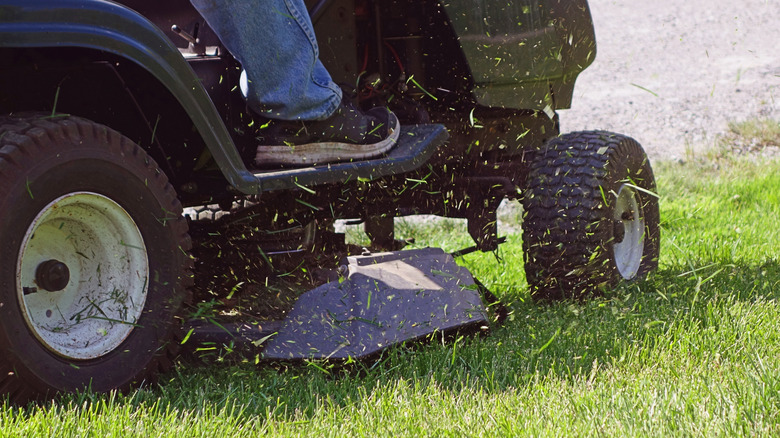
Buying a riding lawn mower is a significant investment. However, the convenience it offers can make maintaining a large lawn much easier, as you no longer have to exhaust yourself pushing or walking behind a mower. But did you know your riding lawn mower can do more than just mow grass? With the right attachment, you can use your riding lawn mower to even dethatch your lawn, and honestly, you should. Dethatching involves removing the excess layer of dead and living organic material that accumulates between the grass and soil, allowing water, air, and nutrients to reach the grass roots more easily.
Don't go purchasing a dethatching attachment just yet. First, make sure your riding lawn mower can even accommodate one, and what type of attachment is compatible with your model. If you are unsure, check your lawn mower's manual. Additionally, if you are buying a tow-behind attachment, make sure its weight does not exceed the maximum towing capacity of your riding lawn mower. If you buy something large or overweight, even though it is compatible, the attachment might not work properly with your riding lawn mower.
If, however, you do not want to get a tow-behind attachment, you can also get a mower-mounted dethatcher blade. Unlike a tow-behind dethatcher attachment that works independently of the mower's cutting deck, a mower-mounted dethatcher blade attaches in place of the mower blade and dethatches your lawn as you run the riding lawn mower across your property. It is also worth noting here that these dethatcher attachments will not remove the loosened thatch. You will need to manually get rid of it yourself after the process.
Consider this when dethatching a lawn using a riding lawn mower
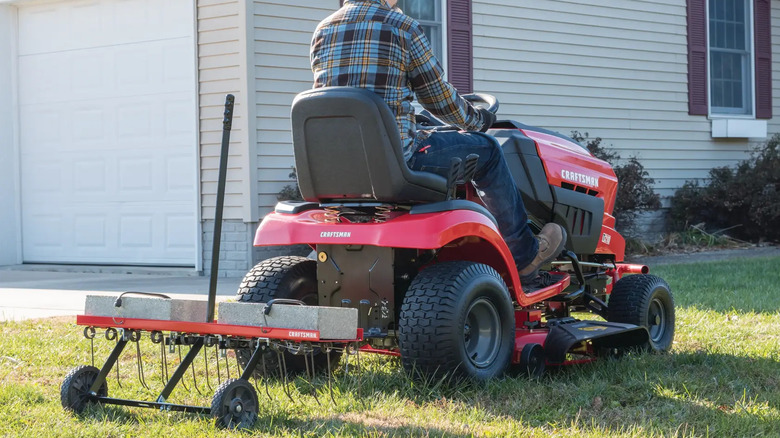
Before you start towing your dethatcher attachment over your lawn, first find out when the best time to dethatch your lawn is. Dethatching is a stressful process for your turf. So, it's best to start when the grass is able to actively grow and recover, or you will end up damaging your lawn instead of helping it. Once you have determined the right time, make sure that the soil is slightly damp when you are dethatching. This is important because if the soil is dry, it can make the tines of your dethatcher attachment skip across the top; whereas, if the soil is wet or soggy, the tines may rip up healthy roots. And, in soggy soil, the riding lawn mower could leave behind ugly tire ruts.
When conditions are right, start with mowing your yard. Cut the grass shorter than usual using the riding lawn mower so the tines can actually reach the thatch instead of just brushing over the grass blades. Likewise, when dethatching, do not run your riding lawn mower too fast. A slower, steady pace gives the dethatcher enough time to work through the thatch, no faster than 5 mph.
It is also important to note here that when you are dethatching your lawn using a riding lawn mower, you should avoid sharp turns with the tines lowered. It could destablize the machine. Plus, be sure to remove the thatch as well once you are done. Lastly, rinse and dry the dethatching attachment after use so it is not just sitting there collecting rust and is ready to use when you need it again.