

Spraying Your Shower Curtain With Vinegar: What It's For And Why It's Recommended
We may receive a commission on purchases made from links.
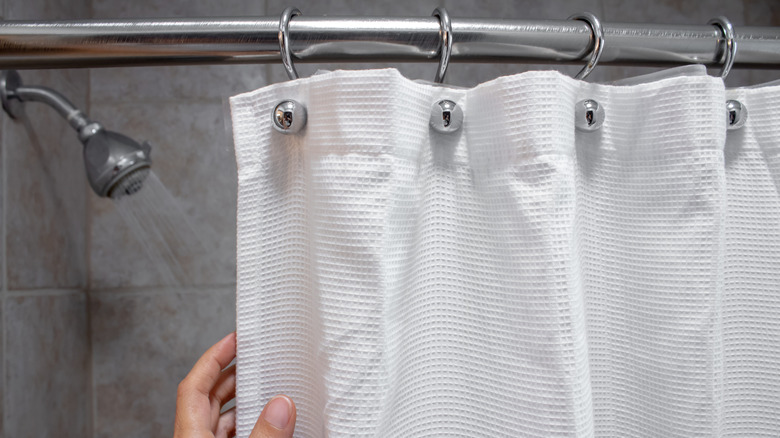
You can spend the afternoon cleaning the whole bathroom and pull back the shower curtain to find a constellation of unsightly cloudy spots. They seem to show up instantly, especially along the bottom of the liner, where splashes and suds tend to collect. If you're tired of waiting until the curtain looks grimy enough to take it down and replace it, there's a smaller chore you can do in between to help it stay clear: spraying it with vinegar.
Of all the ways vinegar can clean your home, loosening the cloudy film on a shower curtain liner might be one you haven't tried yet. While those white spots are nothing harmful, they can occur from the minerals left behind as hard water droplets dry, while soap and body wash can leave another chalky film. The acidity in the vinegar helps to loosen mineral deposits, making it harder for them to stick to the liner each time you take a shower, which is why this method is recommended. The acid can also target any lingering mold and mildew on the curtain.
All you need for this homemade vinegar cleaning solution is white vinegar, water, and a spray bottle. For stubborn spots, grab a soft sponge or cloth to give the curtain a light scrub. But for the most part, think of the DIY spray as a quick touch-up between washes.
Give your shower curtain a weekly vinegar spritz
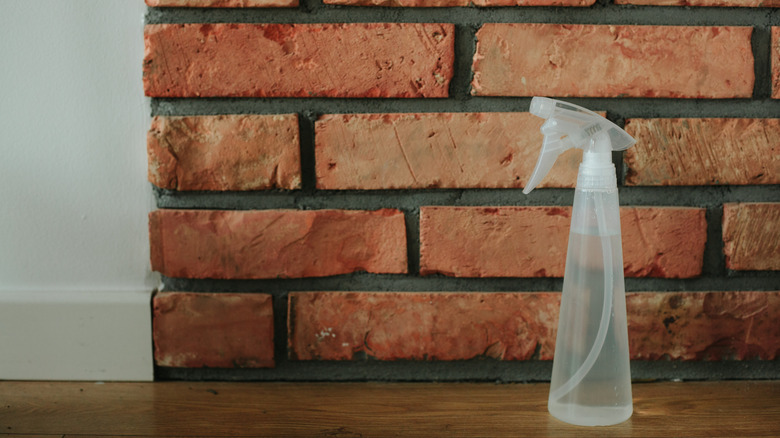
The mixture is super simple — just combine one part white vinegar with four parts water in a labeled spray bottle. Once a week, pull the curtain fully closed so the folds aren't hiding any spots, then lightly mist the side that faces the tub or shower. Give the bottom edge some extra love since most of the marks occur there. Rinse the solution with water and leave the curtain spread out to dry.
If you're trying to clean and remove buildup from a grimy shower, start by taking down the liner and washing it according to its care label. Once it's clean, use the weekly spray for quick touch-ups. The solution won't do much if there's an abundance of scale already. You can also try the diluted solution on plain glass shower doors. Spray the solution onto the cloudy spots, then run a squeegee down the glass to clear the droplets. Even if you don't have a squeegee, that quick spray down after a shower means less residue left behind long-term.
If you'd like to keep a bottle of the solution in the actual shower, consider a smaller spray bottle (like from the toiletries section at the store) and keep a batch next to the shampoo — just make sure it's labeled! If you have a large property with multiple showers, you could even get a multi-pack, like the Xolaawa spray bottles on Amazon, and make a solution for every shower curtain.