

The Reason Older Homes Have Tiny Closets

There's a lot of love about older homes. They're charming, quirky, and stand the test of time. Some historic homes are filled with vintage features that are valuable, too, which can offset some of the trickier parts of owning one like higher maintenance costs and preservation-related restrictions. But one of the most perplexing things you'll notice in many older homes is the teeny, tiny closets. With grand parlors, massive fireplaces, and crown molding for days, finding a little recessed nook in the corner of a room instead of a palatial walk-in closet can come as a shock. According to Mark Johnston, founder of Historic Design Consulting, the reason older homes have tiny closets is surprisingly simple.
"The primary reason was the fact that people simply didn't have as many clothes and other personal items that they needed to store," Johnston told Hunker in an exclusive interview. The numerous closets we've come to expect in every bedroom and hallway are relatively new to real estate. "Although closets became common in the late Victorian era, walk-ins and larger closets are largely a post-war phenomenon," the historic design expert explained. He also debunked the myth that older homes didn't have closets because they were taxed as rooms, an early version of today's commonly held but mistaken belief that a closet is required for a space to qualify as a bedroom. "This has been disproven and had nothing to do with the scarcity of closets," he confirmed.
People didn't have much to store before the Industrial Revolution
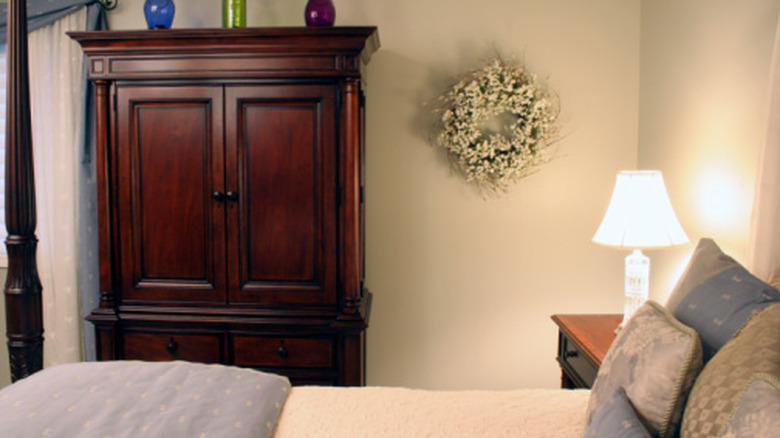
If you're one of the millions of people obsessed with Shein who likes to buy a new outfit for every occasion, walk-in closets that showcase your wardrobe may be the dream. However, having fast fashion delivered to your doorstep at the click of a button is a relatively new concept. "Before the Industrial Revolution made clothing and other consumer goods affordable, people simply didn't have many clothes, shoes and other personal items that needed to be organized and stored," Johnston explained. Because of this, floor space in older homes was devoted to larger bedrooms and living spaces rather than closed-off closets. Instead, Johnston said, "Families typically relied on movable furniture like armoires, presses and chests for the few items they did possess."
Eventually, modernization would change not just our wardrobes but the way we preferred to store them. According to the historic design expert, as the Industrial Revolution made clothing more affordable, by the end of the 19th century closets started to become increasingly common. Then, during the post-World War II housing boom, walk-in closets started becoming popular even in modest homes. Johnston attributed this to a significant economic shift, noting that "Material prosperity after the war allowed families to buy clothes, shoes and other personal items that would have been unimaginable during the Victorian era."
How to add closet space to an older home
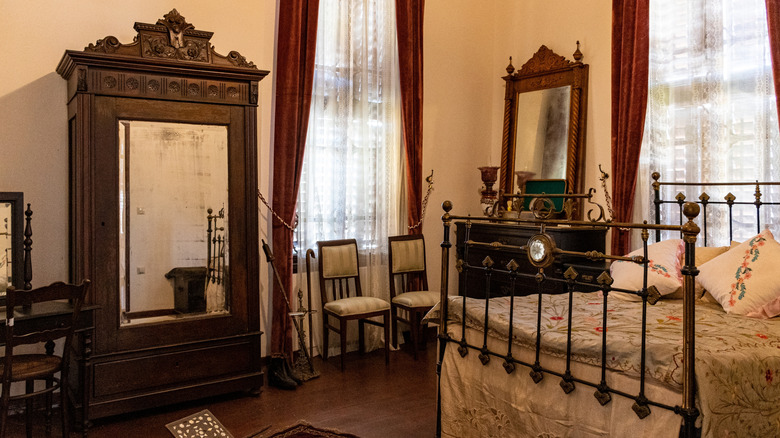
Historic homeowners often find themselves embarking on a major closet overhaul when a modern-size wardrobe simply cannot fit into a tiny old closet. Adding a closet to a historic home can be challenging for several reasons, like structural or material limitations. Fortunately, Johnston said it's still one of the steps people who live in an older home can take to make up for the lack of closet space.
"There are several options. One is to use movables like armoires, chifforobes and wardrobes like they did 150 years ago. These period furniture pieces often contain shelves and drawers which allow you to arrange and organize items and make them easily accessible," he explained. Asides eliminating the need to embark on a major construction or renovation project, going this route can also look visually appealing, because traditional pieces often compliment historic home interiors and look like they belong there.
Of course, if you've got a massive wardrobe, a larger enclosed area may be a better option. In that case, Johnston recommended re-purposing existing floor space. "Many older homes had several, small bedrooms on the second floor which can be remodeled and renovated to be used as walk-in closets and bathrooms," he suggested. Plus, some Victorian-era homes often have alcoves that can be re-purposed for clothing or other storage. "Maximizing the space you do possess is important, too, and new shelving and storage systems, under-bed storage and multi-purpose furniture can allow you to utilize the space you do have," he added.